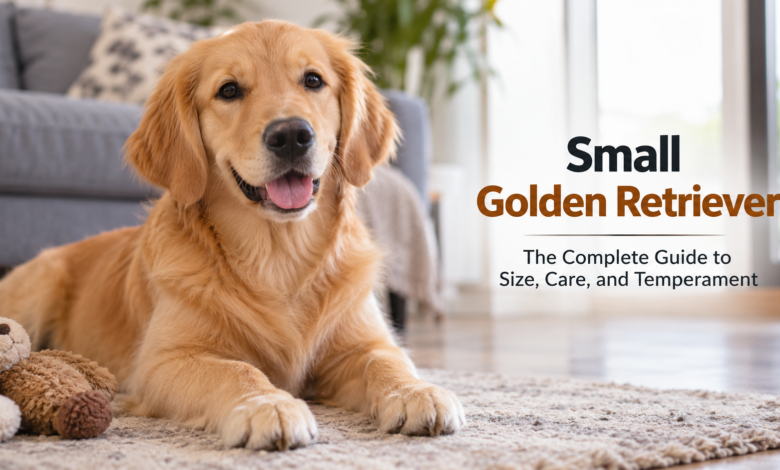
Small Golden Retriever: The Complete Guide to Size, Care, and Temperament
Small Golden Retriever

A small golden retriever can be an appealing choice for families who love the Golden Retriever’s affectionate personality but prefer a somewhat more manageable dog. However, there is an important point to understand first: the Golden Retriever does not have a separate officially recognized “small” variety.
Smaller Goldens may simply be naturally smaller individuals, often females, dogs from smaller lines, or dogs selectively bred for reduced size. Some dogs advertised as “mini Golden Retrievers” may also be mixed with smaller breeds. This guide explains what to realistically expect regarding adult size, temperament, exercise, grooming, nutrition, health, and everyday care.
What Is a Small Golden Retriever?
A small golden retriever is generally a Golden Retriever that falls toward the lower end of the breed’s normal size range. Standard Golden Retrievers are medium-to-large sporting dogs. Adult females are typically smaller than males, while individual dogs can also vary because of genetics, body structure, and breeding lines.
The term “mini Golden Retriever” is commonly used by breeders and sellers, but it does not describe a separate breed recognized by major kennel organizations. Some intentionally smaller dogs are produced by selecting smaller Golden Retrievers over generations, while others are crosses involving breeds such as Cocker Spaniels or Poodles.
That distinction matters. If you want a purebred Golden Retriever, ask for appropriate pedigree documentation rather than assuming that “mini” or “small” automatically means a purebred dog.
A healthy smaller Golden should still have the characteristic Golden Retriever structure: a balanced body, athletic build, dense water-resistant coat, friendly expression, and comfortable movement. Being unusually tiny is not necessarily healthier or better.
Small Golden Retriever Size and Appearance
The adult size of a small golden retriever depends heavily on its genetics. A smaller female may naturally weigh considerably less than a large male while remaining completely within normal breed characteristics.
Instead of focusing only on the number on the scale, owners should assess body condition. A healthy dog should have ribs that can be felt without being prominently visible, a visible waist when viewed from above, and an abdominal tuck when viewed from the side.
A dog that looks “small” because it is underweight is not a healthy example of the size you want.
The coat can also make Goldens appear larger than they actually are. Their feathering around the chest, tail, legs, ears, and abdomen creates a fuller appearance. Coat color varies from light golden to darker shades, depending on genetics and breeding lines.
If purchasing a puppy advertised as exceptionally small, be cautious about unrealistic adult-size guarantees. Puppy growth is influenced by genetics, nutrition, health, and overall development, so responsible breeders should discuss expected size rather than promising an exact miniature adult.
Small Golden Retriever Temperament and Personality
The biggest attraction of a small golden retriever is usually not its size but its personality. Golden Retrievers are generally known for being affectionate, social, intelligent, eager to please, and highly people-oriented.
A smaller Golden can still have the same energetic sporting-dog personality as a larger one. In other words, a smaller body does not automatically mean a low-energy or apartment-only dog.
Most well-socialized Goldens enjoy spending time with their families. They often do well with children when both the dog and children are taught appropriate boundaries. Many also live successfully with other dogs and household pets, particularly when introductions are gradual and positive.
Their friendly nature can also mean they are poor guard dogs. Although they may bark when something unusual happens, many Goldens are more interested in greeting visitors than intimidating them.
Individual temperament still matters. Genetics, early socialization, training, environment, and life experiences all influence adult behavior.
Exercise, Training, and Mental Stimulation
A small golden retriever still needs regular physical activity and mental stimulation. Reducing exercise simply because the dog is smaller can lead to boredom, excessive chewing, weight gain, jumping, or other unwanted behaviors.
Daily walks can be combined with supervised play, retrieving games, obedience exercises, scent games, and interactive food puzzles. Puppies should receive age-appropriate activity rather than excessive forced running or repetitive high-impact exercise while their bones and joints are developing.
Training is usually rewarding because Goldens tend to be responsive and motivated by food, toys, and social interaction. Positive reinforcement works particularly well. Short, consistent sessions are more productive than lengthy training sessions that leave the dog frustrated.
Early socialization is equally important. Gradually exposing a puppy to different people, environments, sounds, surfaces, and appropriately vaccinated dogs can help build confidence.
A smaller Golden is not automatically easier to train. Its size may make physical management easier, but its intelligence and energy still require daily guidance.
Grooming, Nutrition, and Everyday Care
Golden Retrievers shed throughout the year, with heavier shedding periods often occurring seasonally. A small golden retriever generally benefits from regular brushing to remove loose hair, prevent excessive tangling, and keep the coat comfortable.
Pay particular attention to feathered areas behind the ears, around the legs, under the tail, and around the abdomen. Bathing should be done when necessary rather than excessively. Ears should also be checked regularly, especially after swimming.
Nutrition deserves equal attention. Smaller size does not mean a dog should automatically receive dramatically restricted food. Feeding amounts should be based on body condition, age, activity level, reproductive status, and the calorie density of the food.
Puppies should receive a complete and balanced diet appropriate for growth. Large-breed puppy nutrition can be particularly relevant for Golden Retriever puppies because controlled growth is important for developing bones and joints. Your veterinarian can help determine an appropriate diet and portion size.
Avoid routinely adding high-calorie treats or table scraps. Golden Retrievers can be enthusiastic eaters, and excess weight places additional stress on joints.
Health, Lifespan, and Veterinary Care
A small golden retriever does not automatically avoid the health conditions associated with the breed. Golden Retrievers can be predisposed to orthopedic problems, skin and ear issues, allergies, obesity, and certain cancers. Hip and elbow disorders are among the concerns responsible breeders pay close attention to.
Regular veterinary examinations help detect problems before they become advanced. Puppies also need an appropriate vaccination and parasite-prevention schedule, while adult dogs benefit from routine preventive care, dental attention, weight monitoring, and age-appropriate screening.
When choosing a puppy, health history matters more than simply finding the smallest available puppy. Ask breeders about health testing of the parents and whether they screen for inherited conditions relevant to Golden Retrievers.
Be especially cautious if a seller emphasizes extremely tiny size as the main selling point. Deliberately breeding for unhealthy extremes can create welfare problems. A healthy, structurally sound dog is a much better goal than the smallest possible Golden.
Is a Small Golden Retriever Right for Your Lifestyle?
A small golden retriever can suit families, couples, and individuals who want a sociable companion and can provide daily exercise and interaction. A smaller adult may also be easier to handle physically than a very large Golden, although it still needs adequate living space and activity.
Apartment living can work if the dog receives enough exercise, training, enrichment, and opportunities to go outside. A house with a yard is convenient but does not replace walks or interaction with the family.
Consider these advantages:
- Friendly, affectionate companion
- Highly trainable and intelligent
- Often adaptable to different households
- Smaller individuals may be easier to handle physically
- Usually enjoys family activities and interactive games
There are also potential drawbacks:
- Regular shedding and grooming
- Significant exercise requirements
- Possible breed-related health concerns
- Strong appetite and tendency toward weight gain
- Can become bored or anxious without enough attention
Before choosing one, decide whether you want a naturally smaller purebred Golden Retriever or a dog marketed as a “mini Golden.” Those are not necessarily the same thing. A reputable breeder or responsible rescue organization should be transparent about the dog’s breeding, expected adult size, health history, and temperament.
Conclusion
A small golden retriever can offer many of the qualities people love about Golden Retrievers while being somewhat easier to manage physically. However, there is no officially recognized miniature Golden Retriever breed, and extremely small size should never be prioritized over health and sound structure.
Focus on responsible breeding, appropriate nutrition, regular grooming, daily exercise, positive training, preventive veterinary care, and healthy body weight. Most importantly, choose the individual dog’s health and temperament rather than a marketing label.
If you want a Golden Retriever but have limited space or prefer a smaller companion, a naturally smaller healthy dog may be worth considering. The right dog is not necessarily the smallest one—it is the one that fits your lifestyle while remaining healthy, active, and well cared for.
More Pet Guides: For more pet-related guides, tips, and helpful information, visit PetOrbit.blog. Thank you for reading this article!
(FAQs)
Is a small golden retriever a real breed?
No. “Small Golden Retriever” and “mini Golden Retriever” are informal terms rather than separate officially recognized Golden Retriever varieties. A smaller dog may be a naturally smaller purebred Golden Retriever, come from smaller breeding lines, or be a crossbreed. Always ask for clear breeding and pedigree information if purebred status matters to you.
How big does a small golden retriever get?
There is no fixed adult size for a small golden retriever because the term is not an official size category. Females are generally smaller than males, and individual dogs vary considerably. Genetics, breeding lines, nutrition, and health all influence final size. A responsible breeder can provide an estimated adult range based on the puppy’s parents and family history.
Are small Golden Retrievers good for apartments?
They can be, provided their exercise and mental stimulation needs are met. Smaller size may make indoor management easier, but Goldens remain active sporting dogs. Daily walks, play, training, and enrichment are essential. Simply having a smaller body does not turn a Golden Retriever into a low-energy breed.
Does a small Golden Retriever shed less?
Not necessarily. Shedding is primarily related to the Golden Retriever’s coat rather than body size. A smaller dog may produce less total loose hair simply because it has less body surface, but owners should still expect regular shedding and seasonal increases. Brushing several times per week can help manage loose hair.
Are small Golden Retrievers healthier than standard-sized Goldens?
Being smaller does not automatically make a dog healthier. Health depends on genetics, breeding practices, nutrition, weight, exercise, preventive care, and other factors. In fact, breeding specifically for extreme smallness can introduce welfare concerns. Health testing and sound structure should be more important than achieving the smallest possible adult size.
What should I feed a small Golden Retriever?
Feed a complete and balanced diet appropriate for the dog’s life stage, with portions adjusted for body condition and activity level. Growing puppies need appropriate nutrition for healthy development, while adults need enough food to maintain a lean body without excessive weight gain. A veterinarian can help determine appropriate portions and dietary needs for an individual dog.
Can a small Golden Retriever live with children and other pets?
Many can. Golden Retrievers are generally social and family-oriented, but successful relationships depend on the individual dog’s temperament, early socialization, training, and supervision. Children should learn to interact respectfully with dogs, and introductions to other pets should be gradual and controlled.
How can I find a healthy small Golden Retriever puppy?
Start by looking for a responsible breeder or reputable rescue organization rather than choosing based primarily on the word “mini.” Ask about the parents’ health testing, family health history, temperament, vaccination and deworming records, and expected adult size. Avoid sellers who guarantee an unusually tiny adult size or cannot provide clear information about the puppy’s background.

I’m a Pet Niche Expert and Pet Blogger with 12 years of experience in researching and sharing practical, reliable information about pets. Through PetOrbit.blog, I help pet parents and animal lovers better understand their pets and make informed decisions about their care and well-being.
My expertise covers a wide range of pet topics, including pet health, pet food and nutrition, dog and cat breeds, grooming, behavior, training, safety, pet care, travel with pets, and overall pet wellness. I also explore information about different types of pets, their unique needs, characteristics, lifestyles, and responsible ownership.
With more than 12 years of experience in the pet niche, my focus is on creating clear, useful, and easy-to-understand content based on practical knowledge, careful research, and real-world pet care considerations. I believe pet information should be informative without being unnecessarily complicated, so my goal is to make every article helpful for both new and experienced pet owners.
At PetOrbit, my mission is to provide valuable pet guides, breed information, health and nutrition insights, food and care tips, travel advice, and trustworthy resources that help pets live healthier, happier, and more comfortable lives.
PetOrbit.blog — Practical Pet Knowledge for Better Pet Care.