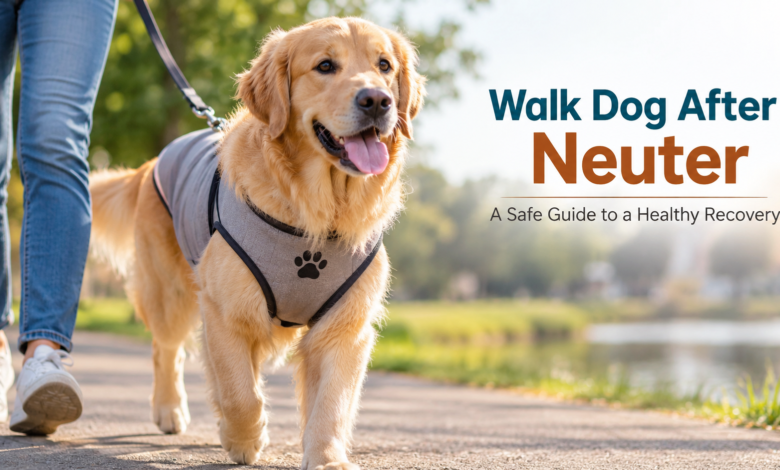
After neutering, most dogs want to return to their normal routine, but their bodies need time to heal. Knowing when to walk your dog after neuter can help prevent bleeding, swelling, wound irritation, or delayed healing. The good news is that your dog usually does not need complete bed rest. Short, controlled activity is often appropriate once your veterinarian says it is safe.
In this guide, you will learn when walking can usually begin, how long walks should last, which activities to avoid, and how to recognise signs that your dog needs veterinary attention. Because recovery varies by dog and surgical technique, always follow the specific discharge instructions your veterinarian provides.
When Can You Walk Dog After Neuter?
For many healthy dogs, you can allow very short leash walks within the first day or two after surgery, mainly for bathroom breaks. However, the timing depends on your dog’s age, health, behaviour, anaesthesia recovery, and the veterinarian’s instructions.
During the first 24 hours, your dog may be sleepy, unsteady, or less interested in moving. Keep activity minimal. Take your dog outside only for necessary toilet breaks and keep the leash short. Avoid normal neighbourhood walks, running, playing, or anything that encourages sudden movement.
After the initial recovery period, your veterinarian may allow brief, slow walks. A five- to ten-minute leash walk can often be enough at first. The goal is controlled movement, not exercise.
When you walk your dog after neuter, choose a quiet route and maintain a steady pace. Your dog should not pull, jump, wrestle with other dogs, or climb repeatedly. If your dog becomes tired, uncomfortable, or unusually restless, return home and allow more rest.
How Long Should Walks Be After Neutering?
The right walking duration changes as recovery progresses. During the early days, think in terms of bathroom breaks and gentle movement rather than exercise.
For the first several days, many dogs do best with short leash outings lasting around five to ten minutes. If the incision looks normal and your dog remains comfortable, the veterinarian may gradually permit longer walks.
The important point is not simply how many minutes your dog walks. Intensity matters just as much. A calm ten-minute stroll is very different from a ten-minute walk involving pulling, jumping, stairs, and chasing squirrels.
When you walk your dog after neuter, keep the activity predictable. Avoid retractable leashes if they encourage your dog to roam or accelerate. A standard leash gives you better control and makes it easier to prevent sudden bursts of activity.
Even if your dog seems energetic, don’t assume the incision has fully healed. Dogs often feel better before the surgical site is strong enough to tolerate normal exercise.
Why Too Much Exercise Can Be Dangerous
Neutering is a surgical procedure, and the tissues around the incision need time to heal. Excessive activity can place tension on the surgical site. Running, jumping, rough play, or climbing can increase the risk of swelling, bleeding, wound opening, or irritation.
This is particularly important for energetic puppies and young dogs. A dog that feels excellent may immediately try to resume its usual routine. Unfortunately, feeling energetic does not mean internal healing is complete.
After a dog’s neuter, controlled exercise is safer than unrestricted activity. Keep your dog on a leash outdoors and discourage interactions that could turn into rough play.
At home, prevent jumping on furniture and avoid games such as fetch or tug-of-war during the restricted activity period. If your dog struggles to remain calm, enrichment activities that require little physical movement can help, such as food puzzles, gentle training, or quiet attention.
Your veterinarian may recommend approximately 7–14 days of restricted activity, although the exact period can vary. Follow the individual instructions you received rather than relying on a generic timeline.
What Activities Should You Avoid?
A successful recovery isn’t just about deciding when to walk your dog after neuter. It is also about knowing which activities can interfere with healing.
Avoid running, off-leash exercise, dog parks, jumping, wrestling, roughhousing, swimming, and strenuous training until your veterinarian gives permission. Swimming is particularly unsuitable while the incision is healing because moisture and contamination can increase the risk of complications.
You may also need to limit stairs, especially if your dog races up and down them. If stairs are unavoidable, keep your dog on a leash and move slowly.
Another common problem is interaction with other pets. Even friendly dogs can accidentally bump or lick the surgical area. Supervise playtime and separate pets when needed.
You should also prevent excessive licking or chewing of the incision. An Elizabethan collar, recovery suit, or another veterinarian-approved protective option may be necessary if your dog repeatedly interferes with the wound.
How to Monitor the Incision After a Walk
Checking the surgical site regularly is one of the easiest ways to identify a problem early. Before and after a walk, look at the incision without touching it unnecessarily.
A normal healing incision may have mild redness or slight swelling initially. It should generally remain closed and relatively clean. You should not see continuous bleeding, significant discharge, or a widening wound.
After you walk your dog after neuter, inspect the area if your dog suddenly starts licking it, seems in pain, or behaves differently. Increased swelling after activity can mean your dog has done too much.
Contact your veterinarian promptly if you notice substantial bleeding, pus-like discharge, a bad smell, significant swelling, the incision opening, severe pain, persistent vomiting, extreme weakness, difficulty urinating, or other concerning changes.
Do not apply creams, disinfectants, powders, or home remedies to the incision unless your veterinarian specifically recommends them. Some products can irritate healing tissue or interfere with the surgical site.
How to Make Post-Neuter Walks Safer
The best approach is to make every outing calm and controlled. Before leaving, check that your dog is alert enough to walk normally and is not showing signs of significant discomfort.
Use a secure leash and avoid crowded areas where another dog could suddenly approach. Choose a flat, familiar route whenever possible. Let your dog sniff at a relaxed pace instead of encouraging fast walking.
If your dog pulls strongly, consider postponing the outing and asking your veterinarian about safer ways to manage bathroom breaks. A sudden lunge can place unnecessary strain on healing tissues.
Weather and ground conditions matter too. Avoid extremely hot surfaces, muddy areas, and places where your dog may jump or scramble during recovery.
Most importantly, increase activity gradually. If a short walk goes well, that does not automatically mean your dog is ready for a long walk the next day. Recovery should progress step by step.
When Can Your Dog Return to Normal Exercise?
Return to normal exercise should happen gradually, usually after your veterinarian confirms healing is progressing appropriately. Many dogs need about 7–14 days of restricted activity after routine neutering, but the timeline isn’t the same for every patient.
Once your veterinarian clears your dog for normal activity, gradually increase walking distance and intensity. Start with controlled walks before returning to running, jumping, off-leash play, agility, or other demanding activities.
If your dog is extremely active, it can be tempting to restore its old exercise schedule immediately. That approach can backfire. A gradual transition gives the surgical site time to adapt to increasing movement.
When you walk your dog after neuter, remember that early walks support recovery, not fitness. Your dog will have plenty of opportunities to return to its normal exercise routine once healing is complete.
Conclusion
Knowing when to walk dog after neuter helps balance two important needs: gentle movement and adequate rest. Short, controlled leash outings are commonly appropriate during recovery, but strenuous exercise should wait until healing is well established and your veterinarian approves it.
Keep walks brief, prevent jumping and rough play, protect the incision from licking, and check the surgical site regularly. If you notice bleeding, discharge, significant swelling, wound separation, or unusual behaviour, contact your veterinary clinic rather than waiting for the problem to resolve on its own.
With sensible activity restrictions and attentive aftercare, most dogs can return to their normal routine safely. When you walk dog after neuter, patience during those first days is one of the simplest ways to support a smooth recovery.
More Pet Guides: For more pet-related guides, tips, and helpful information, visit PetOrbit.blog. Thank you for reading this article!
(FAQs)
Can I walk dog after neuter the same day?
Your dog may need to go outside for a bathroom break after surgery, but this should be a very short, controlled leash outing. Anesthesia can cause sleepiness and poor coordination, so avoid a normal walk. Follow your veterinarian’s discharge instructions about when outdoor activity can begin.
How soon can my dog go for a normal walk after neutering?
A normal exercise walk usually needs to wait until the surgical site has had adequate time to heal. Many dogs have restricted activity for around 7–14 days. Your veterinarian may recommend a different timeline depending on the procedure and your dog’s recovery.
Can my dog run after being neutered?
Generally, avoid running during the initial recovery period. Sudden acceleration can put stress on the healing incision and may contribute to swelling or wound complications. Wait until your veterinarian gives your dog clearance for unrestricted exercise.
Can I walk dog after neuter for 20 minutes?
Twenty minutes may be too much during early recovery, especially if your dog walks quickly or pulls. Start with short, calm outings and increase duration only when your veterinarian considers it appropriate and the incision remains healthy.
Should my dog wear a cone during walks after neutering?
If your dog tries to lick or chew the incision, you may need a protective cone or another veterinarian-approved device. Licking can irritate the wound and introduce bacteria. Keep the cone on as directed by your veterinarian, including during outdoor breaks when needed.
What should I do if the incision swells after a walk?
Stop further exercise and inspect the incision without manipulating it. Mild changes can occur, but discuss noticeable or increasing swelling with your veterinarian. Significant swelling, bleeding, discharge, wound separation, or severe pain warrants prompt veterinary attention.
When can my dog play with other dogs after neutering?
Avoid dog-to-dog play until the surgical site has healed and your veterinarian has cleared your dog for normal activity. Even friendly play can involve jumping, wrestling, chasing, or accidental contact with the incision.
What if my dog seems completely normal after neutering?
Feeling normal does not mean the surgical tissues have fully healed. Dogs can become energetic quickly and may try to run or play before it is safe. Continue following the activity restrictions even when your dog appears comfortable.

I’m a Pet Niche Expert and Pet Blogger with 12 years of experience in researching and sharing practical, reliable information about pets. Through PetOrbit.blog, I help pet parents and animal lovers better understand their pets and make informed decisions about their care and well-being.
My expertise covers a wide range of pet topics, including pet health, pet food and nutrition, dog and cat breeds, grooming, behavior, training, safety, pet care, travel with pets, and overall pet wellness. I also explore information about different types of pets, their unique needs, characteristics, lifestyles, and responsible ownership.
With more than 12 years of experience in the pet niche, my focus is on creating clear, useful, and easy-to-understand content based on practical knowledge, careful research, and real-world pet care considerations. I believe pet information should be informative without being unnecessarily complicated, so my goal is to make every article helpful for both new and experienced pet owners.
At PetOrbit, my mission is to provide valuable pet guides, breed information, health and nutrition insights, food and care tips, travel advice, and trustworthy resources that help pets live healthier, happier, and more comfortable lives.
PetOrbit.blog — Practical Pet Knowledge for Better Pet Care.