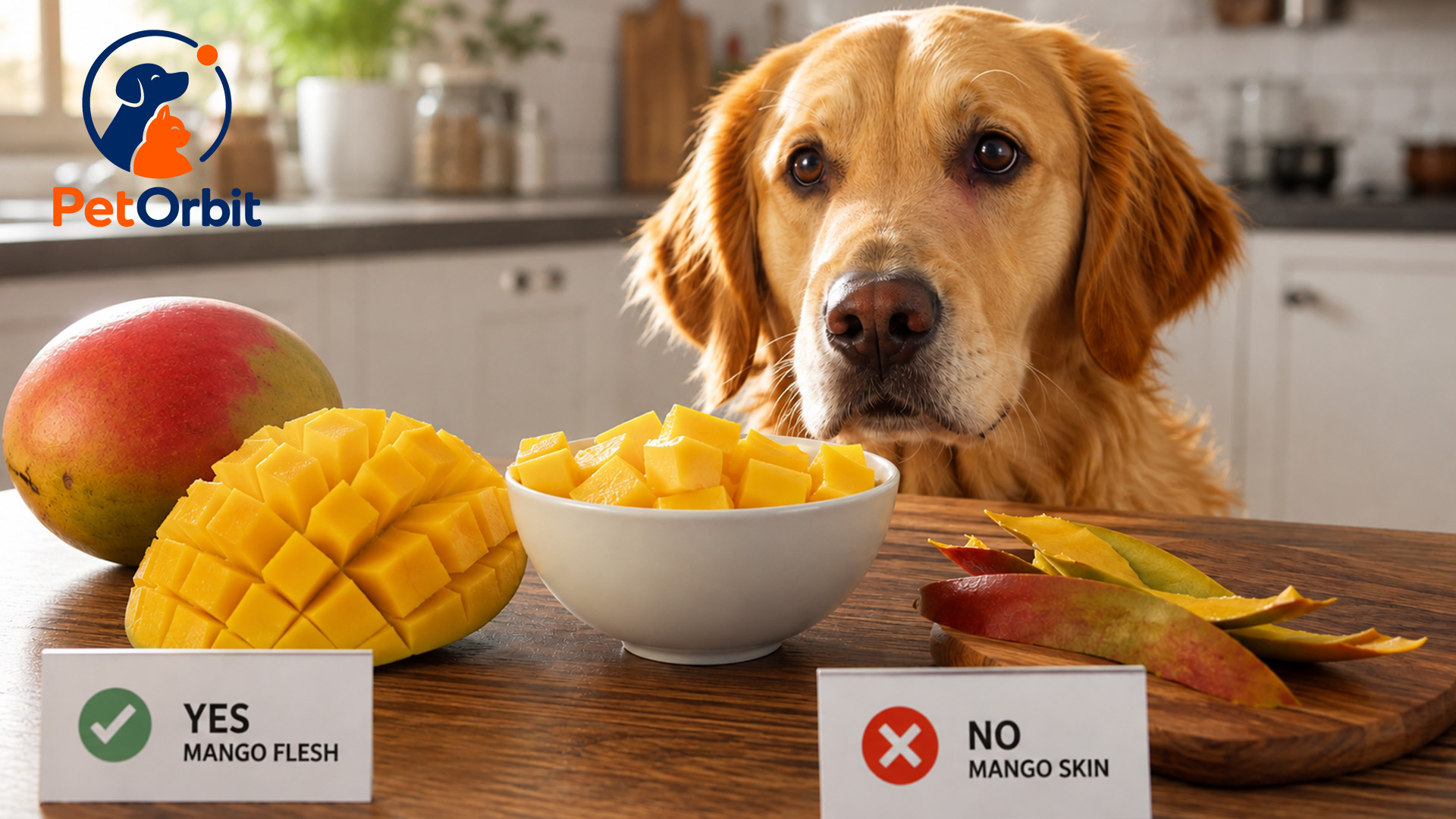
Mango is a sweet, refreshing fruit that many people enjoy, especially during the warmer months. If your dog eagerly watches you snack on a juicy mango, you may wonder, can dogs eat mango skin? While the fruit itself can be a healthy occasional treat, the skin is a different story. Understanding the benefits and risks before sharing mango with your pet can help prevent digestive problems and keep them safe.
In this guide, you’ll learn whether can dogs eat mango skin is a safe choice, why mango peel can be problematic, what to do if your dog eats it, and the safest way to feed fresh mango. Whether you have a playful puppy, an active adult dog, or a senior companion, these practical tips will help you make informed feeding decisions.
Is Can Dogs Eat Mango Skin a Safe Question? Here’s the Short Answer
The simple answer is no. While mango flesh is generally considered safe for healthy dogs when offered in moderation, mango skin is not recommended. If you’re asking can dogs eat mango skin, veterinarians generally advise against intentionally feeding it.
Mango peel is thick, fibrous, and difficult for many dogs to digest. Unlike the soft flesh inside, the skin can irritate the digestive tract and may increase the risk of stomach upset. In some cases, especially with small breeds or dogs that swallow large pieces without chewing, mango skin can even contribute to an intestinal blockage.
Another concern is that mangoes are often treated with pesticides or other agricultural chemicals before reaching grocery stores. Even after washing, traces of these substances may remain on the peel. Sensitive dogs may also develop mild allergic reactions after consuming mango skin.
If your dog accidentally eats a very small amount of washed mango peel, it may not cause serious harm. However, owners should monitor for signs of digestive discomfort such as vomiting, diarrhea, excessive drooling, abdominal pain, loss of appetite, or constipation. Persistent symptoms require prompt veterinary attention.
Why Mango Skin Can Be Difficult for Dogs to Digest
Many fruits contain fiber, which can support digestive health in appropriate amounts. However, the fiber found in mango skin is much tougher than the softer fiber present in the fruit’s flesh.
Dogs have digestive systems designed primarily for processing animal proteins and fats. Although they can digest certain fruits and vegetables, extremely fibrous plant material is much harder for them to break down efficiently.
Common reasons veterinarians discourage feeding mango skin include:
- It is tough and chewy, making it difficult to digest.
- Large pieces may become a choking hazard.
- It can contribute to intestinal obstruction, particularly in smaller dogs.
- It may trigger vomiting, diarrhea, or stomach irritation.
- Residual pesticides or chemicals on the peel can pose additional risks.
These risks increase if a dog gulps food instead of chewing thoroughly. Puppies, toy breeds, senior dogs, and dogs with existing gastrointestinal conditions are particularly vulnerable.
Nutritional Benefits of Mango Flesh for Dogs
Although can dogs eat mango skin has a negative answer, the fruit itself offers several nutritional benefits when served correctly.
Fresh mango flesh contains important nutrients that can complement a balanced canine diet as an occasional treat. It should never replace complete and balanced dog food, but it can provide valuable vitamins in small portions.
Mango contains:
- Vitamin A, which supports healthy vision, skin, and immune function.
- Vitamin C, an antioxidant that helps protect cells from oxidative stress.
- Vitamin E, which contributes to healthy skin and coat condition.
- Vitamin B6, involved in brain function and metabolism.
- Potassium, which supports muscle and nerve function.
- Natural dietary fiber that promotes healthy digestion when consumed in moderation.
Mango is also rich in antioxidants, including beta-carotene and polyphenols, which help combat free radicals. While dogs naturally produce their own vitamin C, the additional antioxidants found in fruits may still provide supportive health benefits for some pets.
However, mango is naturally high in sugar. Dogs with obesity, diabetes, pancreatitis, or those following calorie-controlled diets should only consume mango under veterinary guidance. Too much fruit can contribute to unwanted weight gain and digestive upset.
How to Safely Feed Mango to Your Dog
If you’ve been wondering can dogs eat mango skin, the safest approach is to completely remove the peel before offering any mango to your pet.
Preparing mango correctly significantly reduces the risk of choking, digestive irritation, and intestinal blockage.
Follow these simple steps:
- Wash the mango thoroughly.
- Remove the entire skin.
- Cut away the large central pit.
- Slice the flesh into small, bite-sized pieces appropriate for your dog’s size.
- Offer only a few pieces as an occasional treat.
- Introduce mango gradually if your dog has never eaten it before.
Remember that treats, including fruit, should generally make up no more than about 10% of your dog’s daily calorie intake. The remaining calories should come from a complete, nutritionally balanced dog food that meets your dog’s life stage and health needs.
Frozen mango cubes can also be a refreshing summertime snack for many dogs, provided they are peeled, pit-free, and served in moderation. Avoid canned mango packed in syrup, dried mango with added sugar, or mango products containing artificial sweeteners, especially xylitol, which is highly toxic to dogs.
What Should You Do If Your Dog Eats Mango Skin?
If your dog accidentally eats a small piece of mango skin, don’t panic. In many cases, especially with medium or large healthy dogs, a tiny amount may pass through the digestive system without causing serious problems. However, because can dogs eat mango skin is a common concern for good reason, it’s important to monitor your pet closely.
Watch for symptoms over the next 24 to 48 hours, including:
- Vomiting
- Diarrhea
- Loss of appetite
- Excessive drooling
- Abdominal discomfort
- Constipation
- Difficulty passing stool
- Lethargy
If your dog swallowed a large piece of mango skin or consumed the entire peel, contact your veterinarian promptly. The risk of intestinal blockage is higher in puppies and small breeds because of their narrower digestive tracts.
Seek immediate veterinary care if your dog repeatedly vomits, cannot keep water down, appears bloated, strains to defecate, or shows signs of severe abdominal pain. Early treatment is much safer than waiting for an obstruction to worsen.
Which Dogs Face the Greatest Risk?
Although can dogs eat mango skin has the same answer for every breed, some dogs are more likely to experience complications.
Puppies are naturally curious and often swallow food without chewing. Their developing digestive systems are also more sensitive to unfamiliar foods.
Small breeds such as Chihuahuas, Yorkshire Terriers, Toy Poodles, and Pomeranians face a greater choking and blockage risk because even a modest piece of mango peel can be difficult to pass.
Senior dogs may have slower digestion or underlying medical conditions that increase their sensitivity to fibrous foods. Likewise, dogs with a history of gastrointestinal disease, pancreatitis, inflammatory bowel conditions, or previous intestinal surgery should avoid mango skin completely.
If your dog has known food allergies or a sensitive stomach, introduce any new fruit carefully and only in small amounts after discussing it with your veterinarian.
Common Mistakes Dog Owners Make When Feeding Mango
Many owners assume that because mango is a healthy fruit for people, every part of it is equally safe for dogs. Unfortunately, that isn’t true.
Avoid these common mistakes:
- Feeding mango with the skin still attached.
- Allowing your dog to chew on the large mango pit.
- Offering large portions of mango at one time.
- Feeding canned mango packed in sugary syrup.
- Giving dried mango with added sugar or preservatives.
- Assuming fruit can replace a balanced canine diet.
Another mistake is introducing several new foods at once. If your dog develops digestive upset, it becomes difficult to determine which food caused the problem. Introduce new treats individually and in small quantities.
When choosing snacks, remember that fresh water, balanced nutrition, regular exercise, and appropriate portion control contribute far more to your dog’s long-term health than any single fruit.
Conclusion
So, can dogs eat mango skin? The safest answer is no. While ripe mango flesh can be a nutritious occasional treat, the skin is tough, difficult to digest, and may increase the risk of choking, stomach upset, or intestinal blockage. In addition, pesticide residue and the peel’s fibrous texture make it an unnecessary risk.
If you want your dog to enjoy mango, always wash the fruit thoroughly, remove both the skin and the pit, and serve only small pieces of fresh flesh in moderation. Every dog is different, so monitor your pet whenever introducing a new food and consult your veterinarian if you have concerns or if your dog accidentally eats a large amount of mango peel.
Making informed choices about treats helps keep your dog healthy, comfortable, and ready to enjoy many happy years by your side.
More Pet Guides: For more pet-related guides, tips, and helpful information, visit PetOrbit.blog. Thank you for reading this article!
(FAQs)
Can dogs eat mango skin if it has been washed thoroughly?
No. Washing removes some dirt and pesticide residue, but it does not change the peel’s tough, fibrous texture. Even clean mango skin can be difficult for dogs to digest and may lead to gastrointestinal discomfort or, in rare cases, an intestinal blockage.
Can puppies eat mango skin?
Puppies should not eat mango skin. Their digestive systems are still developing, and they are more likely to swallow food without chewing properly. This increases the risk of choking and digestive complications.
Is mango flesh safe for dogs every day?
Fresh mango flesh is best offered as an occasional treat rather than a daily snack. Because it contains natural sugars, excessive amounts may contribute to weight gain or digestive upset. Moderation is the safest approach.
What fruits are safer than mango skin for dogs?
Many dogs can safely enjoy peeled apple slices without seeds, blueberries, strawberries, watermelon without seeds or rind, bananas in moderation, and peeled pear slices. Introduce any new fruit gradually and offer only small portions.
What happens if my dog swallows a large piece of mango skin?
A large piece of mango skin may become lodged in the digestive tract, especially in small dogs. Watch for vomiting, abdominal pain, loss of appetite, constipation, or lethargy. Contact your veterinarian immediately if these symptoms develop or if you know your dog swallowed a substantial amount.
Can diabetic dogs eat mango?
Dogs with diabetes should only eat mango if their veterinarian recommends it. Mango contains natural sugars that may affect blood glucose levels. Your veterinarian can advise whether it fits safely into your dog’s dietary plan.
Should I remove the mango pit as well?
Absolutely. The pit presents a choking hazard and can cause intestinal obstruction if swallowed. It also contains compounds that should not be consumed. Always remove both the pit and the peel before serving mango to your dog.
Can frozen mango be a healthy treat?
Yes. Peeled, pit-free frozen mango cubes can make a refreshing treat during warm weather. Serve them in small amounts and supervise your dog while eating to reduce the risk of choking, particularly in smaller breeds.

I’m a Pet Niche Expert and Pet Blogger with 12 years of experience in researching and sharing practical, reliable information about pets. Through PetOrbit.blog, I help pet parents and animal lovers better understand their pets and make informed decisions about their care and well-being.
My expertise covers a wide range of pet topics, including pet health, pet food and nutrition, dog and cat breeds, grooming, behavior, training, safety, pet care, travel with pets, and overall pet wellness. I also explore information about different types of pets, their unique needs, characteristics, lifestyles, and responsible ownership.
With more than 12 years of experience in the pet niche, my focus is on creating clear, useful, and easy-to-understand content based on practical knowledge, careful research, and real-world pet care considerations. I believe pet information should be informative without being unnecessarily complicated, so my goal is to make every article helpful for both new and experienced pet owners.
At PetOrbit, my mission is to provide valuable pet guides, breed information, health and nutrition insights, food and care tips, travel advice, and trustworthy resources that help pets live healthier, happier, and more comfortable lives.
PetOrbit.blog — Practical Pet Knowledge for Better Pet Care.