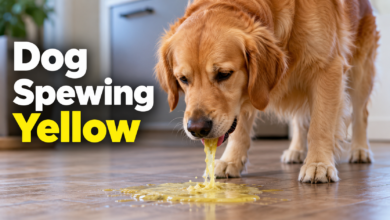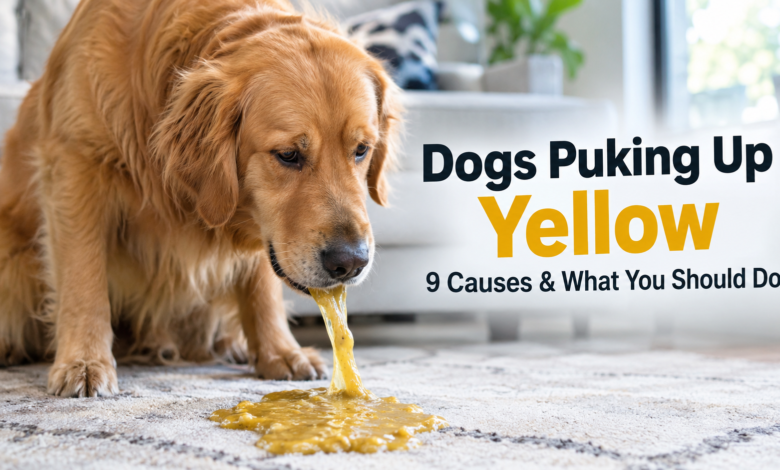
Seeing your dog suddenly vomit yellow liquid or yellow foam can be alarming. Dogs puking up yellow material often bring up bile, a digestive fluid that can look yellow or greenish when the stomach is empty. Sometimes this happens after a long gap between meals and resolves quickly. However, repeated vomiting can also occur with gastrointestinal disease, pancreatitis, parasites, infections, or an intestinal blockage.
The key question isn’t simply why the vomit is yellow, but how your dog behaves before and after vomiting. This guide explains nine possible causes, what you can safely do at home in a mild case, and which warning signs mean your dog needs prompt veterinary care.
What Does Yellow Vomit Mean in Dogs?
Yellow vomit commonly contains bile. The liver produces bile, which enters the small intestine to help digest fats. When a dog vomits on an empty stomach, little food may be present, so the yellow bile becomes more noticeable.
For some otherwise healthy dogs, puking up yellow fluid happens occasionally, particularly early in the morning after many hours without food. This pattern can be associated with bilious vomiting syndrome, in which bile reflux and gastrointestinal motility may irritate an empty stomach.
One isolated episode in a bright, comfortable dog is generally less concerning than repeated vomiting accompanied by lethargy, diarrhea, pain, appetite loss, or difficulty keeping water down. The overall pattern matters.
9 Common Causes of Dogs Puking Up Yellow
Several possible explanations for dogs puking up yellow range from a mild digestive upset to conditions requiring urgent treatment.
1. Empty stomach or bilious vomiting syndrome: A long fasting period can allow bile to accumulate in the stomach. Dogs with bilious vomiting syndrome often vomit yellow fluid or foam early in the morning but otherwise have normal energy and appetite.
2. Dietary indiscretion: Eating garbage, table scraps, spoiled food, excessive treats, grass, or another unfamiliar substance can irritate the digestive tract. Vomiting may occur as the body attempts to remove something that does not agree with it.
3. Sudden food changes or food intolerance: Switching diets too quickly or eating a food that does not suit your dog can cause nausea, vomiting, loose stools, and reduced appetite. Recurrent episodes deserve veterinary evaluation rather than repeated diet experiments.
4. Gastrointestinal infection: Viral or bacterial gastrointestinal illness can cause vomiting, diarrhea, reduced appetite, and tiredness. The risk is particularly important in puppies because they can become dehydrated more quickly.
5. Intestinal parasites: Worms and other intestinal parasites can contribute to vomiting and digestive problems. Other signs may include diarrhea, poor weight gain, a pot-bellied appearance, or changes in appetite.
6. Pancreatitis: Inflammation of the pancreas can cause vomiting, abdominal discomfort, reduced appetite, weakness, and sometimes diarrhea. Vomit may be yellow, but color alone cannot diagnose pancreatitis.
7. Intestinal blockage: A swallowed toy, sock, bone fragment, plastic item, or other foreign object can obstruct the digestive tract. A blockage can initially look like ordinary vomiting but may progress to repeated vomiting, refusal to eat, abdominal pain, lethargy, or inability to keep water down. This is potentially an emergency.
8. Liver or gallbladder disease: Problems affecting bile production or flow can cause digestive symptoms. If the dog’s gums, whites of the eyes, or skin also become yellow, that is different from yellow vomit and may indicate jaundice requiring veterinary assessment.
9. Other underlying illnesses: Conditions such as inflammatory intestinal disease, certain infections, allergies, Addison’s disease, and, less commonly, cancer can cause vomiting.
Because these causes can look similar at home, recurrent vomiting should not be diagnosed solely from the color of the vomit.
When Is Dogs Puking Up Yellow an Emergency?
Yellow vomit does not automatically mean an emergency. However, a veterinarian should assess dogs puking up yellow repeatedly or showing other signs of illness.
Seek urgent veterinary care if your dog has repeated or severe vomiting, cannot keep water down, becomes very weak or lethargic, develops significant diarrhea, has obvious abdominal pain, or produces blood or foreign material in the vomit. Persistent vomiting can cause dehydration and electrolyte losses.
Retching without producing vomit, a swollen or distended abdomen, collapse, severe discomfort, or rapid deterioration are especially concerning. Repeated unproductive retching combined with abdominal enlargement can occur with gastric dilatation-volvulus, a life-threatening emergency.
Puppies, senior dogs, and dogs with existing medical conditions may need a lower threshold for veterinary attention because vomiting can become more serious more quickly.
What to Do When Your Dog Vomits Yellow
If your dog puked up yellow in a single episode and is otherwise alert, comfortable, and behaving normally, monitor closely rather than immediately assuming the worst.
Do not force food or large amounts of water immediately after vomiting. If vomiting stops, you can offer small amounts of water while you continue monitoring. If your dog remains well and keeps water down, your veterinarian may recommend gradually reintroducing small portions of an easily digestible diet.
For a healthy dog that repeatedly vomits yellow bile only in the early morning, a veterinarian may suggest changing the feeding schedule, such as providing a small late-evening meal. This approach is intended for dogs that otherwise appear healthy and should not be used to mask persistent vomiting or other symptoms.
Avoid giving human medications unless your veterinarian specifically tells you to use them and provides appropriate instructions. Human drugs can be inappropriate or unsafe for dogs.
How Vets Diagnose the Cause
When yellow vomiting becomes recurrent or is accompanied by other symptoms, your veterinarian will usually start with a physical exam and a detailed history. Useful information includes when vomiting occurs, how often it happens, what the vomit looks like, whether your dog is eating and drinking, recent diet changes, medications, and whether your dog may have swallowed a foreign object.
Depending on the examination, diagnostic testing may include bloodwork, abdominal X-rays, ultrasound, or other tests. For suspected bilious vomiting syndrome, veterinarians may first need to exclude more serious gastrointestinal disease before considering that diagnosis.
Treatment depends entirely on the underlying cause. A simple feeding-schedule adjustment may help some dogs with bilious vomiting syndrome, while an obstruction, pancreatitis, severe infection, or another illness may require intensive veterinary treatment.
How to Help Prevent Future Vomiting
You cannot prevent every episode of vomiting, but several practical habits can reduce common digestive problems.
Keep garbage, medications, chemicals, toys, socks, bones, and other potentially dangerous objects away from your dog. Introduce new foods gradually instead of making sudden dietary changes. Keep treats moderate and avoid giving foods known to be unsafe for dogs.
Discuss regular parasite prevention with your veterinarian, especially for puppies and dogs that spend significant time outdoors.
If yellow vomiting becomes a recurring pattern, keep a simple record of when it happens. Note the time, meals, treats, bowel movements, activity level, and any other symptoms. This information can help your veterinarian identify patterns that may otherwise be easy to miss.
Conclusion: What Should You Do About Dogs Puking Up Yellow?
Dogs puking up yellow often means bile is present in the vomit, especially when the stomach is empty. An occasional episode in an otherwise healthy dog may be minor. Still, yellow vomit can also accompany problems such as dietary upset, parasites, pancreatitis, infection, liver or gallbladder disease, and intestinal obstruction.
The safest approach is to judge the entire picture rather than the color alone. Monitor a single mild episode closely, provide small amounts of water once vomiting has stopped, and follow veterinary advice about feeding. If vomiting is repeated, persistent, painful, or accompanied by lethargy, diarrhea, appetite loss, abdominal swelling, blood, or inability to keep water down, contact a veterinarian promptly.
When in doubt, getting professional advice is safer than assuming that yellow vomit is simply an empty stomach.
More Pet Guides: For more pet-related guides, tips, and helpful information, visit PetOrbit.blog. Thank you for reading this article!
FAQs
Is a dog puking up yellow always a sign of illness?
No. Yellow vomit commonly contains bile and can occur when a dog’s stomach is empty. Some otherwise healthy dogs experience occasional early-morning bile vomiting. However, repeated vomiting or additional symptoms can indicate an underlying problem that needs veterinary evaluation.
Why is my dog vomiting yellow foam in the morning?
Early-morning yellow foam can occur after a long period without food. Bilious vomiting syndrome is one possible explanation, especially if the dog otherwise has normal energy and appetite. A veterinarian should evaluate recurrent episodes to rule out other causes.
Should I feed my dog after yellow vomit?
If vomiting has stopped and your dog is otherwise acting normally, your veterinarian may recommend gradually offering small amounts of food. Do not force food immediately after vomiting, and seek veterinary advice if vomiting continues or your dog develops other symptoms.
Can yellow vomit mean my dog has a blockage?
Yes. An intestinal obstruction can cause vomiting that may include yellow bile. Other warning signs can include repeated vomiting, loss of appetite, lethargy, abdominal discomfort, or inability to keep water down. Suspected obstruction requires prompt veterinary assessment.
When should I take my dog to the vet for yellow vomiting?
Contact a veterinarian promptly when vomiting is repeated or severe, continues for several hours, or occurs with lethargy, poor appetite, diarrhea, pain, dehydration, blood, or other concerning changes. Emergency care is appropriate for severe symptoms such as collapse, abdominal swelling, or repeated unproductive retching.
Can dehydration happen after my dog vomits yellow bile?
Yes. Repeated vomiting causes fluid and electrolyte losses, and a nauseated dog may not drink enough to replace them. Signs such as weakness, lethargy, tacky gums, or inability to keep water down warrant veterinary attention.
Does yellow vomit mean my dog has liver disease?
Not necessarily. Yellow vomit usually reflects bile in the stomach or digestive tract. Liver or gallbladder disease is a different concern, particularly when a dog’s gums, eyes, or skin become yellow, which can indicate jaundice.
Can I give my dog human medicine for vomiting?
Do not give human medication unless your veterinarian specifically recommends it for your dog. The right treatment depends on why the dog is vomiting, and some medications appropriate for people may be unsafe or inappropriate for pets.

I’m a Pet Niche Expert and Pet Blogger with 12 years of experience in researching and sharing practical, reliable information about pets. Through PetOrbit.blog, I help pet parents and animal lovers better understand their pets and make informed decisions about their care and well-being.
My expertise covers a wide range of pet topics, including pet health, pet food and nutrition, dog and cat breeds, grooming, behavior, training, safety, pet care, travel with pets, and overall pet wellness. I also explore information about different types of pets, their unique needs, characteristics, lifestyles, and responsible ownership.
With more than 12 years of experience in the pet niche, my focus is on creating clear, useful, and easy-to-understand content based on practical knowledge, careful research, and real-world pet care considerations. I believe pet information should be informative without being unnecessarily complicated, so my goal is to make every article helpful for both new and experienced pet owners.
At PetOrbit, my mission is to provide valuable pet guides, breed information, health and nutrition insights, food and care tips, travel advice, and trustworthy resources that help pets live healthier, happier, and more comfortable lives.
PetOrbit.blog — Practical Pet Knowledge for Better Pet Care.