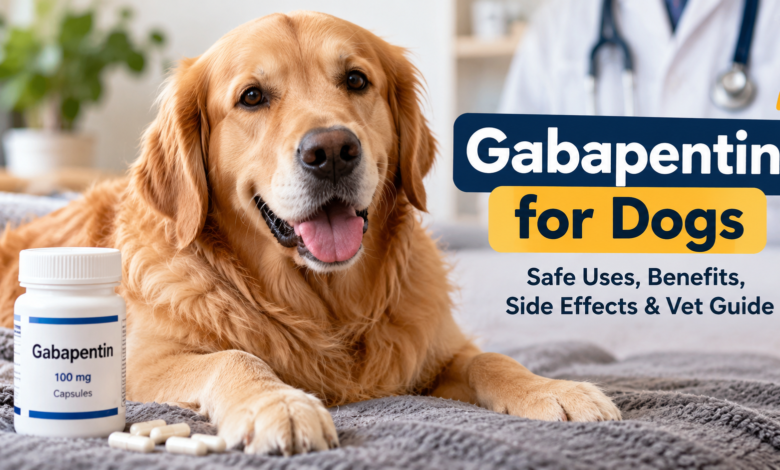
Gabapentin for Dogs: Safe Uses, Benefits, Side Effects & Vet Guide
Gabapentin for Dogs: Safe Uses, Benefits & Side Effects

When a dog is dealing with chronic pain, nerve-related discomfort, anxiety, or certain seizure disorders, veterinarians may consider gabapentin for dogs as part of a broader treatment plan. Although gabapentin was originally developed for human medicine, it is also commonly used in veterinary practice for dogs.
But is gabapentin safe for dogs? How does it work, when is it prescribed, and what side effects should owners watch for?
This guide explains how gabapentin for dogs is used, what pet parents should know about dosing, sedation, kidney disease, liquid formulations, missed doses, and when to seek veterinary attention.
What Is Gabapentin for Dogs Used For?
Gabapentin is a medication with analgesic, anticonvulsant, and calming properties. In veterinary medicine, it is most often considered for neuropathic pain, chronic pain, seizure management as an add-on treatment, and short-term anxiety or fear associated with stressful situations.
Unlike many traditional pain medications, gabapentin is particularly useful when abnormal nerve signalling contributes to discomfort. It works partly by affecting voltage-gated calcium channels involved in releasing excitatory neurotransmitters.
Veterinarians may therefore prescribe gabapentin for dogs experiencing conditions such as nerve pain, certain chronic pain problems, postoperative discomfort, or pain associated with neurological disease.
It can also be used as an adjunctive medication for some dogs with seizures. However, gabapentin is not automatically the first or only medication chosen for epilepsy. Its effectiveness can vary by dog, so veterinary supervision is important.
For anxiety, gabapentin may be used before stressful events such as veterinary visits, travel, grooming, fireworks, or other predictable triggers. The timing and dose depend on the dog’s individual needs.
How Does Gabapentin for Dogs Work?
Gabapentin belongs to a group of medicines called gabapentinoids. Despite its name and chemical relationship to GABA, it does not work simply by activating ordinary GABA receptors.
Instead, gabapentin interacts with calcium-channel proteins in the nervous system. This can reduce the release of certain excitatory neurotransmitters and change how the nervous system processes pain signals and abnormal neuronal activity.
That mechanism helps explain why the medication can have several veterinary applications.
For pain, it is especially relevant to neuropathic or nerve-associated discomfort. For neurological conditions, it may reduce abnormal neuronal activity. For stressful events, its effects on the nervous system can also produce a calming and sedating effect.
Gabapentin is absorbed relatively well after oral administration in dogs, and its effects are generally relatively short-acting. However, dogs with kidney or liver problems may handle the medication differently, so their treatment may require additional caution.
Gabapentin for Dogs: Dosage and How Vets Decide It
There is no single gabapentin dose that is appropriate for every dog.
Veterinarians consider the dog’s body weight, medical condition, age, kidney function, other medications, treatment goal, and response to therapy. Published veterinary references contain different dosing ranges depending on whether gabapentin is being used for pain, anxiety, or seizure management.
For example, veterinary references describe doses that can vary considerably according to the condition being treated. That is why copying a dose from another dog, an internet forum, or a human prescription can be unsafe.
Your veterinarian may start with a lower dose and adjust it according to the dog’s response and side effects. This is particularly important because sedation and loss of coordination can become more noticeable as the dose increases.
Never increase the amount simply because your dog still appears uncomfortable. Pain can have many causes, and worsening symptoms may mean the underlying condition needs reassessment.
If a dose is accidentally missed, do not automatically double the next dose. Follow your veterinarian’s specific instructions or contact the clinic for advice.
Common Side Effects of Gabapentin for Dogs
The most frequently noticed effects are sleepiness and incoordination. A dog taking gabapentin may seem unusually tired, walk unsteadily, or be less active than normal.
These effects may be more obvious when treatment begins or when the dose changes.
Other possible effects, particularly at higher doses, include decreased appetite, vomiting, and diarrhoea.
Mild sleepiness is not necessarily an emergency, but severe sedation should not be ignored. If your dog is extremely difficult to wake, cannot stand normally, collapses, vomits repeatedly, develops breathing abnormalities, or behaves dramatically differently after receiving medication, contact a veterinarian promptly.
A useful practical tip is to give the first prescribed dose when you can safely observe your dog, unless your veterinarian has instructed otherwise. This can help you understand how your individual pet responds.
Is Gabapentin for Dogs Safe?
When prescribed appropriately and monitored by a veterinarian, gabapentin is commonly used in dogs. However, “commonly used” does not mean that every formulation or dose is automatically safe.
One important concern involves certain liquid gabapentin products. Some oral solutions contain xylitol, an ingredient that can be highly toxic to dogs and can cause severe complications, including potentially life-threatening liver injury.
Always check the exact formulation before giving your dog liquid medication. Do not assume that a human liquid prescription is appropriate simply because the active ingredient is gabapentin.
Extra caution may also be needed in dogs with kidney disease because gabapentin is eliminated through the kidneys. Your veterinarian may adjust the treatment plan when kidney function declines.
Pregnant or nursing dogs also require individualized veterinary advice.
Another important safety point is when to stop treatment. Dogs receiving gabapentin for seizure control should not have the medication suddenly discontinued unless a veterinarian specifically instructs you to do so, because abrupt withdrawal can contribute to seizure problems.
Gabapentin for Dogs With Pain, Anxiety, or Seizures
The reason a veterinarian chooses gabapentin for dogs matters because the expected benefit can vary by condition.
For neuropathic pain, gabapentin can be particularly useful because it modifies nerve-related pain signalling. It may also be incorporated into a multimodal pain plan, where different treatments target different aspects of pain.
For anxiety, it may be used as a short-term medication around predictable stressful events. Some veterinary references describe administration before travel or other stressful situations. However, medication works best when combined with appropriate behaviour management rather than being treated as a complete solution for an ongoing behavioural disorder.
For seizures, gabapentin may be used as an additional anticonvulsant in selected cases. Evidence of effectiveness varies, so the veterinarian may choose other anticonvulsants depending on the dog’s seizure pattern and overall health.
This distinction is important: gabapentin is not a universal treatment for every type of pain, anxiety, or seizure disorder.
What Dog Owners Should Know Before Giving It
Before giving gabapentin to your dog, make sure your veterinarian knows about every medication, supplement, and health condition your dog has.
Keep the medication stored securely and give only the prescribed amount. Do not share your dog’s medication with another pet, even if the animals have similar symptoms.
Watch for changes in:
- Alertness and energy
- Walking and coordination
- Appetite
- Vomiting or diarrhoea
- Seizure frequency
- Pain or mobility
- Anxiety or stress-related behaviour
If your dog becomes excessively sedated or develops concerning symptoms, contact your veterinary clinic.
It is also important to remember that gabapentin may reduce symptoms without treating the underlying disease. A dog with persistent pain still needs an appropriate diagnosis and overall treatment plan.
For chronic pain, veterinarians may combine medication with weight management, physical rehabilitation, environmental adjustments, and other evidence-based treatments when appropriate.
Conclusion: Is Gabapentin for Dogs Right for Your Pet?
Gabapentin for dogs can be a useful veterinary medication for selected cases of neuropathic or chronic pain, certain seizure disorders, and situational anxiety. Its benefits come with important considerations, including sedation, incoordination, formulation safety, kidney function, and the need for individualized dosing.
The biggest mistake is treating gabapentin as a one-size-fits-all medicine. The appropriate dose and schedule depend on why your dog needs it and how your dog responds.
If your veterinarian has prescribed it, follow the instructions carefully and monitor your pet for changes. If you are considering gabapentin because your dog appears painful, anxious, or is having seizures, getting a proper veterinary assessment is the safest first step.
More Pet Guides: For more pet-related guides, tips, and helpful information, visit PetOrbit.blog. Thank you for reading this article!
(FAQs)
Can I give gabapentin for dogs without a prescription?
You should not give your dog gabapentin without veterinary guidance. The appropriate dose and treatment schedule depend on the dog’s condition, weight, health status, and other medications. Human formulations can also contain ingredients that are unsafe for dogs.
How long does gabapentin for dogs take to work?
Gabapentin is absorbed relatively quickly after oral administration, but the noticeable effect depends on why it was prescribed. Sedation may appear relatively soon, while pain management may require ongoing treatment and adjustment. Your veterinarian can explain the expected timeline for your dog’s specific condition.
Does gabapentin for dogs make them sleepy?
Yes. Sleepiness is one of the most common side effects. Some dogs may also become uncoordinated or unsteady. These effects can be more noticeable when treatment starts or the dose is increased.
Can gabapentin for dogs help with anxiety?
Veterinarians can use it for situational anxiety and fear, including predictable stressful events. It may be particularly useful as part of a broader behavioural treatment plan. The correct timing and dose should come from your veterinarian.
Can gabapentin for dogs be used for seizures?
Gabapentin may be used as an adjunctive anticonvulsant in some dogs, but its effectiveness varies. It should not automatically replace a primary seizure medication, and a veterinarian should make treatment decisions.
Can I stop gabapentin for dogs suddenly?
If your dog receives gabapentin for seizure control, do not stop it abruptly unless your veterinarian tells you to. Sudden withdrawal can contribute to seizure problems. Ask your veterinarian about an appropriate tapering plan when discontinuation is necessary.
Is liquid gabapentin for dogs safe?
Some liquid gabapentin formulations contain xylitol, which is toxic to dogs. Always verify the ingredients of the exact product prescribed for your pet before giving it.
What should I do if my dog gets too much gabapentin?
Contact your veterinarian or an emergency veterinary service immediately, especially if your dog becomes extremely sleepy, unsteady, vomits repeatedly, collapses, or develops other concerning symptoms. Do not give another dose until you receive professional instructions.

I’m a Pet Niche Expert and Pet Blogger with 12 years of experience in researching and sharing practical, reliable information about pets. Through PetOrbit.blog, I help pet parents and animal lovers better understand their pets and make informed decisions about their care and well-being.
My expertise covers a wide range of pet topics, including pet health, pet food and nutrition, dog and cat breeds, grooming, behavior, training, safety, pet care, travel with pets, and overall pet wellness. I also explore information about different types of pets, their unique needs, characteristics, lifestyles, and responsible ownership.
With more than 12 years of experience in the pet niche, my focus is on creating clear, useful, and easy-to-understand content based on practical knowledge, careful research, and real-world pet care considerations. I believe pet information should be informative without being unnecessarily complicated, so my goal is to make every article helpful for both new and experienced pet owners.
At PetOrbit, my mission is to provide valuable pet guides, breed information, health and nutrition insights, food and care tips, travel advice, and trustworthy resources that help pets live healthier, happier, and more comfortable lives.
PetOrbit.blog — Practical Pet Knowledge for Better Pet Care.