Dog Spewing Yellow: Important Causes, What It Means & When to See a Vet
Dog Spewing Yellow: Causes, Warning Signs & Vet Care

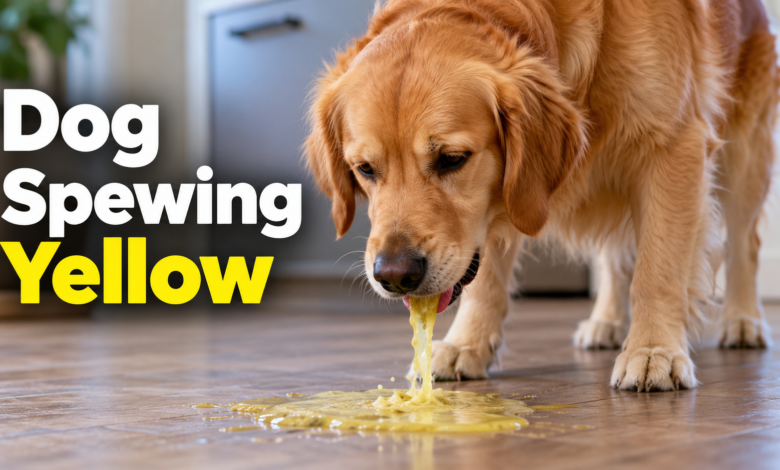
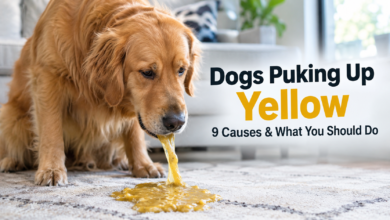
Seeing your dog spewing yellow liquid or foam can be alarming, especially when you are not sure whether it is harmless bile or a sign of illness. Yellow vomit often contains bile, a digestive fluid that can enter the stomach when it is empty. However, yellow vomiting can also occur with stomach irritation, dietary problems, parasites, pancreatitis, intestinal obstruction, or other medical conditions.
The important thing is to look at the whole picture. One isolated episode in an otherwise bright, healthy dog may be less concerning than repeated vomiting with pain, diarrhoea, weakness, or loss of appetite. This guide explains why your dog may be spewing yellow, what you can safely do, and which symptoms mean you shouldn’t delay veterinary care.
What Does Dog Spewing Yellow Usually Mean?
Yellow vomit is commonly associated with bile. The liver produces bile and stores it in the gallbladder before it enters the small intestine to help with digestion. When a dog’s stomach has been empty for several hours, bile can sometimes move backwards into the stomach and irritate its lining. The result may be yellow liquid or yellowish foam.
This pattern is particularly common in dogs that vomit early in the morning after going overnight without food. A condition called bilious vomiting syndrome can cause intermittent early-morning vomiting in otherwise healthy dogs. These dogs often have normal energy, appetite, and bowel movements between episodes.
Still, yellow vomit does not automatically mean bilious vomiting syndrome. The same appearance can occur with gastroenteritis, dietary indiscretion, infections, parasites, pancreatitis, foreign-body obstruction, liver disease, and other gastrointestinal problems. Therefore, colour alone cannot establish the cause.
Common Reasons for Dog Spewing Yellow
One common explanation is an empty stomach. If a dog goes many hours without eating, bile may irritate the stomach and trigger vomiting. This is especially suggestive when the episode happens occasionally in the early morning, and the dog quickly returns to normal afterwards.
Another possibility is dietary indiscretion. Dogs sometimes eat garbage, table scraps, spoiled food, plants, unfamiliar treats, or other inappropriate items. Such dietary changes can irritate the gastrointestinal tract and lead to vomiting, diarrhoea, or abdominal discomfort.
Gastroenteritis is another cause. Inflammation of the stomach and intestines can result from infections, parasites, new foods, medications, toxins, or other irritants. Yellowish bile may become more visible after the stomach has emptied.
More serious causes are also possible. Pancreatitis and intestinal obstruction can cause yellow vomiting, especially when it becomes repeated or is accompanied by poor appetite, abdominal pain, lethargy, or other behavioural changes. Foreign objects can be especially dangerous because an obstruction may require urgent treatment.
Less common possibilities include inflammatory bowel disease, intestinal parasites, infections, allergies or food intolerance, and certain liver or endocrine disorders. Your veterinarian may need testing to distinguish these conditions.
Is Dog Spewing Yellow Ever an Emergency?
A single episode of yellow vomit is not automatically an emergency. However, repeated vomiting deserves more attention, particularly when your dog cannot keep water down or appears unwell. Veterinary sources recommend prompt evaluation when vomiting occurs alongside symptoms such as lethargy, abdominal pain, diarrhoea, dehydration, loss of appetite, or blood in the vomit.
Seek urgent veterinary help if your dog shows signs such as:
- Repeated or persistent vomiting
- Repeated retching without producing anything
- A swollen or painful abdomen
- Severe weakness, collapse, or difficulty standing
- Blood in vomit or stool
- Trouble breathing
- Suspected poisoning or toxin exposure
- Possible ingestion of a foreign object
- Inability to keep water down
- Significant dehydration
An especially important warning sign is repeated unproductive retching combined with abdominal enlargement. Serious gastrointestinal conditions can deteriorate quickly, so it is safer to contact a veterinarian or emergency clinic rather than waiting for the problem to resolve on its own.
Puppies, elderly dogs, and dogs with existing medical problems may also need a lower threshold for veterinary assessment because vomiting and dehydration can become significant more quickly.
What to Do When Your Dog Spewing Yellow Seems Otherwise Well
If your dog has vomited once, is alert, comfortable, breathing normally, and has no other concerning symptoms, monitor closely. Don’t assume medication is necessary right away.
Offer access to fresh water, but if drinking triggers more vomiting, contact your veterinarian for advice. If vomiting has stopped and your dog remains well, a veterinarian may recommend gradually reintroducing small portions of easily digested food.
If the episodes consistently occur early in the morning, discuss the pattern with your veterinarian. For dogs with suspected bilious vomiting syndrome, a small late-evening meal may sometimes reduce the length of the overnight fasting period. This approach is most appropriate when the dog is otherwise healthy, and the pattern matches bilious vomiting syndrome.
Avoid giving human anti-vomiting medicines, antacids, painkillers, or other medications unless your veterinarian specifically recommends them. Different causes of vomiting require different treatments, and medication can sometimes mask important symptoms.
Keep a simple record of the episodes. Note when vomiting happens, what the vomit looks like, whether food is present, what your dog ate the day before, and whether diarrhoea, appetite changes, pain, or lethargy occurred. This information can make the veterinary consultation more useful.
How Vets Diagnose the Cause of Dog Spewing Yellow
A veterinarian will usually begin by asking about your dog’s diet, recent food changes, medications, access to garbage or toxins, vaccination and parasite-control history, and the timing and frequency of vomiting.
The physical examination is equally important. Your veterinarian may assess hydration, abdominal discomfort, temperature, gum colour, and overall behaviour. If the vomiting is mild and isolated, extensive testing may not always be necessary. However, repeated vomiting or additional symptoms can justify further investigation.
Depending on the situation, diagnostic testing may include blood and urine tests, abdominal X-rays, or ultrasound. Imaging can help identify foreign objects, intestinal obstruction, pancreatitis-related changes, and other abnormalities.
If your dog’s gums or the whites of the eyes appear yellow rather than simply having yellow vomit, tell your veterinarian promptly. Yellow tissues can indicate jaundice, which differs from vomiting bile and may involve liver disease, red blood cell destruction, or bile-duct obstruction.
Treatment depends entirely on the underlying cause. Mild gastrointestinal upset may improve with dietary management and supportive care, while dehydration may require fluids. Pancreatitis, obstruction, poisoning, or significant liver and gallbladder disease can require much more intensive veterinary treatment.
How to Help Prevent Future Yellow Vomiting
Prevention starts with identifying why the vomiting is happening. Keep your dog’s diet consistent and introduce new foods gradually. Limit access to garbage, spoiled food, toxic substances, and objects your dog could swallow.
Regular parasite prevention and routine veterinary examinations can also help identify health problems before they become more serious. Dogs with recurring vomiting should not simply be managed indefinitely at home without determining the underlying reason.
For dogs with a veterinarian-confirmed pattern of bilious vomiting syndrome, adjusting meal timing may help. A veterinarian might recommend smaller, more frequent meals or a small meal later in the evening. Dietary changes should be individualised because another dog with similar-looking vomiting could have a completely different condition.
Most importantly, watch for changes over time. Occasional yellow bile in a healthy dog differs from increasingly frequent vomiting, weight loss, diarrhoea, reduced appetite, or behavioural changes. A change in pattern is often more informative than the vomit’s colour.
Conclusion: When Dog Spewing Yellow Needs Attention
When you notice your dog spewing yellow, the colour usually indicates bile, particularly when the stomach is empty. An occasional early-morning episode in an otherwise healthy dog can be associated with bilious vomiting syndrome and may not represent an emergency.
However, yellow vomit can also accompany gastroenteritis, dietary indiscretion, parasites, pancreatitis, intestinal obstruction, and other illnesses. Repeated vomiting, abdominal pain, lethargy, diarrhoea, dehydration, blood, collapse, or suspected toxin or foreign-object ingestion should prompt veterinary attention.
If your dog spewing yellow becomes a recurring problem, do not focus only on treating the vomiting. The goal is to identify the underlying cause. When in doubt, contacting your veterinarian is the safest way to determine whether your dog needs monitoring, an appointment, or urgent care.
More Pet Guides: For more pet-related guides, tips, and helpful information, visit PetOrbit.blog. Thank you for reading this article!
(FAQs)
Is dog spewing yellow always a sign of illness?
No. Yellow vomit commonly contains bile, and occasional vomiting can occur when a dog’s stomach is empty. However, repeated yellow vomiting or vomiting accompanied by diarrhoea, pain, lethargy, appetite loss, or dehydration can indicate an underlying problem and should be discussed with a veterinarian.
Why does my dog spew yellow happen early in the morning?
Early-morning yellow vomiting can occur after a long overnight fasting period. In otherwise healthy dogs with normal appetite and energy, this pattern may be consistent with bilious vomiting syndrome. A veterinarian should still assess recurring episodes, especially if the pattern changes or other symptoms develop.
Should I give my dog food after dog spewing yellow?
If vomiting has stopped and your dog is otherwise acting normally, your veterinarian may recommend restarting food gradually with small portions of an easily digested diet. If your dog continues vomiting, refuses food, or cannot keep water down, seek veterinary advice instead of repeatedly offering food at home.
Can pancreatitis cause a dog to spew yellow?
Yes. Pancreatitis can cause vomiting, including yellow or bile-containing vomit. It commonly occurs with other signs such as abdominal pain, reduced appetite, lethargy, or diarrhoea. Because pancreatitis can require veterinary treatment, evaluate recurring vomiting rather than assuming it’s simple bile vomiting.
When is dog spewing yellow an emergency?
Emergency assessment is appropriate when vomiting is severe or persistent, your dog repeatedly retches without producing anything, the abdomen becomes swollen or painful, your dog collapses or becomes extremely weak, blood is present, breathing becomes difficult, or poisoning or a swallowed foreign object is suspected.
Can parasites cause dog spewing yellow?
Yes. Intestinal parasites are among the possible causes of vomiting in dogs. Parasites can also cause gastrointestinal signs such as diarrhoea and appetite changes. If vomiting keeps returning, your veterinarian may recommend faecal testing or other diagnostic tests to identify the cause.
What if my dog’s vomit is yellow and the gums are yellow too?
That is different from simply vomiting yellow bile. Yellow gums or yellowing of the whites of the eyes can indicate jaundice, which may be associated with liver disease, destruction of red blood cells, or bile-flow obstruction. This requires veterinary evaluation.
Can a late-night meal help stop dog spewing yellow?
For some otherwise healthy dogs with a veterinarian-confirmed pattern of bilious vomiting syndrome, a small late-night meal can reduce the overnight fasting period and may decrease early-morning vomiting. Do not use it as a substitute for veterinary evaluation if vomiting is frequent or accompanied by other symptoms.

I’m a Pet Niche Expert and Pet Blogger with 12 years of experience in researching and sharing practical, reliable information about pets. Through PetOrbit.blog, I help pet parents and animal lovers better understand their pets and make informed decisions about their care and well-being.
My expertise covers a wide range of pet topics, including pet health, pet food and nutrition, dog and cat breeds, grooming, behavior, training, safety, pet care, travel with pets, and overall pet wellness. I also explore information about different types of pets, their unique needs, characteristics, lifestyles, and responsible ownership.
With more than 12 years of experience in the pet niche, my focus is on creating clear, useful, and easy-to-understand content based on practical knowledge, careful research, and real-world pet care considerations. I believe pet information should be informative without being unnecessarily complicated, so my goal is to make every article helpful for both new and experienced pet owners.
At PetOrbit, my mission is to provide valuable pet guides, breed information, health and nutrition insights, food and care tips, travel advice, and trustworthy resources that help pets live healthier, happier, and more comfortable lives.
PetOrbit.blog — Practical Pet Knowledge for Better Pet Care.