Rabies Vaccine for Dogs: Essential Schedule, Side Effects & Safe Care Guide

Rabies is one of the most serious infectious diseases a dog can encounter. It affects the nervous system and is almost always fatal once clinical signs develop. The good news is that vaccination provides highly effective protection and also helps protect people who live around dogs.
Veterinary organisations consider the rabies vaccine a core vaccine for dogs. However, the exact vaccination schedule can depend on the dog’s age, the vaccine product, and local regulations. This guide explains when dogs typically receive rabies vaccination, how long protection lasts, possible side effects, and what owners should do after a possible rabies exposure.
Why the Rabies Vaccine for Dogs Is So Important
Rabies is caused by a virus that can infect mammals, including dogs and humans. It is commonly transmitted when saliva from an infected animal enters the body, most often through a bite. Once symptoms appear, rabies is nearly always fatal, making prevention extremely important.
The rabies vaccine for dogs stimulates the immune system so the dog can develop protection before exposure. Vaccination also has an important public-health role because vaccinated pets create an additional barrier between rabies in wildlife and human households.
Veterinary guidelines generally classify rabies as a core canine vaccine. This means it is recommended for dogs regardless of whether they spend most of their time indoors or outdoors, although specific legal requirements vary by location.
Even an indoor dog should not automatically be considered risk-free. Bats, wildlife, escaped animals, or an unexpected encounter outside the home can create exposure.
When Should a Dog Get the Rabies Vaccine?
For many dogs, the first rabies vaccine is given at approximately 12 weeks of age or later. CDC veterinary guidance notes that most dogs should not be vaccinated before 3 months because the immune response may be less reliable in very young animals. Vaccine labels and local regulations can affect the exact timing.
A typical vaccination pattern is:
- First rabies vaccination: Around 12 weeks of age or later, depending on local law and the vaccine label.
- First booster: Commonly given one year after the initial vaccination.
- Later boosters: Often every one or three years, depending on the licensed product and local requirements.
The one-year booster is particularly important because it helps protect dogs that did not develop adequate immunity after their initial vaccination. AAHA guidance recommends a booster one year after the initial rabies vaccination, regardless of the formulation or age at initial vaccination.
Owners should not assume that every dog follows the same calendar. Your veterinarian should consider the vaccine used and the regulations where you live.
What Happens During a Rabies Vaccination Appointment?
Before giving a dog the rabies vaccine, a veterinarian normally considers the dog’s age, health, vaccination history, lifestyle, and potential exposure risk. Keeping accurate vaccination records matters because rabies vaccination may also be required for travel, licensing, boarding, or animal-control situations.
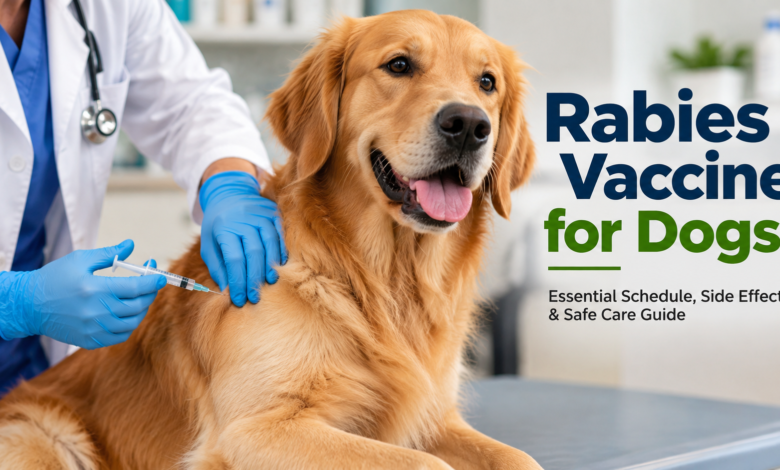
The vaccine itself is administered by injection according to the product’s instructions. Rabies vaccines for dogs are licensed veterinary products and should be administered by a veterinarian or under appropriate veterinary supervision.
If your dog has an unknown vaccination history, do not try to recreate a schedule yourself. A veterinarian can determine the appropriate vaccination steps.
It is also useful to tell the veterinarian if your dog has previously experienced a vaccine reaction. This information can help the veterinary team plan future vaccinations appropriately.
Rabies Vaccine for Dogs: Common Side Effects
Most dogs tolerate the rabies vaccine for dogs well. Like any medication or biological product, however, vaccination can cause adverse reactions.
Mild effects may include temporary soreness or swelling at the injection site, reduced energy, mild discomfort, or a low-grade fever. These reactions generally resolve without treatment. AAHA notes that serious vaccine reactions are uncommon and that the benefits of vaccination generally outweigh the risks associated with preventable disease.
Some dogs can develop an allergic reaction. Warning signs may include facial swelling, hives, vomiting, diarrhoea, weakness, or collapse. Severe allergic reactions are uncommon but can become emergencies.
After vaccination, monitor your dog and contact a veterinarian promptly if symptoms are severe, worsen rapidly, or seem unusual for your pet.
Do not give your dog medication for a suspected vaccine reaction unless a veterinarian tells you to.
How Long Does Rabies Protection Last?
The duration of protection from the rabies vaccine for dogs depends on the specific licensed vaccine and applicable regulations. Rabies vaccines are available in formulations labelled for one-year or three-year durations of immunity.
That does not mean owners should choose a three-year interval on their own. The legally recognised vaccination period may depend on the vaccine product, the dog’s vaccination history, and local law.
If your dog’s vaccination is overdue, contact your veterinarian rather than assuming the dog has completely lost protection. Veterinary guidelines recommend considering the benefits of vaccination in dogs with overdue or unknown vaccination histories.
Keep the vaccination certificate or veterinary record somewhere safe. It can become important if your dog bites someone, is exposed to wildlife, travels, boards at a facility, or needs veterinary care elsewhere.
What If a Suspected Rabid Animal Bites Your Dog?
Treat a possible rabies exposure seriously, even if your dog appears completely healthy. Rabies can have an incubation period during which obvious symptoms are absent.
If a dog is bitten or otherwise potentially exposed, contact a veterinarian and the relevant public-health or animal-control authority immediately. Do not attempt to handle a suspected rabid wild animal yourself.
For dogs that are currently vaccinated, CDC guidance recommends an immediate booster after a qualifying exposure, followed by owner supervision and monitoring for signs of rabies for 45 days under its U.S. protocol. Local rules can differ.
The situation is much more complicated for dogs that have never been vaccinated. In the United States, CDC guidance states that unvaccinated dogs exposed to rabies may require euthanasia or strict quarantine under specified circumstances. Other jurisdictions can have different legal procedures.
The key point is simple: do not wait for symptoms before seeking professional advice after a possible exposure.
How Owners Can Keep Rabies Protection on Track
Maintaining the rabies vaccine schedule for dogs is easier when owners treat vaccination as part of routine preventive care rather than an occasional task.
Keep a record of:
- The date of every rabies vaccination
- The vaccine’s expiration or duration-of-immunity information
- The veterinarian or clinic that administered it
- The next recommended booster date
- Any previous vaccine reactions
- Any suspected contact with wildlife or unknown animals
It is also wise to reduce opportunities for exposure. Prevent dogs from roaming freely, supervise outdoor activities, secure garbage that may attract wildlife, and contact local authorities if an animal behaves unusually.
Remember that rabies prevention protects more than the dog. Because rabies is zoonotic, responsible vaccination can also reduce risks to family members, veterinary professionals, and other animals.
Conclusion: Keeping Your Dog Protected
The rabies vaccine for dogs is an important part of preventive veterinary care because rabies is devastating once symptoms develop but is preventable through vaccination. Most dogs receive their first dose around 12 weeks of age or later, followed by a booster about a year later. Subsequent vaccination depends on the product and local regulations.
Mild soreness, tiredness, or a low-grade fever can occur after vaccination, while serious allergic reactions are uncommon. However, unusual or severe symptoms should receive prompt veterinary attention.
Most importantly, never ignore a possible rabies exposure. If your dog is bitten by wildlife or another potentially infected animal, contact a veterinarian and the appropriate local authority immediately. Staying current with the rabies vaccine for dogs and keeping accurate records are two of the simplest steps owners can take to protect their pets and households.
More Pet Guides: For more pet-related guides, tips, and helpful information, visit PetOrbit.blog. Thank you for reading this article!
FAQs
How often does a dog need the rabies vaccine?
The schedule depends on the vaccine product and local regulations. Many dogs receive a booster one year after the first vaccination, followed by boosters at intervals determined by the licensed vaccine and applicable law. Your veterinarian can confirm the legally recognised schedule for your dog.
Can a puppy get a rabies vaccine before 12 weeks?
Most dogs are not vaccinated against rabies before approximately 12 weeks of age because the immune response may be less reliable in very young animals. The exact minimum age depends on the vaccine label and local requirements.
What are normal side effects after the rabies vaccine for dogs?
Temporary soreness at the injection site, mild tiredness, or a low-grade fever can occur. These effects are generally mild. Facial swelling, hives, repeated vomiting, weakness, collapse, or other severe symptoms require prompt veterinary attention.
Is the rabies vaccine for dogs safe?
Rabies vaccination is generally well tolerated, and serious adverse reactions are uncommon. Veterinary organisations consider rabies a core vaccine because of the disease’s severity and public-health importance.
What should I do if a wild animal bites my vaccinated dog?
Contact a veterinarian and the appropriate local public-health or animal-control authority immediately. A currently vaccinated dog that has a qualifying exposure may need an immediate booster and a period of monitoring. Do not wait for symptoms to appear.
Does an indoor dog still need a rabies vaccine?
Yes, vaccination can still be important for indoor dogs. Unexpected contact with bats, wildlife, escaped animals, or other potentially infected animals can occur. In many places, rabies vaccination is also required by law regardless of lifestyle.
Can a dog receive a rabies booster if the previous vaccine is overdue?
An overdue vaccination does not automatically mean you should restart the entire vaccination history. The appropriate approach depends on the dog’s records, the vaccine used, and local requirements. A veterinarian can determine whether a booster is appropriate.

I’m a Pet Niche Expert and Pet Blogger with 12 years of experience in researching and sharing practical, reliable information about pets. Through PetOrbit.blog, I help pet parents and animal lovers better understand their pets and make informed decisions about their care and well-being.
My expertise covers a wide range of pet topics, including pet health, pet food and nutrition, dog and cat breeds, grooming, behavior, training, safety, pet care, travel with pets, and overall pet wellness. I also explore information about different types of pets, their unique needs, characteristics, lifestyles, and responsible ownership.
With more than 12 years of experience in the pet niche, my focus is on creating clear, useful, and easy-to-understand content based on practical knowledge, careful research, and real-world pet care considerations. I believe pet information should be informative without being unnecessarily complicated, so my goal is to make every article helpful for both new and experienced pet owners.
At PetOrbit, my mission is to provide valuable pet guides, breed information, health and nutrition insights, food and care tips, travel advice, and trustworthy resources that help pets live healthier, happier, and more comfortable lives.
PetOrbit.blog — Practical Pet Knowledge for Better Pet Care.