Can Kittens Drink Goat Milk? The Honest Truth Every Cat Owner Should Know
Can Kittens Drink Goat Milk

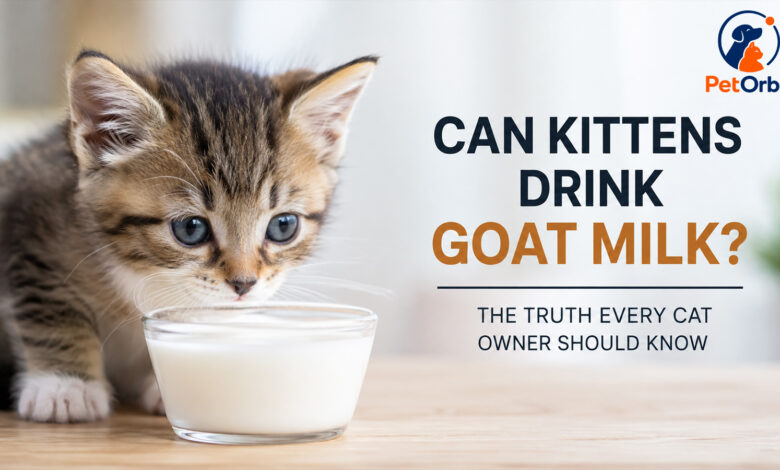
If you are caring for a tiny kitten, you may wonder, can kittens drink goat milk when their mother is unavailable? Goat milk is sometimes promoted as a gentle, natural alternative to cow’s milk, but that does not make it nutritionally appropriate for growing kittens.
For newborn kittens, nutrition is especially important because they grow rapidly and have very specific requirements for protein, fat, calories, amino acids, and other nutrients. In most cases, a kitten should receive its mother’s milk. If that is not possible, a properly formulated kitten milk replacer is the safer choice.
So, can kittens drink goat milk safely? The short answer is: goat milk should not be used as a regular replacement for a mother cat’s milk or commercial kitten formula. There is an important distinction between a tiny amount given during an emergency and using goat milk as a kitten’s main diet.
Can Kittens Drink Goat Milk as Their Main Food?
The answer is generally no. Can kittens drink goat milk as their primary source of nutrition? They should not, because goat milk does not provide the complete nutritional balance required by a rapidly developing kitten.
Veterinary guidance specifically warns against relying on goat milk because it is too low in important nutrients, including protein and fat, compared with what nursing kittens need. Commercial kitten milk replacers are formulated to provide a much more appropriate nutritional profile.
This matters most during the first few weeks of life. Newborn kittens cannot simply substitute one type of mammalian milk for another. Cat milk is specially suited to feline development, while milk from goats, cows, or other species has a different nutritional composition.
Goat milk may therefore look like a natural option, but “natural” does not automatically mean “complete” or “appropriate” for kittens.
Why Goat Milk Is Not Ideal for Kittens
To understand why can kittens drink goat milk is not a straightforward yes-or-no question, consider what a newborn kitten actually needs.
A young kitten is building bones, muscles, organs, and its immune system at an extremely rapid rate. Its milk must supply concentrated energy and the right balance of nutrients. Mother cat’s milk is highly digestible and calorie-dense, while unsuitable milk substitutes can fail to meet those requirements.
Goat milk also does not provide the same nutritional profile as feline milk. Even if a kitten appears to tolerate it, tolerance does not mean the diet is sufficient for healthy development.
Another concern is digestive upset. Young kittens have immature digestive systems, so an inappropriate milk can contribute to diarrhea, bloating, regurgitation, or poor feeding. Diarrhea is particularly concerning in very young kittens because fluid loss can quickly become serious.
That is why the better question is not simply whether a kitten can physically swallow goat milk. The more important question is whether goat milk can safely meet the kitten’s nutritional needs. As a regular food, it cannot.
When Can Kittens Drink Goat Milk in an Emergency?
There is one important nuance. Can kittens drink goat milk temporarily if you have found an orphaned kitten and cannot immediately obtain kitten formula?
Veterinary guidance from VCA notes that pasteurized goat milk may be used in an emergency, but kitten milk replacer should be obtained as soon as possible. This is very different from recommending goat milk as a normal feeding method.
If you have a newborn or very young orphaned kitten, contact a veterinarian or emergency veterinary service as quickly as possible. A kitten’s age, weight, hydration status, temperature, and health can change what feeding approach is appropriate.
Do not assume that a kitten that eagerly drinks goat milk is doing well. Hunger can make a weak kitten consume whatever is offered, while inadequate nutrition may become apparent later.
If goat milk is being considered because commercial formula is temporarily unavailable, treat it as an emergency situation rather than a long-term feeding plan.
What Should You Feed an Orphaned Kitten Instead?
For an orphaned kitten, a commercial kitten milk replacer is generally the preferred option. These products are specifically designed to provide the nutrients needed by growing kittens and are recommended over unsuitable milk or homemade mixtures.
The kitten’s age makes a major difference. Very young kittens may need frequent bottle feedings, while older kittens gradually transition toward solid kitten food.
Newborn orphaned kittens commonly need feeding every two to four hours during their first week. After that, feeding intervals can gradually become longer, depending on age and veterinary guidance. Formula should be prepared according to the manufacturer’s instructions rather than guessed.
Safe bottle-feeding technique is also important. The kitten should be positioned on its stomach in a natural nursing position, not placed on its back like a human baby. Milk flowing too quickly can enter the airways and cause aspiration pneumonia, which can be life-threatening.
For very young kittens, feeding is only part of the job. Orphaned kittens may also need help eliminating urine and stool until they are old enough to do this themselves.
Can Kittens Drink Goat Milk After Weaning?
Once a kitten is fully weaned, the situation changes. At that stage, it no longer needs milk as its primary source of nutrition.
So, can kittens drink goat milk after they begin eating solid food? There is still little nutritional reason to offer it. Fresh water should be the kitten’s normal drink, while a complete kitten diet should supply the calories and nutrients required for growth.
Kittens generally begin transitioning toward solid food at around three to four weeks, with the process continuing over the following weeks. By roughly eight to ten weeks, healthy kittens should be accustomed to eating appropriate kitten food and drinking water.
Giving milk as a treat can also create unnecessary digestive problems. Some cats tolerate small amounts of dairy better than others, but tolerance is not a reason to make milk part of a kitten’s diet.
For a growing kitten, the priority should be complete and balanced kitten food, adequate hydration, appropriate veterinary care, and healthy weight gain.
Common Mistakes When Feeding Young Kittens
Many kitten-feeding problems begin with good intentions. People may believe that any milk is better than nothing, that homemade recipes are safer because they are natural, or that a kitten will automatically stop eating when it has had enough.
These assumptions can be dangerous.
Avoid these common mistakes:
- Using goat, cow, or plant milk as a regular replacement for kitten formula.
- Feeding a cold or improperly prepared formula.
- Overfeeding a newborn kitten.
- Squeezing a bottle to force milk into the kitten’s mouth.
- Feeding a kitten on its back.
- Ignoring diarrhea, vomiting, weakness, or poor weight gain.
- Waiting too long to seek veterinary help when a newborn kitten will not eat.
Bottle-fed kittens should also be monitored closely. Tracking body weight can help identify problems early. A kitten that is losing weight, refusing feeds, becoming unusually weak, or developing persistent diarrhea needs prompt veterinary attention.
A healthy feeding routine is nott choo just abousing the right milk. It also involves correct preparation, feeding technique, hygiene, temperature, frequency, and monitoring.
The Bottom Line: Can Kittens Drink Goat Milk?
So, can kittens drink goat milk? It is not recommended as a regular food or substitute for a mother cat’s milk. Goat milk does not provide the complete nutritional balance a growing kitten requires, and relying on it can put an orphaned kitten at risk of inadequate nutrition.
If the mother cat is healthy and producing enough milk, her milk is the best option for newborn kittens. If a kitten is orphaned or unable to nurse, commercial kitten milk replacer is generally the appropriate alternative.
In a genuine emergency, pasteurized goat milk may have a limited temporary role according to veterinary guidance, but it should not become the kitten’s long-term diet. When dealing with a newborn kitten, professional veterinary advice is especially valuable because these animals can deteriorate quickly.
The safest approach is simple: choose nutrition designed for kittens, monitor their growth, and get veterinary help whenever a young kitten is not eating or appears unwell.
More Pet Guides: For more pet-related guides, tips, and helpful information, visit PetOrbit.blog. Thank you for reading this article!
(FAQs)
Can kittens drink goat milk if their mother is not around?
Can kittens drink goat milk when their mother is unavailable? Goat milk is not recommended as a regular substitute for maternal milk. If a kitten is orphaned, a commercial kitten milk replacer formulated specifically for kittens is generally the better choice. In an immediate emergency, veterinary guidance may allow pasteurized goat milk temporarily until proper formula can be obtained.
Is goat milk better than cow’s milk for kittens?
Goat milk may be easier for some animals to digest than cow’s milk, but that does not make it nutritionally suitable for newborn kittens. Neither should replace a kitten’s mother’s milk or properly formulated kitten milk replacer. The nutritional requirements of kittens are different from those of humans and other mammals.
Can newborn kittens drink goat milk?
Newborn kittens have especially demanding nutritional needs, so goat milk should not be used as their primary food. They should ideally nurse from their mother. If that is impossible, use an appropriate kitten milk replacer and follow veterinary or manufacturer feeding instructions.
Can kittens drink goat milk every day?
Regular goat milk is not recommended as a daily nutritional source for kittens. Even if a kitten appears to enjoy it and does not immediately develop digestive symptoms, it may still fail to receive the nutrients needed for normal growth.
What milk is safest for an orphaned kitten?
A commercial kitten milk replacer is generally the preferred milk substitute for an orphaned kitten. These formulas are designed specifically for kittens and are nutritionally more appropriate than goat milk, cow’s milk, or homemade alternatives.
When should kittens stop drinking milk?
Kittens usually begin transitioning toward solid food at approximately three to four weeks of age. The transition is gradual, and they increasingly rely on kitten food as they grow. By around eight to ten weeks, most kittens should be eating solid kitten food and drinking water rather than depending on milk.
Can goat milk cause diarrhea in kittens?
It can contribute to digestive upset, particularly when given inappropriately or in excessive amounts. Diarrhea in a young kitten is more concerning than it may seem because small kittens can become dehydrated quickly. Persistent diarrhea, weakness, vomiting, or refusal to eat warrants veterinary attention.
What should I do if my kitten already drank goat milk?
A small amount does not automatically mean the kitten will become seriously ill. However, do not continue using goat milk as the kitten’s main diet. Monitor the kitten for diarrhea, vomiting, bloating, weakness, poor appetite, or other changes, and contact a veterinarian if the kitten is very young or develops concerning symptoms. For an orphaned kitten, arrange an appropriate kitten milk replacer as soon as possible.

I’m a Pet Niche Expert and Pet Blogger with 12 years of experience in researching and sharing practical, reliable information about pets. Through PetOrbit.blog, I help pet parents and animal lovers better understand their pets and make informed decisions about their care and well-being.
My expertise covers a wide range of pet topics, including pet health, pet food and nutrition, dog and cat breeds, grooming, behavior, training, safety, pet care, travel with pets, and overall pet wellness. I also explore information about different types of pets, their unique needs, characteristics, lifestyles, and responsible ownership.
With more than 12 years of experience in the pet niche, my focus is on creating clear, useful, and easy-to-understand content based on practical knowledge, careful research, and real-world pet care considerations. I believe pet information should be informative without being unnecessarily complicated, so my goal is to make every article helpful for both new and experienced pet owners.
At PetOrbit, my mission is to provide valuable pet guides, breed information, health and nutrition insights, food and care tips, travel advice, and trustworthy resources that help pets live healthier, happier, and more comfortable lives.
PetOrbit.blog — Practical Pet Knowledge for Better Pet Care.