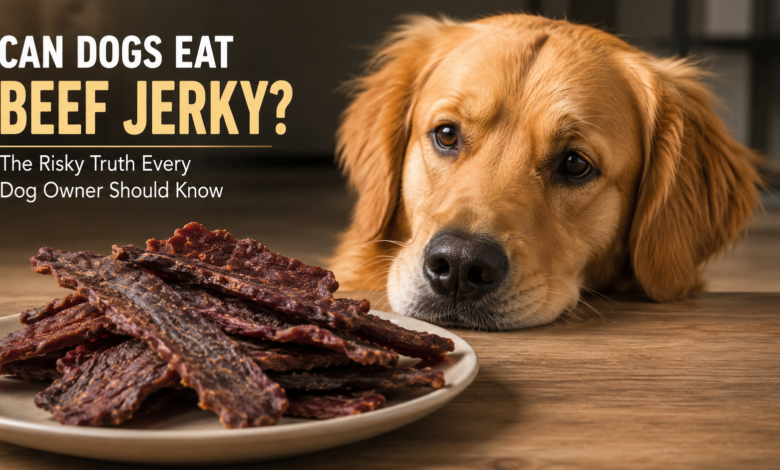
Beef jerky looks like a simple meat snack, so it is understandable when a dog begs for a bite. But can dogs eat beef jerky without putting their health at risk? The short answer is: usually, human beef jerky is not a good treat for dogs. The beef itself is not necessarily the problem. The concern is the salt, seasonings, preservatives, fat, and other ingredients commonly added during processing.
Some beef jerky products can contain onion or garlic powder, both of which are toxic to dogs. Others may contain excessive sodium or ingredients that can cause digestive problems. This guide explains what makes jerky unsafe, what to do if your dog eats it, and which alternatives are better choices.
Can Dogs Eat Beef Jerky Safely?
Can dogs eat beef jerky in small amounts? A tiny accidental piece of plain jerky may not cause illness in an otherwise healthy dog, but human beef jerky should not become a regular treat. Commercial jerky is formulated for people, not canine nutritional needs.
The biggest issue is the ingredient list. Beef jerky is often heavily salted and seasoned to improve flavor and extend shelf life. Dogs have different nutritional requirements, and salty human snacks can provide unnecessary sodium and calories. Veterinary guidance generally recommends choosing small, appropriate treats and avoiding salty snack foods, especially when healthier alternatives are available.
Seasonings create another concern. Garlic, onion, chives, and leeks belong to the Allium family and can damage a dog’s red blood cells. Dried or powdered forms can be particularly concentrated, which matters because garlic powder or onion powder may be hidden in the seasoning blend on jerky packaging.
So the safest approach is simple: don’t intentionally feed ordinary human beef jerky to your dog.
Why Is Beef Jerky Bad for Dogs?
The main problem with beef jerky is that it is a processed human snack, not a simple piece of cooked beef. Even when the meat itself is suitable for dogs, processing can add unnecessary or potentially harmful ingredients.
Salt is one of the biggest concerns. Dogs need sodium in their diet, but too much can increase thirst and cause other problems. Salty human foods are therefore poor choices for routine dog treats.
Seasonings can be even more serious. Many jerky recipes use garlic powder, onion powder, pepper, chili, sauces, or spice mixtures. Onion and garlic can cause gastrointestinal irritation and, at sufficient exposure, destruction of red blood cells and anemia. Signs can include weakness, pale gums, increased breathing effort, vomiting, diarrhea, and dark or red-colored urine.
Some flavored or specialty snacks may also contain sweeteners or other additives that are inappropriate for dogs. Xylitol, for example, is highly toxic to dogs and can cause a dangerous drop in blood sugar, seizures, liver failure, and potentially death.
Finally, jerky can be calorie-dense. Frequent high-calorie treats can contribute to weight gain, particularly in dogs that are already overweight or receive several treats throughout the day.
Can Dogs Eat Beef Jerky With Garlic or Onion?
No. Can dogs eat beef jerky seasoned with garlic or onion? It is best to avoid it completely.
Onion and garlic are not made safe simply because they have been cooked, dried, or powdered. Veterinary toxicology guidance notes that raw, cooked, dried, powdered, and liquid forms of these Allium ingredients can harm dogs. Powdered seasonings can also be more concentrated than their fresh counterparts.
This is especially important because pet owners may not realize how much seasoning is present in a piece of jerky. The package may list ingredients such as garlic powder, onion powder, onion salt, garlic extract, or a seasoning blend.
If your dog accidentally eats a small piece, do not automatically assume poisoning will occur. The actual risk depends on the ingredients, amount consumed, and your dog’s size and health. However, if the jerky contains onion or garlic, contact your veterinarian for individualized advice rather than waiting for symptoms.
What Happens If a Dog Eats Beef Jerky?
If your dog steals a small amount of plain beef jerky, the most likely concern may be stomach upset, especially if the food is unusually salty, fatty, or unfamiliar.
Possible signs include increased thirst, vomiting, diarrhea, abdominal discomfort, reduced appetite, or lethargy. A larger or more problematic exposure can be more serious, particularly if toxic seasonings were involved.
If onion or garlic was present, signs of toxicity may not always appear immediately. Gastrointestinal symptoms can occur first, while red blood cell damage and related signs may develop later. Veterinary sources report signs such as weakness, pale gums, increased heart rate, increased breathing effort, and red-colored urine in more serious cases.
If your dog has eaten jerky, keep the package rather than throwing it away. Check the ingredient list and determine approximately how much was consumed. This information can help your veterinarian assess the situation.
Seek veterinary advice promptly if the product contained onion, garlic, xylitol, or another potentially toxic ingredient, or if your dog develops significant vomiting, weakness, tremors, breathing changes, pale gums, collapse, or other unusual symptoms.
Can Dogs Eat Beef Jerky Made Specifically for Dogs?
Can dogs eat beef jerky that is manufactured specifically as a dog treat? Potentially, yes, as long as the product is formulated and labeled for dogs and is appropriate for your individual pet.
Dog-specific jerky treats are different from human beef jerky because responsible formulations can avoid problematic seasonings and unnecessary ingredients. However, “made for dogs” does not automatically mean you can feed unlimited quantities.
Read the label before buying. Look for a simple ingredient list, appropriate calories, and clear feeding instructions. Avoid products containing onion, garlic, or other ingredients known to be unsafe for dogs.
Portion size matters too. Treats should complement a complete and balanced diet, not replace it. Smaller pieces can make a treat last longer while reducing unnecessary calories.
If your dog has kidney disease, heart disease, pancreatitis, obesity, food allergies, or another medical condition, ask your veterinarian before introducing a new jerky-style treat.
Safer Alternatives to Human Beef Jerky
Instead of wondering if dogs eat beef jerky every time your dog begs for a piece, choose foods that are simpler and easier to control.
Plain, fully cooked beef can be an occasional treat when it contains no onion, garlic, heavy seasoning, sauces, or excessive fat. Small pieces of cooked chicken or other suitable lean meats can also work when prepared without harmful seasonings.
For dogs that enjoy crunchy snacks, carrots, cucumber, and certain other dog-safe fruits and vegetables can provide lower-calorie alternatives. Veterinary guidance lists several plain fruits and vegetables as suitable occasional treats, while emphasizing that new foods should be introduced gradually because dietary changes can cause gastrointestinal upset.
For training, use very small portions. A treat does not need to be large to be rewarding. Breaking an appropriate treat into smaller pieces can help prevent excessive calorie intake while still providing positive reinforcement.
Common Mistakes When Giving Dogs Human Snacks
One common mistake is assuming that an ingredient is safe simply because humans commonly eat it. Dogs process some foods differently, and seemingly harmless seasonings can create serious problems.
Another mistake is focusing only on the meat and ignoring the seasoning. Plain cooked beef differs greatly from highly processed, seasoned beef jerky.
Owners may also underestimate how quickly treats add calories. A dog receiving jerky, table scraps, biscuits, dental chews, and training treats throughout the day may consume far more calories than expected.
A better habit is to check the ingredient label before sharing human food and keep treats appropriately portioned. If you cannot identify every ingredient or the product contains multiple seasonings, it is safer to choose something made specifically for dogs.
Conclusion
So, can dogs eat beef jerky? Human beef jerky is generally best avoided. Plain beef can suit many dogs when cooked properly and served in moderation. Still, traditional jerky often contains too much salt, strong seasonings, preservatives, or ingredients such as onion and garlic that can be harmful.
If your dog accidentally eats a small piece, check the package and monitor closely. If the product contains potentially toxic ingredients or your dog develops concerning symptoms, contact a veterinarian promptly.
The safest rule is simple: choose plain, dog-appropriate treats instead of sharing seasoned human jerky. Your dog does not need heavily processed snacks to enjoy a tasty reward.
More Pet Guides: For more pet-related guides, tips, and helpful information, visit PetOrbit.blog. Thank you for reading this article!
(FAQs)
Can dogs eat beef jerky as an occasional treat?
Can dogs eat beef jerky occasionally? Human beef jerky is still not recommended as a routine treat because it may contain high sodium levels, seasonings, preservatives, or other ingredients that are unsuitable for dogs. A small accidental amount may not cause a problem, but dog-specific treats or plain cooked meat are safer choices.
Can dogs eat beef jerky without seasoning?
Plain cooked beef is generally a more appropriate option than seasoned human jerky. However, true jerky is usually dried and preserved, so check the sodium content and ingredients. A small piece of plain, dog-appropriate meat is generally preferable to processed human jerky.
What if my dog ate beef jerky with garlic powder?
Garlic can be toxic to dogs, including dried and powdered forms. The risk depends on the amount consumed and the dog’s size. Check the ingredient list on the package and contact your veterinarian for advice, especially if your dog ate a significant amount or develops vomiting, weakness, pale gums, or other unusual symptoms.
Can dogs eat beef jerky with onion powder?
No. Onion powder is not safe for dogs. Onion belongs to the Allium family and can damage red blood cells. Because powdered ingredients can be concentrated, avoid giving dogs jerky containing onion powder or onion seasoning.
Can puppies eat beef jerky?
Puppies should not be given ordinary human beef jerky. Their digestive systems and nutritional needs are still developing, so treats should match their age, size, and diet. Small, puppy-appropriate training treats are a better choice than salty, seasoned human snacks.
What are safer alternatives to beef jerky for dogs?
Plain cooked beef without seasoning, small pieces of suitable cooked meat, and certain dog-safe fruits and vegetables can be better options. Commercial dog treats can also be used when the ingredients, calories, and recommended serving size are appropriate.
Can beef jerky make dogs sick?
Yes. Can dogs eat beef jerky without getting sick? Not necessarily. Salty, fatty, heavily seasoned, or contaminated jerky can cause digestive problems, while products containing toxic ingredients can create more serious risks. Watch for vomiting, diarrhea, lethargy, unusual thirst, weakness, pale gums, or other abnormal behavior after ingestion.
When should I call a veterinarian after my dog eats beef jerky?
Contact a veterinarian promptly if the jerky contained onion, garlic, xylitol, or another potentially toxic ingredient, if your dog ate a large quantity, or if symptoms develop. Serious signs such as weakness, collapse, pale gums, breathing difficulty, repeated vomiting, or unusual urine color warrant urgent veterinary attention.

I’m a Pet Niche Expert and Pet Blogger with 12 years of experience in researching and sharing practical, reliable information about pets. Through PetOrbit.blog, I help pet parents and animal lovers better understand their pets and make informed decisions about their care and well-being.
My expertise covers a wide range of pet topics, including pet health, pet food and nutrition, dog and cat breeds, grooming, behavior, training, safety, pet care, travel with pets, and overall pet wellness. I also explore information about different types of pets, their unique needs, characteristics, lifestyles, and responsible ownership.
With more than 12 years of experience in the pet niche, my focus is on creating clear, useful, and easy-to-understand content based on practical knowledge, careful research, and real-world pet care considerations. I believe pet information should be informative without being unnecessarily complicated, so my goal is to make every article helpful for both new and experienced pet owners.
At PetOrbit, my mission is to provide valuable pet guides, breed information, health and nutrition insights, food and care tips, travel advice, and trustworthy resources that help pets live healthier, happier, and more comfortable lives.
PetOrbit.blog — Practical Pet Knowledge for Better Pet Care.