how to stop puppy biting hands: 10 Proven Tips for a Happier Puppy
how to stop puppy biting hands

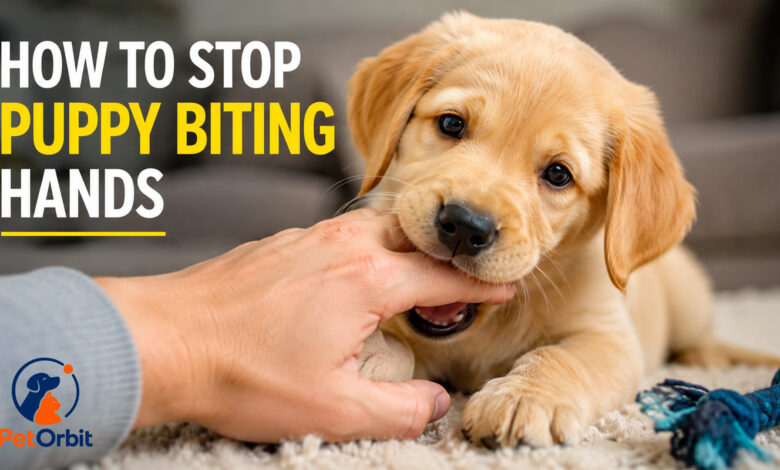
A puppy grabbing your fingers with needle-sharp teeth can turn an adorable play session into a painful one. The good news is that how to stop puppy biting hands is not about making your puppy fearful or punishing normal behavior. Mouthing, nipping, chewing, and play-biting are common parts of puppy development, especially during teething. Your goal is to teach your puppy that human skin is not a toy and that gentle behavior earns attention, play, and rewards.
The most effective approach combines redirection, bite inhibition, positive reinforcement, appropriate rest, and consistency. These 10 training tips can help reduce hand biting while teaching your puppy what to do instead.
Why Puppies Bite Hands in the First Place
Before learning how to stop puppy biting hands, understand why the behavior happens. Puppies explore their environment with their mouths. They also use their mouths during play, while teething can make chewing especially appealing. A puppy may bite because they are excited, curious, tired, frustrated, or seeking interaction.
Biting does not automatically mean a puppy is aggressive. Normal play-mouthing is usually loose and energetic. However, repeated hard biting should still be addressed because habits learned early can become harder to manage as the dog grows.
Overtired puppies are especially likely to become “land sharks.” If biting suddenly increases late in the day or after a busy play session, your puppy may need quiet rest rather than more stimulation.
How to Stop Puppy Biting Hands With Immediate Redirection
The first practical step in how to stop puppy biting hands is to give your puppy something appropriate to bite. Keep several puppy-safe toys within easy reach in the rooms where you play.
When teeth touch your hand, calmly remove your attention and offer a toy. Once your puppy grabs it, praise the choice and continue playing. This teaches a clear lesson: hands make the fun stop, while toys make the fun continue.
Avoid waving your fingers or repeatedly pulling your hand away quickly. Fast movement can turn your hand into a moving target and encourage chasing. Keep movements calm and make the toy more interesting than your fingers.
Rotate safe chew toys to prevent boredom. Inspect them regularly and replace anything that is breaking apart or producing pieces your puppy could swallow.
Teach Bite Inhibition Instead of Demanding Instant Perfection
A major part of how to stop puppy biting hands is teaching bite inhibition, meaning your puppy learns to control the force of a bite. The goal is not necessarily to make a puppy stop using its mouth overnight. Instead, you want progressively softer and less frequent mouthing.
Some puppies respond well when a person calmly says “ouch” after a painful bite, followed by a brief pause in interaction. However, this method does not suit every puppy. Some become more excited by high-pitched sounds. If your puppy gets wilder, skip the vocal reaction and quietly end the interaction instead.
When your puppy backs away, settles, or chooses a toy, reward that behavior. Over time, your puppy learns that gentle mouths keep people engaged while painful biting makes the interaction disappear.
Make Biting Mean “Game Over”
Consistency is one of the most important answers to how to stop puppy biting hands. Every family member should respond to biting in roughly the same way.
If your puppy bites, stop playing immediately. Tuck your hands away, turn your body, and briefly withdraw attention. If necessary, step behind a baby gate or leave the area for a short period. Return when your puppy is calmer and offer an appropriate activity.
Do not chase your puppy, wrestle with them, or turn the interruption into a dramatic event. Attention itself can reinforce behavior, even when that attention is negative.
Avoid hitting, grabbing the muzzle, yelling, or physical corrections. These methods do not teach the puppy what you want and may increase fear or confusion.
Use Positive Reinforcement to Reward Gentle Behavior
One reason how to stop puppy biting hands can feel difficult is that owners often focus only on correcting unwanted behavior. Puppies also need to learn what success looks like.
Catch your puppy being gentle. If they sit beside you without biting, chew a toy, or settle near your feet, reward them with praise, a tiny training treat, or a short game.
You can also teach an alternative such as “sit.” When your puppy approaches calmly, ask for the behavior and reward it. With repetition, your puppy learns that calm interaction is a reliable way to get attention.
Keep training sessions short and upbeat. Puppies learn better when they are not overwhelmed, frustrated, or exhausted.
Manage Teething, Exercise, and Rest
Teething is a major reason how to stop puppy biting hands becomes challenging during the early months. Puppies need suitable outlets for chewing, so removing every opportunity to chew without alternatives is unrealistic.
Offer age-appropriate, puppy-safe chew toys. Some puppies enjoy chilled or frozen food-stuffed toys, which can provide a satisfying chewing activity. Always supervise new chews and discard damaged items.
Exercise matters too, but more activity is not always the answer. Young puppies need plenty of sleep and quiet time. A puppy that is biting relentlessly may need a nap, potty break, food, water, or a calmer environment rather than another exciting game.
A predictable daily routine can make biting episodes easier to prevent.
Prevent Triggers and Teach Better Alternatives
Good management makes how to stop puppy biting hands much easier. Watch for patterns. Does your puppy bite during petting, when you walk past, after waking, during evening play, or when children run around?
Once you know the trigger, change the setup before biting starts. Keep a toy nearby during play. Use treats during gentle handling. Move slowly around an excited puppy. If your puppy attacks moving ankles, carry treats or a toy and reward calm behavior before they pounce.
Children also need clear rules. They should not chase a puppy, pull ears or tails, tease the dog, or use hands as wrestling toys. All interactions between young children and puppies should be actively supervised.
10 Proven Training Tips for Faster Progress
For a simple daily plan for how to stop puppy biting hands, use these habits consistently:
- Stop play immediately when teeth touch skin.
- Redirect the puppy to a safe chew or toy.
- Reward calm behavior before the puppy becomes overexcited.
- Keep hands still instead of jerking them away.
- Avoid wrestling games that encourage hand biting.
- Provide regular opportunities for sleep and quiet time.
- Teach alternative behaviors such as “sit.”
- Rotate appropriate chew toys.
- Make sure every household member follows the same rules.
- Get professional help if biting is severe, persistent, or concerning.
Progress is rarely perfectly linear. A puppy may improve for several days and then have a difficult evening. That does not mean training has failed. Continue reinforcing the behavior you want.
When How to Stop Puppy Biting Hands Needs Professional Help
Knowing how to stop puppy biting hands also means knowing when home training is not enough. Speak with your veterinarian if biting is unusually intense, appears connected to pain, happens with fearful or defensive body language, or causes significant injury.
Seek professional behavior support if your puppy regularly stiffens, growls in threatening contexts, guards resources, snaps outside normal play, or cannot be safely handled. A qualified trainer or veterinary behavior professional can assess the puppy’s age, environment, learning history, and behavior.
A well-run puppy class can also help with appropriate play, handling, focus, and social skills. Choose a program that uses reward-based methods and maintains safe interactions between puppies.
Conclusion: How to Stop Puppy Biting Hands Takes Consistency
Learning how to stop puppy biting hands is a process, not a single command. Puppies need time to develop self-control and understand which behaviors work in a human household.
The strongest approach is simple: stop rewarding hand biting, provide appropriate things to chew, reinforce gentle behavior, prevent overexcitement, and give your puppy enough sleep and structure. Avoid harsh punishment and focus on teaching an alternative.
With calm repetition, those painful puppy nips can become much more polite interactions. If the behavior seems abnormal, causes injuries, or is not improving despite consistent training, involve your veterinarian or a qualified behavior professional.
More Pet Guides: For more pet-related guides, tips, and helpful information, visit PetOrbit.blog. Thank you for reading this article!
(FAQs)
Why does my puppy bite my hands?
Puppies commonly mouth hands during play, exploration, teething, excitement, or when seeking attention. It does not automatically mean aggression. The important step is teaching the puppy that human skin is not an appropriate chew toy.
How long does how to stop puppy biting hands training take?
There is no exact timeline because puppies mature at different rates. Consistent training can produce noticeable improvement, but teething and excitement may cause temporary setbacks. Continue rewarding gentle behavior and redirecting biting every day.
Should I say “no” when my puppy bites?
A harsh “no” is usually less useful than showing your puppy what to do instead. Calmly end the interaction, redirect to a toy, and reward appropriate behavior. If a verbal cue helps your puppy pause without becoming more excited, use it calmly and consistently.
Is puppy biting a sign of aggression?
Usually not. Normal puppy mouthing often occurs during play, exploration, or teething. However, biting accompanied by fear, stiff posture, guarding, repeated threatening behavior, or unusually severe attacks deserves professional assessment.
Should I let my puppy bite my hands during play?
It is better not to make human hands part of the game. If hand biting is sometimes allowed and sometimes punished, the puppy receives a confusing message. Use toys for tugging, chasing, and chewing, while keeping hands for calm handling.
What should I do if my puppy bites hard and will not stop?
Stop moving and remove attention rather than turning the moment into a chase. Once the puppy disengages, offer a toy or guide them toward a calm activity. If repeated episodes are difficult to manage or involve injury, contact your veterinarian or a qualified positive-reinforcement trainer.
Does teething make puppies bite more?
Yes. Teething can make chewing more appealing because puppies seek appropriate ways to relieve oral discomfort. Providing safe chew options and redirecting your puppy away from hands can help. Persistent signs of pain should be discussed with a veterinarian.
When should I worry about puppy biting?
Concern is warranted when biting causes significant wounds, occurs with fear or defensive aggression, suddenly changes, or continues without meaningful improvement despite consistent training. Professional guidance is especially important if children or vulnerable adults cannot safely interact with the puppy.

I’m a Pet Niche Expert and Pet Blogger with 12 years of experience in researching and sharing practical, reliable information about pets. Through PetOrbit.blog, I help pet parents and animal lovers better understand their pets and make informed decisions about their care and well-being.
My expertise covers a wide range of pet topics, including pet health, pet food and nutrition, dog and cat breeds, grooming, behavior, training, safety, pet care, travel with pets, and overall pet wellness. I also explore information about different types of pets, their unique needs, characteristics, lifestyles, and responsible ownership.
With more than 12 years of experience in the pet niche, my focus is on creating clear, useful, and easy-to-understand content based on practical knowledge, careful research, and real-world pet care considerations. I believe pet information should be informative without being unnecessarily complicated, so my goal is to make every article helpful for both new and experienced pet owners.
At PetOrbit, my mission is to provide valuable pet guides, breed information, health and nutrition insights, food and care tips, travel advice, and trustworthy resources that help pets live healthier, happier, and more comfortable lives.
PetOrbit.blog — Practical Pet Knowledge for Better Pet Care.