Russian Blue Hypoallergenic: The Honest Truth About Allergies and This Cat Breed
Russian Blue Hypoallergenic

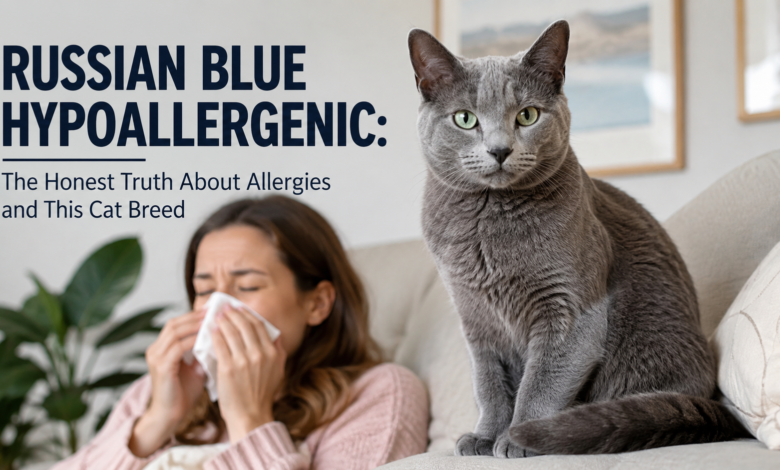
If you love cats but start sneezing, itching, or wheezing around them, choosing the right breed matters. The Russian Blue is often promoted as a good option for people with allergies, but is a Russian Blue hypoallergenic cat really allergy-free? The short answer is no. However, some allergy sufferers may find living with a Russian Blue easier than living with certain other cats.
The reason is more complicated than fur length or shedding. Cat allergies are usually triggered by proteins found in saliva, skin secretions, and other biological material—not the hair itself. This guide explains what Russian Blue hypoallergenic really means, why Russian Blues are considered relatively allergy-friendly, and what you can realistically expect before bringing one home.
Is a Russian Blue Hypoallergenic Cat Really Hypoallergenic?
No cat breed is scientifically considered completely hypoallergenic. Russian Blues can still produce the allergens responsible for reactions, so calling them allergy-free would be misleading.
The main cat allergen is Fel d 1, a protein produced primarily in a cat’s salivary and sebaceous glands. When a cat grooms itself, saliva containing the protein spreads across its coat. The allergen can then become attached to shed skin particles, dried saliva, and household dust.
This means a person can react to a cat even if it doesn’t shed heavily.
The Russian Blue’s hypoallergenic reputation probably comes from its breed’s short coat and relatively manageable grooming needs. Russian Blues have a distinctive plush double coat, which can reduce the amount of loose hair circulating the home compared with some heavily shedding cats. However, less loose hair does not mean less Fel d 1.
Individual cats can also differ in how much allergen they produce. Therefore, someone who tolerates one Russian Blue may still react strongly to another.
Why Are Russian Blues Considered Allergy-Friendly?
The Russian Blue hypoallergenic label persists because several characteristics may make this breed easier for some allergy sufferers to live with.
Russian Blues have short but unusually dense coats. Their coat is soft, plush, and silver-tipped, giving the breed its characteristic blue-gray appearance. They are also generally considered easy to groom. Regular grooming can help control loose hair and dander around the home.
Another factor is that Russian Blues are not typically known for excessive shedding. That can help because less loose hair may mean fewer allergen-carrying particles distributed onto furniture, clothing, and floors.
Still, don’t confuse reduced exposure with elimination. A Russian Blue can groom itself, leave allergen-containing saliva on its coat, shed microscopic skin particles, and transfer allergens onto bedding or furniture.
So, if you search for Russian Blue hypoallergenic cats because of allergies, think of the breed as a possible lower-exposure option, not a guaranteed solution.
What Causes Cat Allergies?
Understanding cat allergies is more useful than focusing only on breed labels. Most reactions are caused by proteins rather than cat fur itself.
Fel d 1 is the best-known cat allergen, and it can become airborne or settle onto surfaces. Allergens may remain in a home even after a cat leaves because they can cling to carpets, upholstery, clothing, and bedding.
Common allergy symptoms include:
- Sneezing and a runny or stuffy nose
- Itchy, watery, or irritated eyes
- Coughing or throat irritation
- Skin itching or hives after contact
- Wheezing or breathing difficulties in sensitive individuals
The severity of symptoms varies considerably. Someone with mild symptoms might tolerate a Russian Blue after taking sensible environmental precautions, while someone with significant respiratory reactions may need to avoid living with cats altogether.
This is why you should never interpret “Russian Blue hypoallergenic” as a medical guarantee. If you have significant allergies or asthma, talk with a qualified healthcare professional before adopting a cat.
How to Reduce Allergens When Living With a Russian Blue
Even if a Russian Blue works well for you, managing the home environment can make a major difference. The goal is not to eliminate every allergen, which is unrealistic, but to reduce overall exposure.
Regular grooming is one useful step. Brushing the cat removes loose hair and helps keep the coat cleaner. Ideally, someone who isn’t allergic should groom the cat outdoors or in an area that’s easy to clean.
Regularly cleaning the home is equally important. Vacuum carpets, upholstery, and other surfaces where hair and dander collect. A vacuum with effective filtration can help reduce airborne particles.
Wash bedding frequently, especially if the cat sleeps on your bed. You can also create allergy-reduced areas by keeping the bedroom off-limits to the cat.
Other practical measures include:
- Wash your hands after prolonged contact with the cat.
- Clean hard floors regularly.
- Wash blankets and washable cat bedding frequently.
- Use an air purifier with appropriate particle filtration.
- If symptoms are significant, avoid letting the cat sleep on pillows or bedding.
- Keep litter areas clean and well ventilated.
These measures do not make a Russian Blue allergen-free. They reduce the amount of allergen accumulating in your environment.
Russian Blue Grooming, Personality, and Daily Care
The Russian Blue hypoallergenic question should not be the only consideration when choosing this breed. Compatibility also depends on temperament, activity level, grooming needs, and your home environment.
Russian Blues are elegant, intelligent cats with vivid green eyes and a dense blue-gray coat. They are often described as quiet, graceful, affectionate, and playful. Many are reserved with unfamiliar people but become deeply attached to people they trust.
Their grooming needs are relatively modest. Because the coat is short, regular brushing is usually sufficient to control loose hair and maintain its condition. Dental care, nail trimming, parasite prevention, veterinary checkups, and a nutritionally complete diet remain important regardless of coat type.
Exercise and mental stimulation also matter. Russian Blues are intelligent cats that benefit from interactive toys, climbing opportunities, puzzle feeders, and regular play. Their reputation for being calm should not be mistaken for a need for little stimulation.
A healthy indoor lifestyle can be particularly suitable for this breed. Keeping the cat indoors also reduces exposure to traffic, fights, infectious diseases, parasites, and other outdoor hazards.
Should Allergy Sufferers Choose a Russian Blue?
If you’re specifically searching for a Russian Blue hypoallergenic cat, the smartest approach is to test your personal reaction before committing to adoption or purchase.
Do not rely solely on online breed descriptions. If possible, spend meaningful time around adult Russian Blues. Ideally, visit the particular cat you are considering more than once. Allergic reactions may not always appear immediately.
Also remember that allergy symptoms can come from the entire environment. Cat litter, dust, pollen carried on a cat’s fur, cleaning products, and household dust mites can contribute to symptoms. Therefore, reacting around a cat does not automatically prove that Fel d 1 is the only cause.
If symptoms are mild, environmental controls may make cohabitation possible. If symptoms involve significant wheezing, breathing difficulty, or poorly controlled asthma, however, choosing a cat simply because it is marketed as Russian Blue hypoallergenic could be risky.
A responsible breeder or adoption organization should also let you ask questions about the cat’s health, temperament, and living conditions. Never purchase a cat solely because someone promises it will not cause allergies.
Conclusion
The truth about Russian Blue hypoallergenic cats is straightforward: Russian Blues are not truly hypoallergenic, but their short, dense coat and generally manageable shedding may make them a more comfortable choice for some allergy sufferers. The biggest factor is still the individual’s sensitivity and the cat’s allergen exposure.
If allergies are a concern, spend time with the specific cat before bringing it home, maintain consistent grooming and cleaning routines, and keep sleeping areas as allergen-free as practical. Most importantly, treat the word “hypoallergenic” as a description of potential suitability—not a promise of zero allergic reactions.
For the right household, a Russian Blue can be an intelligent, affectionate, beautiful companion. Make your decision based on your actual allergy response rather than the breed’s reputation.
More Pet Guides: For more pet-related guides, tips, and helpful information, visit PetOrbit.blog. Thank you for reading this article!
(FAQs)
Is a Russian Blue hypoallergenic cat safe for people with allergies?
Not necessarily. Russian Blues still produce Fel d 1 and other allergens that can cause reactions. Some allergy sufferers may experience fewer symptoms around them, but individual responses vary. Spending time with the specific cat before adoption is one of the most useful ways to assess compatibility.
Do Russian Blues produce less Fel d 1 than other cats?
There is no reliable breed-wide guarantee that Russian Blues produce less Fel d 1. Individual cats naturally vary in allergen production. The common Russian Blue hypoallergenic reputation is therefore better understood as a claim about potential allergen exposure rather than proof that the breed produces unusually low levels.
Does Russian Blue fur cause allergies?
The fur itself is not usually the primary allergen. Cat allergies mainly involve proteins such as Fel d 1 found in saliva and skin secretions. Fur can carry these proteins and help distribute them throughout the home, which is why shedding and grooming can influence exposure.
Are Russian Blues better for people with asthma?
Not automatically. A Russian Blue may be easier for some people with mild allergies, but cat allergens can trigger asthma and become serious. Anyone with asthma should consider their individual medical situation rather than assuming that a breed marketed as Russian Blue hypoallergenic will be safe.
How often should I groom a Russian Blue if I have allergies?
Regular brushing can help remove loose hair and reduce the amount of material distributed around the home. The exact schedule depends on the individual cat, but consistent grooming is more useful than occasional intensive brushing. Ideally, someone without allergies should handle grooming.
Can you make a Russian Blue completely hypoallergenic?
No. Cleaning, grooming, air filtration, and limiting access to bedrooms can reduce allergen exposure, but they cannot remove every allergen. A Russian Blue hypoallergenic cat is therefore not the same thing as an allergen-free cat.
Should I meet a Russian Blue before adopting one?
Yes. This is especially important if you have allergies. Spend time with the specific adult cat whenever possible, and watch for symptoms. A general breed reputation cannot predict exactly how your body will respond to one individual animal.
What is the biggest mistake allergy sufferers make when choosing a cat?
The biggest mistake is assuming that “hypoallergenic” means allergy-free. Breed labels are not a guarantee. Before choosing a Russian Blue hypoallergenic cat, consider your personal reaction, the cat’s individual characteristics, and whether you can consistently manage allergens in your home.

I’m a Pet Niche Expert and Pet Blogger with 12 years of experience in researching and sharing practical, reliable information about pets. Through PetOrbit.blog, I help pet parents and animal lovers better understand their pets and make informed decisions about their care and well-being.
My expertise covers a wide range of pet topics, including pet health, pet food and nutrition, dog and cat breeds, grooming, behavior, training, safety, pet care, travel with pets, and overall pet wellness. I also explore information about different types of pets, their unique needs, characteristics, lifestyles, and responsible ownership.
With more than 12 years of experience in the pet niche, my focus is on creating clear, useful, and easy-to-understand content based on practical knowledge, careful research, and real-world pet care considerations. I believe pet information should be informative without being unnecessarily complicated, so my goal is to make every article helpful for both new and experienced pet owners.
At PetOrbit, my mission is to provide valuable pet guides, breed information, health and nutrition insights, food and care tips, travel advice, and trustworthy resources that help pets live healthier, happier, and more comfortable lives.
PetOrbit.blog — Practical Pet Knowledge for Better Pet Care.