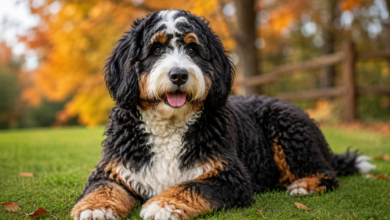
A springer doodle is an appealing cross between an English Springer Spaniel and a Poodle, combining the affectionate, people-focused nature of the Springer with the intelligence and trainability associated with the Poodle. Because this is a mixed breed rather than a standardized purebred, individual dogs can vary considerably in size, coat, appearance, and personality.
If you are considering bringing one home, it helps to look beyond the adorable appearance. This guide explains what a Springer Doodle may be like to live with, including its temperament, exercise needs, grooming, training, nutrition, health considerations, and puppy care.
Springer Doodle Quick Facts
- Breed type: English Springer Spaniel–Poodle cross
- Typical weight: About 30–60 pounds
- Typical height: About 16–24 inches
- Expected lifespan: Roughly 10–15 years
- Temperament: Intelligent, affectionate, playful, energetic, loyal, and eager to please
- Coat: May be wavy, curly, medium, or longer depending on inheritance
- Exercise: Daily physical activity and mental stimulation
- Best suited for: Active families, couples, singles, and households prepared for regular interaction
- Training: Generally responsive to positive, consistent training
- Grooming: Regular brushing, with trimming potentially needed depending on coat type
Because mixed-breed dogs do not inherit a predictable set of traits, these figures should be treated as general ranges rather than guarantees.
What Is a Springer Doodle?
The springer doodle is a designer cross between an English Springer Spaniel and a Poodle. Both parent breeds are intelligent and highly responsive to people, but they were developed for different purposes. The English Springer Spaniel is a sporting dog with substantial stamina and a history of working closely with humans. At the same time, the Poodle is known for intelligence, athleticism, and a distinctive coat.
The result can be a lively companion that enjoys being involved in family activities. However, no single breed standard determines exactly what every puppy will become. One puppy may have a curlier, lower-shedding coat, while another may inherit more of the Springer Spaniel’s coat and shedding characteristics.
The breed’s relatively uncertain history is another reason to be cautious about claims that every puppy will have the same characteristics. Available information generally describes the springer doodle as a relatively modern designer cross rather than a long-established, standardized breed.
Appearance, Size, and Coat
A springer doodle can have a medium-sized to moderately large build. A commonly cited range is approximately 30–60 pounds and 16–24 inches, although adult size depends heavily on the individual Poodle parent and the traits inherited from both sides.
The appearance can combine the long ears and athletic outline of the Springer Spaniel with the facial features and coat texture of the Poodle. Some dogs have a softer, wavier coat, while others may develop noticeably curlier hair.
Coat shedding is also unpredictable. A dog inheriting more Poodle-like coat characteristics may shed less, but low shedding should never automatically be interpreted as completely non-shedding or hypoallergenic. Families with allergies should spend time with the individual dog before deciding.
Regular brushing is important because longer or curly coats can develop tangles and mats. Depending on the coat, professional trimming may also become part of the normal grooming routine.
Springer Doodle Temperament and Family Life
The personality of a springer doodle is one of its biggest attractions. These dogs can be affectionate, playful, intelligent, social, and eager to participate in whatever their family is doing.
Both parent breeds tend to be highly people-oriented. That can make the cross rewarding for owners who want an interactive companion rather than a dog that prefers spending most of the day alone.
They can also do well with children and other pets when properly socialized and supervised. However, breed labels never guarantee temperament. Early experiences, genetics, training, environment, and individual personality all influence behavior.
Their energy level is another important consideration. A springer doodle is unlikely to thrive if exercise and interaction are consistently neglected. A bored, energetic dog may develop unwanted behaviors such as excessive chewing, jumping, barking, or attention-seeking.
For that reason, this cross can be particularly suitable for households that enjoy walks, games, outdoor activities, training sessions, and regular family interaction.
Training, Exercise, and Mental Stimulation
Training is usually one of the more enjoyable parts of owning a Springer Doodle because their intelligence and desire to please make them responsive learners. Positive reinforcement, consistency, patience, and rewards are preferable to harsh correction.
Start basic training while the puppy is young. Important skills include name recognition, recall, loose-leash walking, basic obedience, calm greetings, and appropriate household behavior.
Socialization matters as much. Gradually introducing a puppy to different people, friendly dogs, environments, sounds, and everyday experiences can help build confidence.
Pair physical exercise with mental stimulation. Daily walks are useful, but games of fetch, scent-based activities, obedience exercises, puzzle toys, and controlled outdoor play can make the routine more fulfilling.
A secure, fenced area is particularly useful for energetic dogs, but free running should happen only in a safe environment. Dogs with strong curiosity or hunting instincts can quickly get themselves into trouble when allowed to roam.
Grooming, Nutrition, and Health
Grooming needs vary considerably for a Springer Doodle. A basic routine should include regular brushing, nail care, ear checks, and bathing when necessary. Dogs with dense or curly coats may need more frequent brushing and professional clipping to prevent painful matting.
Ears deserve particular attention because dogs with floppy, well-feathered ears can be more prone to moisture and debris buildup around the ear canal. Owners should watch for redness, odor, discharge, scratching, or repeated head shaking and consult a veterinarian if these signs occur.
Base nutrition on the dog’s age, size, activity level, body condition, and individual needs. A complete and balanced dog food appropriate for the life stage is a sensible starting point. Treats should remain a modest part of the overall diet, particularly during training.
Because the springer doodle combines two breeds, potential health concerns can include conditions associated with either parent. Hip and elbow problems, eye disorders, ear issues, skin conditions, and other inherited diseases may occur. Still, a parent-breed risk does not mean every individual dog will develop that condition.
Regular veterinary examinations are important. Prospective owners should also ask breeders about health screening performed on both parents rather than relying on statements that a crossbreed is automatically healthier.
Is a Springer Doodle Right for You?
A springer doodle can be an excellent companion for the right household, but it is not an ideal match for everyone.
The biggest advantage is its combination of companionship, intelligence, playfulness, and trainability. Owners who enjoy spending time with their dogs may find this cross especially rewarding.
The main challenge is commitment. Exercise, grooming, training, socialization, veterinary care, and companionship all require time and money.
Before purchasing a puppy, investigate the breeder carefully. When possible, ask to meet the mother, review available health testing, discuss temperament, and ask how puppies are socialized. Avoid choosing a puppy solely because it has a particular coat color or because someone promises it will be completely non-shedding.
Consider adoption and rescue as well. A mixed-breed dog can be a wonderful option for people who care more about personality and compatibility than pedigree.
Springer Doodle Puppies and Everyday Care
A Springer Doodle puppy needs structure from the start. Young puppies should have a safe sleeping area, appropriate food, chew toys, regular potty breaks, and plenty of supervised interaction.
Keep training short and positive because puppies have limited attention spans. Consistent routines can make house training and basic manners easier to establish.
Puppies also need age-appropriate veterinary care, including vaccinations, parasite prevention, nutritional guidance, and regular health checks. Your veterinarian can create a schedule based on the puppy’s age, lifestyle, local risks, and medical history.
One common mistake is assuming that a puppy will naturally become well-behaved simply because both parent breeds are intelligent. Intelligence does not replace training. Early boundaries, socialization, exercise, and positive reinforcement remain essential.
A well-raised springer doodle can become a devoted companion, but the quality of the dog’s upbringing plays a major role in the adult personality you eventually see.
Conclusion
The Springer Doodle brings together two intelligent, active parent breeds to create a companion with plenty of potential. Its affectionate personality, trainability, playful nature, and enthusiasm for family activities can make it an appealing choice for an active household.
However, prospective owners should remember that this is a mixed breed with considerable individual variation. Size, coat, shedding, temperament, and health cannot be predicted perfectly from the name alone.
If you are prepared to provide daily exercise, consistent training, regular grooming, veterinary care, and plenty of companionship, a springer doodle may be a rewarding addition to your family. The best choice is ultimately the individual dog whose temperament and needs fit your lifestyle.
More Pet Guides: For more pet-related guides, tips, and helpful information, visit PetOrbit.blog. Thank you for reading this article!
(FAQs)
Is a springer doodle a good family dog?
A springer doodle can make a good family companion when properly socialized and trained. Its affectionate, playful nature can suit households with children, but always supervise interactions between dogs and young children.
How big does a springer doodle get?
Many springer doodle dogs fall somewhere around 30–60 pounds and 16–24 inches tall, but adult size can vary significantly. The size of the Poodle parent and inherited genetics can influence the final result.
Does a springer doodle shed?
Some may shed relatively little, particularly when they inherit a more Poodle-like coat. Others can shed more because of their Springer Spaniel heritage. Therefore, no individual Springer Doodle should be assumed to be completely non-shedding.
How much exercise does a springer doodle need?
This is generally an active cross that benefits from daily walks, play, training, and mental stimulation. Exercise needs vary by age and individual temperament, but simply leaving an energetic dog in a yard is usually not enough.
Are springer doodle dogs easy to train?
They can be highly responsive to training because both parent breeds are intelligent and people-oriented. Positive reinforcement, consistency, early socialization, and patience help develop reliable behavior.
How often should a springer doodle be groomed?
Grooming frequency depends on coat type. Regular brushing is important, while dogs with longer or curlier coats may need more frequent brushing and professional trimming to prevent mats.
What health problems can a Springer doodle have?
Potential concerns can include problems associated with either parent breed, such as orthopedic, eye, ear, and skin conditions. A veterinarian can help establish an appropriate preventive-care plan, while responsible breeders should provide relevant health-testing information for parent dogs.
How long does a springer doodle live?
A commonly cited lifespan is around 10–15 years, although individual longevity depends on genetics, preventive veterinary care, nutrition, body condition, lifestyle, and overall health.

I’m a Pet Niche Expert and Pet Blogger with 12 years of experience in researching and sharing practical, reliable information about pets. Through PetOrbit.blog, I help pet parents and animal lovers better understand their pets and make informed decisions about their care and well-being.
My expertise covers a wide range of pet topics, including pet health, pet food and nutrition, dog and cat breeds, grooming, behavior, training, safety, pet care, travel with pets, and overall pet wellness. I also explore information about different types of pets, their unique needs, characteristics, lifestyles, and responsible ownership.
With more than 12 years of experience in the pet niche, my focus is on creating clear, useful, and easy-to-understand content based on practical knowledge, careful research, and real-world pet care considerations. I believe pet information should be informative without being unnecessarily complicated, so my goal is to make every article helpful for both new and experienced pet owners.
At PetOrbit, my mission is to provide valuable pet guides, breed information, health and nutrition insights, food and care tips, travel advice, and trustworthy resources that help pets live healthier, happier, and more comfortable lives.
PetOrbit.blog — Practical Pet Knowledge for Better Pet Care.