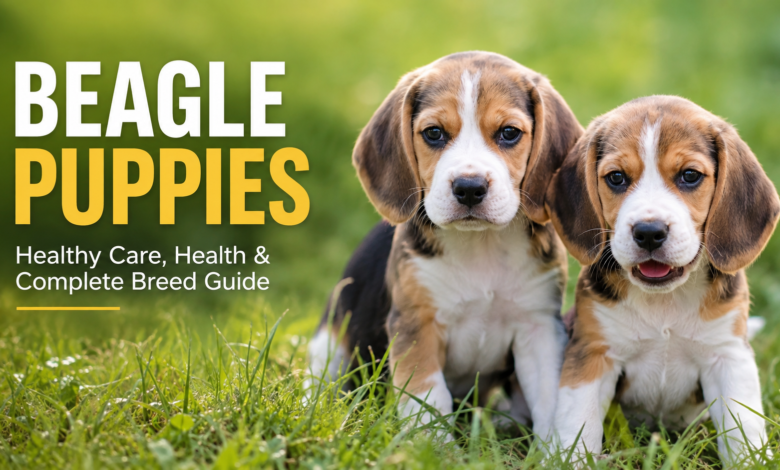
Bringing home Beagle Puppies is exciting, but their playful energy and powerful noses require thoughtful care. Beagles are social, curious, intelligent scent hounds that can become wonderful family companions when owners provide structure from the beginning.
This guide covers breed traits, health, nutrition, exercise, training, grooming, socialization, household safety, adoption, buying considerations, and common puppy-care mistakes.
Beagle Puppies: Breed Overview, Appearance & Personality
Beagles are compact scent hounds with expressive eyes, long floppy ears, a short coat, and a characteristic white-tipped tail. Common coat colors include combinations of black, tan, white, lemon, and red. Many adults weigh roughly 20–30 pounds, although individual size varies.
The breed is usually affectionate, outgoing, playful, and people-oriented. Beagles can do well with respectful children and, with proper introductions, other dogs. However, their scent drive is strong. A puppy that catches an interesting smell may follow it instead of responding to a recall cue.
They are intelligent but can be independent. Food rewards, short training sessions, and consistent rules usually work better than harsh corrections. Their personality makes them engaging, but owners should expect an active dog that wants to participate in family life.
Health Needs of Beagle Puppies
A veterinary examination soon after bringing a puppy home is an important first step. The veterinarian can assess overall health, discuss vaccines, parasite prevention, nutrition, dental care, and future preventive visits.
Puppy vaccination schedules depend on age, previous records, local disease risk, and veterinary guidance. Core vaccines commonly protect against serious illnesses such as parvovirus, distemper, and adenovirus. Deworming and fecal testing may also be recommended because intestinal parasites are common in young dogs.
Beagles can be affected by inherited or acquired problems involving the eyes, ears, joints, spine, thyroid, and weight. Their floppy ears can trap moisture, so check for odor, redness, discharge, scratching, or frequent head shaking.
Weight control deserves special attention because many Beagles are enthusiastic eaters. Excess body fat can increase stress on joints and contribute to other health problems. Daily routines for Beagle Puppies should include monitoring appetite, stool quality, energy, and body condition.
Contact a veterinarian promptly for repeated vomiting or diarrhea, blood in stool, severe lethargy, breathing difficulty, collapse, seizures, dehydration, or persistent refusal to eat. Young puppies can become seriously ill quickly.
Feeding, Nutrition & Exercise for Beagle Puppies
Feed a complete and balanced puppy diet formulated for growth. Measure portions rather than guessing, and adjust feeding according to body condition and veterinary advice. Young puppies generally do better with several smaller meals.
Fresh water should always be available. Treats can support training but should remain limited. Never intentionally feed foods known to be toxic to dogs, including chocolate, grapes and raisins, onions, garlic, xylitol-containing products, and alcohol.
Exercise should match development. Young puppies need short periods of walking, play, sniffing, and exploration, but excessive forced running, repetitive jumping, or very long outings can be inappropriate for growing bodies. Mental stimulation is equally useful. Food puzzles, scent games, basic obedience, and supervised exploration can provide healthy enrichment.
Training, Socialization & Everyday Behavior
Start training when the puppy comes home. Teach their name, attention, house-training routines, gentle handling, basic cues, calm behavior, and polite leash walking. Keep sessions brief and reward desirable behavior.
Recall is particularly important for Beagles. Because they may follow scents with intense focus, do not rely on an unreliable recall in an unfenced area. A secure harness, leash, or long line can provide safer freedom during training.
Socialization means gradually exposing a puppy to safe people, sounds, surfaces, handling, and environments without overwhelming them. Positive experiences help build confidence.
Crate training can support house-training, travel, rest, and safety. Introduce the crate positively and never use it as punishment. Puppy-proof the home by securing medicines, cleaning products, electrical cords, small objects, toxic plants, and trash.
Grooming, Home Care & Family Life
The Beagle coat is relatively easy to maintain. Weekly brushing helps remove loose hair and can reduce hair around the home. Check ears regularly, trim nails as needed, and begin dental care early with dog-safe toothpaste and gradual handling.
Beagle Puppies generally do best when they live as part of the household rather than being isolated outdoors. A secure yard is useful, but fencing should be reliable because scent-driven dogs can be persistent escape artists.
Beagles can be good family dogs when children learn to interact respectfully. Adults should supervise puppy-child interactions and protect the puppy’s sleep and personal space. Introductions to other pets should be gradual and supervised.
Choosing, Adopting & Budgeting for Beagle Puppies
When choosing Beagle Puppies, evaluate health and temperament rather than appearance alone. A responsible breeder should provide health and vaccination records, explain parasite control, discuss the parents, and answer questions about socialization and hereditary concerns. Be cautious with sellers who refuse records, avoid reasonable questions, or pressure buyers into immediate payment.
Adoption is another strong option. Shelters and breed-rescue groups may have Beagles or mixes that need homes, including young dogs whose personalities are becoming clearer.
The initial purchase or adoption cost is only part of ownership. Plan for food, veterinary examinations, vaccines, parasite prevention, identification, training, grooming supplies, toys, bedding, and emergency care. Pet insurance may help with unexpected veterinary expenses, but compare exclusions, waiting periods, deductibles, reimbursement limits, and coverage for hereditary conditions.
Before bringing a puppy home, prepare a safe sleeping area, food and water bowls, a properly fitted collar or harness, identification, a leash, chew-safe toys, and a veterinary appointment.
Common Mistakes to Avoid With Beagle Puppies
A common mistake is assuming exercise alone will solve behavior problems. Puppies also need boundaries, training, rest, and mental stimulation. Another mistake is free-feeding. Measuring meals and monitoring body condition can help prevent excess weight.
Giving a puppy unrestricted access to the entire home too early can also create unwanted habits. Start with a safe, manageable area and gradually increase freedom as reliability improves.
Finally, do not skip preventive veterinary visits because a puppy looks healthy. Routine care helps detect problems early and provides an opportunity to review vaccines, parasites, nutrition, behavior, dental care, and long-term health.
Conclusion
Raising Beagle Puppies is rewarding when owners combine affection with structure. Balanced nutrition, preventive veterinary care, appropriate exercise, positive training, early socialization, dental and ear care, and a secure home all contribute to a healthier companion.
Beagles are curious, food-motivated, social dogs with a remarkable sense of smell. That combination can create challenges, but it also makes them fun and engaging family pets. Build good habits early, keep routines consistent, and work with your veterinarian on care suited to your puppy’s individual needs.
More Pet Guides: For more pet-related guides, tips, and helpful information, visit PetOrbit.blog. Thank you for reading this article!
FAQs
Are Beagle Puppies good for first-time owners?
They can be, especially for owners willing to provide consistent training and daily enrichment. Their friendly nature is beginner-friendly, but their scent drive, energy, and food motivation require secure management and clear routines.
How much exercise do Beagle Puppies need?
Young puppies need several short periods of play, exploration, training, and age-appropriate walking rather than prolonged forced exercise. Increase activity gradually as the puppy matures, and ask your veterinarian about an appropriate routine.
What should Beagle Puppies eat?
Choose a complete and balanced puppy food designed for growth. Feed measured portions based on the label, body condition, and veterinary advice. Keep treats limited and provide fresh water at all times.
When should Beagle puppies start training?
Training can begin as soon as the puppy arrives home. Start with their name, attention, house-training, gentle handling, and simple cues. Short, positive sessions are usually more effective than lengthy lessons.
Do Beagle puppies shed a lot?
They shed a moderate amount despite having a short coat. Weekly brushing can remove loose hair, while regular ear checks, nail care, and early dental hygiene help maintain overall grooming and comfort.
Are Beagle puppies easy to house-train?
They can be house-trained successfully with consistency. Take the puppy out after sleeping, eating, drinking, and playing, then reward successful elimination immediately. Avoid punishment for accidents and clean them thoroughly.
How long do Beagles live?
Many Beagles live about 10–15 years, although genetics, body weight, preventive care, nutrition, and individual health can affect lifespan. Regular veterinary care and maintaining a healthy body condition support long-term wellbeing.
Should Beagle puppies sleep in a crate?
A crate can provide a safe place for rest, travel, house-training, and short periods when supervision is unavailable. Introduce it gradually and positively, and never use it as punishment or as a substitute for exercise and interaction.

I’m a Pet Niche Expert and Pet Blogger with 12 years of experience in researching and sharing practical, reliable information about pets. Through PetOrbit.blog, I help pet parents and animal lovers better understand their pets and make informed decisions about their care and well-being.
My expertise covers a wide range of pet topics, including pet health, pet food and nutrition, dog and cat breeds, grooming, behavior, training, safety, pet care, travel with pets, and overall pet wellness. I also explore information about different types of pets, their unique needs, characteristics, lifestyles, and responsible ownership.
With more than 12 years of experience in the pet niche, my focus is on creating clear, useful, and easy-to-understand content based on practical knowledge, careful research, and real-world pet care considerations. I believe pet information should be informative without being unnecessarily complicated, so my goal is to make every article helpful for both new and experienced pet owners.
At PetOrbit, my mission is to provide valuable pet guides, breed information, health and nutrition insights, food and care tips, travel advice, and trustworthy resources that help pets live healthier, happier, and more comfortable lives.
PetOrbit.blog — Practical Pet Knowledge for Better Pet Care.