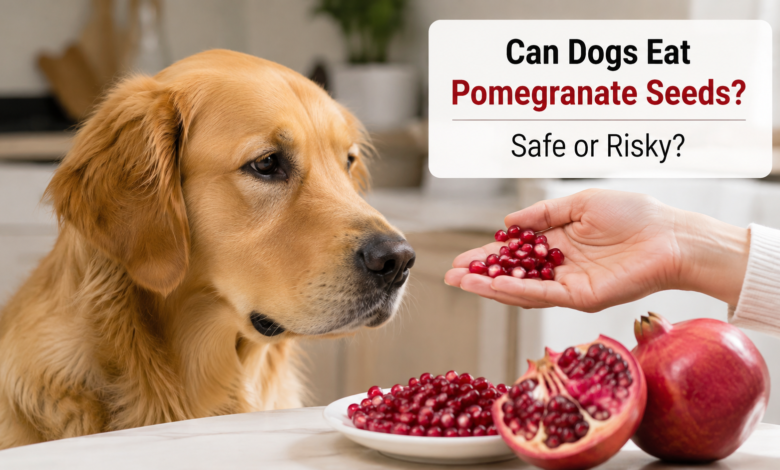
Pomegranate may be a nutritious fruit for people, but that does not automatically make every part of it suitable for dogs. So, can dogs eat pomegranate seeds? The safest answer is that fresh pomegranate seeds, also called arils, are best avoided as a regular dog treat. They are not generally considered poisonous to dogs, but they can be difficult to digest and may cause vomiting, diarrhea, or, when eaten in larger quantities, a digestive blockage.
This distinction matters because “not toxic” does not necessarily mean “safe to feed.” Dogs have different digestive systems from humans, and some foods that provide useful nutrients for people offer little benefit while creating unnecessary risks for pets.
Can Dogs Eat Pomegranate Seeds?
So, can dogs eat pomegranate seeds without becoming seriously ill? A small accidental amount is unlikely to cause a problem in many healthy adult dogs, but intentionally feeding fresh pomegranate seeds is generally not recommended. Veterinary guidance from the American Kennel Club and PetMD notes that the seeds can cause gastrointestinal upset and may contribute to an intestinal obstruction when a dog consumes a moderate or large quantity.
The seeds are firm and do not break down easily during digestion. That makes them different from softer fruits that can be offered to dogs in small, appropriate portions. A dog that steals one or two seeds from the floor is usually in a very different situation from a dog that eats a bowlful.
It is also important to understand that the edible portion of a pomegranate is technically an aril: a juicy covering surrounding the actual seed. Regardless of terminology, the practical concern remains the same. Fresh pomegranate is not a necessary part of a balanced canine diet.
Are Pomegranate Seeds Toxic to Dogs?
One reason the question about can dogs eat pomegranate seeds can be confusing is that pomegranate is not generally classified as a poisonous fruit for dogs. However, toxicity and digestive safety are two different issues.
The main concern with the fresh fruit is gastrointestinal irritation and the possibility of obstruction rather than classic poisoning. Dogs that consume larger quantities may develop vomiting, diarrhea, abdominal discomfort, or other signs of digestive distress. The hard rind and stem are particularly inappropriate because they are tough and can create an obstruction if swallowed.
Therefore, dog owners should not interpret “pomegranate isn’t toxic” as permission to give their dog unlimited seeds. The safest approach is prevention: keep the whole fruit, peel, stem, and discarded pieces away from dogs.
This is especially important for small dogs, puppies, dogs that gulp food, and pets with previous digestive problems. Their individual risk can differ considerably.
What Happens If a Dog Eats Pomegranate Seeds?
If your dog accidentally eats pomegranate, do not panic. The amount consumed is important. Eating a couple of seeds is generally less concerning than swallowing a large portion of the fruit. Still, owners should watch the dog closely for changes in behavior or digestion.
Possible signs include vomiting, diarrhea, reduced appetite, abdominal discomfort, lethargy, or unusual behavior. A larger ingestion creates greater concern because the seeds and other tough fruit components may be difficult to pass.
If your dog has eaten a substantial quantity, consumed the rind or stem, or begins showing concerning symptoms, contact your veterinarian promptly. Do not attempt to make your dog vomit unless a veterinary professional specifically tells you to do so.
When speaking with your veterinarian, be prepared to explain:
- Approximately how much fruit your dog ate
- Whether the dog swallowed seeds, rind, or stem
- When the ingestion occurred
- Your dog’s approximate size and age
- Any symptoms that have already appeared
That information can help the veterinary team determine whether home observation or an examination is appropriate.
Are There Health Benefits of Pomegranate for Dogs?
Pomegranate contains antioxidants, fiber, potassium, and other nutrients that can be valuable in human nutrition. That naturally raises another question: if pomegranate is nutritious for people, why shouldn’t dogs simply eat it?
The answer is that dogs do not need to obtain these nutrients from pomegranate. A complete and balanced dog food should already provide the nutrients a healthy dog requires. Adding a human superfood is therefore not automatically an improvement.
Interestingly, pomegranate-derived ingredients are sometimes used in commercially formulated dog foods, treats, and supplements. This is different from handing a dog a whole fresh pomegranate. Formulated products can use controlled quantities and ingredients selected specifically for canine diets.
If you are considering a pomegranate supplement for your dog, discuss it with your veterinarian first. This is particularly important if your pet takes medication, has a chronic health condition, follows a prescription diet, or has a sensitive digestive system.
Can Dogs Eat Pomegranate Rind, Peel, or Juice?
The answer to can dogs eat pomegranate seeds becomes even clearer when the other parts of the fruit are considered. Dogs should not be given pomegranate peel, rind, stems, or leaves. The rind is tough and difficult to digest, while swallowed pieces can increase the risk of gastrointestinal obstruction.
Pomegranate juice is also not a good substitute for fresh fruit. Human fruit juices can contain concentrated sugar and are unnecessary for dogs. Products containing added sweeteners are an even bigger concern because certain sweeteners, particularly xylitol, are highly dangerous to dogs.
Chocolate-covered pomegranate seeds should never be offered to a dog. Besides the digestive concerns associated with the seeds, chocolate itself can be toxic to dogs.
For everyday treats, it is much easier to choose foods with a well-established safety profile rather than trying to adapt a complicated fruit for canine consumption.
What Fruit Can Dogs Eat Instead?
If you’re looking for a healthy fruit treat after learning can dogs eat pomegranate seeds, there are several simpler options. Depending on your dog’s individual diet and health needs, small portions of dog-safe fruits can be used as occasional treats.
Examples include apples with the seeds and core removed, bananas, blueberries, and small pieces of seedless watermelon. Fruits should remain treats rather than replacing a nutritionally complete dog food.
Portion size matters. Even a safe fruit can cause digestive upset when a dog eats too much, and fruit can add extra calories and natural sugar to the diet. Introduce unfamiliar foods gradually and stop if your dog develops digestive problems.
The safest treat is one that fits your dog’s overall nutritional needs, not simply one that happens to be healthy for humans.
Conclusion: Should Dogs Eat Pomegranate Seeds?
So, can dogs eat pomegranate seeds? While pomegranate is not generally considered poisonous to dogs, fresh seeds are not a recommended treat because they can be difficult to digest and may cause vomiting, diarrhea, or potentially an intestinal blockage when consumed in larger quantities.
If your dog accidentally eats one or two seeds, monitor them rather than assuming an emergency. However, a large amount, ingestion of the rind or stem, or symptoms such as repeated vomiting, diarrhea, lethargy, or abdominal discomfort warrant veterinary advice.
For routine rewards, choose dog-safe treats or appropriately prepared fruits instead. When in doubt, your veterinarian can help you decide what best fits your dog’s age, size, health history, and regular diet.
More Pet Guides: For more pet-related guides, tips, and helpful information, visit PetOrbit.blog. Thank you for reading this article!
(FAQs)
Can dogs eat pomegranate seeds in small amounts?
A very small accidental amount is unlikely to cause serious problems in many healthy dogs, but fresh pomegranate seeds are still not recommended as a routine treat. They can cause digestive upset and may be difficult for dogs to digest. If your dog consumes more than a few seeds, contact your veterinarian for individualized advice.
Are pomegranate seeds poisonous to dogs?
Pomegranate seeds are not generally considered poisonous to dogs. The bigger concern is gastrointestinal irritation and possible obstruction, particularly after a dog consumes a larger amount. Therefore, “not poisonous” should not be confused with “safe to feed freely.”
What should I do if my dog ate a whole pomegranate?
If your dog ate a whole pomegranate, determine approximately how much was consumed and whether the rind or stem was swallowed. Monitor for vomiting, diarrhea, abdominal discomfort, lethargy, or appetite changes, and contact your veterinarian, especially if the quantity was substantial or symptoms develop.
Can puppies eat pomegranate seeds?
Puppies should not be given fresh pomegranate seeds. Young dogs can have sensitive digestive systems, and the firm seeds may create unnecessary gastrointestinal and obstruction concerns. A puppy’s diet should primarily consist of nutritionally complete food appropriate for its growth stage.
Can dogs eat pomegranate peel or rind?
No. Pomegranate peel and rind are tough and difficult to digest. Swallowed pieces can contribute to gastrointestinal problems and may create an obstruction. Keep discarded rinds and stems securely away from dogs.
Can dogs eat pomegranate-flavored dog food?
Some commercially produced dog foods and treats contain pomegranate-derived ingredients. These products are different from feeding a dog fresh pomegranate because their ingredients and quantities are formulated for pet diets. If your dog has a medical condition or follows a prescription diet, ask your veterinarian before introducing a new product.
What are safer fruit alternatives for dogs?
Small portions of appropriately prepared apples, bananas, blueberries, and seedless watermelon can be suitable treats for many dogs. Remove problematic seeds, cores, pits, or rinds where appropriate, and introduce new foods gradually.
Is pomegranate juice safe for dogs?
Pomegranate juice is not necessary for dogs and is generally not a better choice than ordinary dog treats. Human juices may contain concentrated sugar or other ingredients that are unsuitable for pets. Never give a product containing xylitol, which is toxic to dogs. When choosing a supplement or specialized product, consult your veterinarian first.

I’m a Pet Niche Expert and Pet Blogger with 12 years of experience in researching and sharing practical, reliable information about pets. Through PetOrbit.blog, I help pet parents and animal lovers better understand their pets and make informed decisions about their care and well-being.
My expertise covers a wide range of pet topics, including pet health, pet food and nutrition, dog and cat breeds, grooming, behavior, training, safety, pet care, travel with pets, and overall pet wellness. I also explore information about different types of pets, their unique needs, characteristics, lifestyles, and responsible ownership.
With more than 12 years of experience in the pet niche, my focus is on creating clear, useful, and easy-to-understand content based on practical knowledge, careful research, and real-world pet care considerations. I believe pet information should be informative without being unnecessarily complicated, so my goal is to make every article helpful for both new and experienced pet owners.
At PetOrbit, my mission is to provide valuable pet guides, breed information, health and nutrition insights, food and care tips, travel advice, and trustworthy resources that help pets live healthier, happier, and more comfortable lives.
PetOrbit.blog — Practical Pet Knowledge for Better Pet Care.