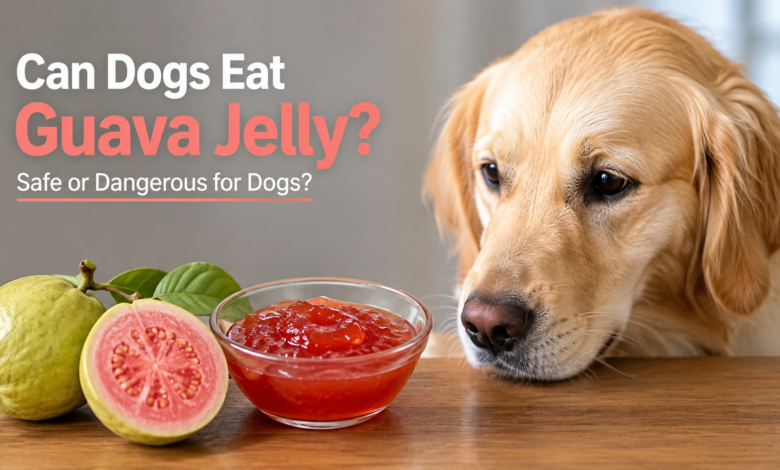
Guava may seem like a harmless tropical fruit, but guava jelly is a very different food. If you are wondering, can dogs eat guava jelly, the safest answer is that it is generally better to avoid giving dogs human guava jelly. The fruit itself can be suitable in small amounts for many healthy dogs, while jelly usually contains concentrated sugar, sweeteners, preservatives, and other ingredients that dogs do not need.
This guide explains whether can dogs eat guava jelly, what makes jelly different from fresh guava, which ingredients can be dangerous, how much is too much, and what you should do if your dog accidentally eats some.
Can Dogs Eat Guava Jelly Safely?
So, can dogs eat guava jelly without problems? A small amount of ordinary guava jelly is unlikely to cause serious poisoning in an otherwise healthy dog if it contains only common ingredients such as guava, sugar, water, and pectin. However, that does not make it a recommended dog treat.
The main concern is that jelly is usually high in added sugar. Dogs do not need sugary spreads as part of a balanced diet, and excessive treats can contribute unnecessary calories and weight gain. Veterinary nutrition guidance generally recommends keeping treats and snacks to no more than about 10% of a dog’s daily calorie intake.
There is also an important distinction between regular jelly and sugar-free jelly. Some sugar-free products can contain xylitol, a sweetener that is highly toxic to dogs. The U.S. Food and Drug Administration warns that xylitol can cause a rapid and potentially life-threatening drop in blood sugar and may also cause seizures, liver failure, and other serious complications.
Why Guava Jelly Is Different From Fresh Guava
If you are asking can dogs eat guava jelly, it helps to separate the fruit from the processed product. Fresh guava provides water, fiber, and naturally occurring nutrients, whereas guava jelly is designed primarily as a sweet spread.
Jelly may contain large amounts of added sugar, concentrated fruit ingredients, preservatives, artificial flavors, or sweeteners. Depending on the recipe, it may also contain ingredients that are unsuitable for dogs.
Fresh guava, when properly prepared, can be offered occasionally to many healthy dogs in small portions. Remove the stem and any hard or difficult-to-chew parts, cut the fruit into small pieces, and introduce it gradually. Too much fruit at once can cause digestive upset because of its fiber and natural sugars.
By contrast, jelly offers little nutritional advantage for a dog. If your goal is to give your pet a fruity snack, a small piece of appropriate fresh fruit is generally a better choice than a sugary spread.
The Biggest Danger: Xylitol in Sugar-Free Jelly
The most important reason to check the label before deciding can dogs eat guava jelly is xylitol. This sweetener can appear in sugar-free foods, including some jams and jellies. FDA materials specifically list sugar-free jams and jellies among products that may contain xylitol.
Dogs can absorb xylitol rapidly, triggering a powerful insulin response. This can cause hypoglycemia, or dangerously low blood sugar. Signs can begin quickly and may include vomiting, weakness, reduced activity, difficulty walking, staggering, collapse, or seizures. Severe poisoning can also involve liver failure and bleeding problems.
If your dog has eaten guava jelly containing xylitol, do not wait to see whether symptoms develop. Contact a veterinarian or emergency veterinary clinic immediately and tell them the product name, ingredients, approximate amount eaten, and your dog’s weight.
Do not assume that a product is safe simply because its label says “sugar-free,” “low sugar,” or “natural.” Read the complete ingredient list.
How Much Guava Jelly Can Dogs Have?
For the question can dogs eat guava jelly, there is no recommended serving size because guava jelly is not a necessary or particularly useful food for dogs.
If a healthy dog accidentally licks a tiny amount of ordinary jelly that contains no xylitol or other toxic ingredients, serious poisoning is unlikely. However, the amount matters, especially for small dogs and puppies. Eating a large quantity can cause stomach upset because of the high sugar content and may add a substantial number of calories.
Dogs with diabetes, obesity, pancreatitis, food sensitivities, or other medical conditions may need stricter dietary control. Veterinary nutrition guidance notes that dogs with medical conditions or special diets should have treats discussed with their veterinary care team.
Therefore, rather than deliberately feeding jelly, choose a dog-appropriate treat that fits your pet’s normal diet.
What Should You Do If Your Dog Eats Guava Jelly?
If you are searching can dogs eat guava jelly because your dog has already eaten some, first stay calm and check the packaging. The ingredient list is more important than the flavor.
Look specifically for xylitol. It can also be identified by names such as birch sugar, wood sugar, or birch bark extract.
If xylitol is listed, treat the situation as an emergency and contact a veterinarian immediately. Do not wait for symptoms.
If the jelly contains no xylitol and your dog ate only a small amount, monitor for digestive symptoms such as vomiting, diarrhea, abdominal discomfort, or unusual behavior. If your dog consumed a large amount, is very small, has an underlying health condition, or develops concerning symptoms, contact your veterinarian.
Keep the jar or packaging available. The veterinarian may need the exact ingredients and product information to assess the risk.
Better Fruit Treats for Dogs
For owners wondering can dogs eat guava jelly, the better question is what fruity foods can be offered safely and occasionally. Dogs can enjoy certain fruits when they are prepared appropriately and given in moderation.
Small portions of dog-safe fruits can include apples without seeds and core, blueberries, strawberries, watermelon without seeds, and plain banana. Each fruit has different nutritional properties, so portions should remain modest.
Fresh guava may also be an occasional option for a healthy dog when prepared into small, manageable pieces. However, fruit should remain a treat rather than replacing a complete and balanced dog food.
Avoid turning fruit into sugary desserts. Dogs generally benefit more from simple foods than from sweetened human snacks. If your dog has diabetes, obesity, gastrointestinal disease, pancreatitis, allergies, or another medical condition, ask your veterinarian before introducing new treats.
Final Verdict: Should Dogs Eat Guava Jelly?
So, can dogs eat guava jelly? While a tiny amount of ordinary, non-xylitol guava jelly may not cause serious harm to a healthy dog, it is not a good routine treat. The added sugar provides little nutritional benefit, and some products can contain ingredients that are dangerous.
The biggest warning is xylitol. If a jelly contains xylitol, it should never be given to a dog, and accidental ingestion requires prompt veterinary attention.
For everyday rewards, choose appropriate dog treats or small portions of suitable fresh fruit instead. When in doubt, read the ingredient label first. That simple habit can prevent a potentially dangerous mistake.
More Pet Guides: For more pet-related guides, tips, and helpful information, visit PetOrbit.blog. Thank you for reading this article!
(FAQs)
Can dogs eat guava jelly if it has no xylitol?
Can dogs eat guava jelly without xylitol? A small accidental amount of ordinary guava jelly is unlikely to be toxic to most healthy dogs, but it is still not an ideal treat because of its added sugar. It is better to choose a dog-appropriate snack or a small portion of suitable fresh fruit.
Can dogs eat sugar-free guava jelly?
Can dogs eat guava jelly labeled sugar-free? You should not give it to your dog unless you have checked every ingredient. Sugar-free jellies may contain xylitol, which is highly toxic to dogs. FDA guidance specifically warns about xylitol in sugar-free jams and jellies.
What happens if a dog eats guava jelly?
If a dog eats a small amount of regular jelly without xylitol, it may experience no significant effects, although stomach upset is possible. A larger amount can cause digestive problems. If the product contains xylitol, however, the situation can become life-threatening and requires immediate veterinary attention.
Is fresh guava better than guava jelly for dogs?
Yes, in general. Fresh guava does not have the same concentration of added sugar found in many jellies. It should still be given in moderation and prepared into small pieces. Can dogs eat guava jelly is therefore a different nutritional question from whether they can occasionally eat properly prepared fresh guava.
Can puppies eat guava jelly?
Puppies have developing digestive systems and specific nutritional needs, so sugary human foods are best avoided. Can dogs eat guava jelly is especially important to consider carefully with puppies because even small amounts of inappropriate ingredients can be significant relative to their body size.
Can dogs eat homemade guava jelly?
Homemade jelly may avoid certain additives, but it can still contain substantial amounts of sugar. More importantly, recipes using sugar substitutes must be checked carefully. Never use xylitol in anything intended for a dog, and do not assume a homemade recipe is automatically pet-safe.
What should I do if my dog ate xylitol-containing guava jelly?
If you discover that your dog ate jelly containing xylitol, contact your veterinarian or an emergency veterinary clinic immediately. Xylitol poisoning can develop rapidly, and symptoms may include vomiting, weakness, difficulty walking, collapse, and seizures.
Is guava jelly good for dogs?
No. Even when it does not contain a toxic sweetener, guava jelly is not a nutritionally necessary food for dogs. Can dogs eat guava jelly safely is therefore less important than choosing treats that provide appropriate nutrition without unnecessary added sugar or risky ingredients.

I’m a Pet Niche Expert and Pet Blogger with 12 years of experience in researching and sharing practical, reliable information about pets. Through PetOrbit.blog, I help pet parents and animal lovers better understand their pets and make informed decisions about their care and well-being.
My expertise covers a wide range of pet topics, including pet health, pet food and nutrition, dog and cat breeds, grooming, behavior, training, safety, pet care, travel with pets, and overall pet wellness. I also explore information about different types of pets, their unique needs, characteristics, lifestyles, and responsible ownership.
With more than 12 years of experience in the pet niche, my focus is on creating clear, useful, and easy-to-understand content based on practical knowledge, careful research, and real-world pet care considerations. I believe pet information should be informative without being unnecessarily complicated, so my goal is to make every article helpful for both new and experienced pet owners.
At PetOrbit, my mission is to provide valuable pet guides, breed information, health and nutrition insights, food and care tips, travel advice, and trustworthy resources that help pets live healthier, happier, and more comfortable lives.
PetOrbit.blog — Practical Pet Knowledge for Better Pet Care.