GI Blockage in Dogs: Dangerous Warning Signs, Causes, Treatment, and Recovery

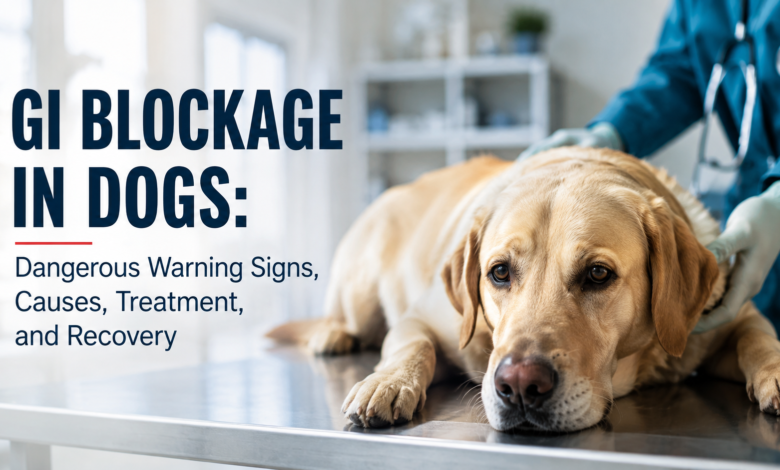
A dog that suddenly starts vomiting, refuses food, seems painful, or becomes unusually tired may have more than a simple stomach upset. GI blockage in dogs occurs when food, fluid, or intestinal contents cannot move normally through the gastrointestinal tract. It is potentially life-threatening because an obstruction can damage the intestinal wall, cause dehydration, and interfere with the blood supply to the bowel.
The problem is especially concerning when a dog has swallowed a toy, bone, sock, plastic, rock, corn cob, or another non-food item. This guide explains the most important symptoms, causes, diagnostic tests, treatment options, recovery expectations, and prevention strategies so owners can recognize a possible emergency early.
What Is gi blockage in dogs?
GI blockage in dogs means there is a partial or complete obstruction somewhere in the gastrointestinal tract. The blockage may occur in the stomach, small intestine, or, less commonly, farther along the digestive tract.
Foreign objects are among the most common causes. Some objects pass naturally, but others become lodged and prevent normal movement of food and digestive fluids. Obstructions can also develop because of intestinal telescoping, known as intussusception, tumors, hernias, or other abnormalities.
A partial obstruction may allow some material to pass so that the signs may appear less dramatic at first. A complete obstruction can progress rapidly. As fluid and gas build up above the blockage, the intestine stretches. Continued pressure can compromise circulation and eventually cause tissue death, leakage, infection, or shock.
That is why suspected GI blockage in dogs should not be treated as ordinary indigestion.
Common Causes of gi blockage in dogs
Foreign-body ingestion is a major cause, particularly in dogs that chew or swallow inappropriate objects. Puppies and young dogs may be especially prone to this behavior, although dogs of any age can develop an obstruction. Large-breed dogs may also be at increased risk of foreign-body obstruction.
Common objects involved include:
- Socks, clothing, and fabric
- Plastic toys or pieces of toys
- Bones and large chews
- Rocks and stones
- Sticks
- Food wrappers
- Corn cobs
- String or other long, thin materials
Not every swallowed object causes an obstruction. The object’s size, shape, location, and composition all matter. Long or linear foreign bodies can be particularly dangerous because they may cause the intestines to bunch together and potentially injure or perforate the intestinal wall.
Other causes include intussusception, tumors, intestinal narrowing, and bowel entrapment associated with certain hernias. Therefore, a blockage is not always caused by something the dog swallowed.
Warning Signs of gi blockage in dogs
Symptoms of GI blockage in dogs vary depending on the location and severity of the obstruction. Vomiting and loss of appetite are common warning signs, while diarrhea, lethargy, abdominal pain, dehydration, weight loss, and abdominal swelling may also occur.
A dog with a suspected blockage may:
- Vomit repeatedly or become unable to keep food down
- Refuse food
- Become weak, quiet, or unusually sleepy
- Show abdominal tenderness or pain
- Strain to defecate or produce only small amounts of stool
- Develop diarrhea
- Have a swollen or uncomfortable abdomen
- Change behavior when picked up or touched around the belly
- Become dehydrated
Importantly, passing stool does not automatically rule out an obstruction. A partial blockage may still allow some feces or liquid to pass.
Repeated vomiting combined with abdominal pain, marked weakness, or a known history of swallowing an object deserves urgent veterinary attention. Severe obstruction can progress to dehydration, intestinal damage, peritonitis, and shock.
How Veterinarians Diagnose gi blockage in dogs
Diagnosing GI blockage in dogs usually begins with a detailed history and physical examination. Tell the veterinarian exactly what symptoms you have noticed and whether your dog could have accessed toys, bones, clothing, trash, string, or other objects.
The veterinarian may recommend blood tests to assess hydration, electrolyte disturbances, inflammation, and the dog’s overall condition. Abdominal X-rays commonly look for foreign objects, abnormal intestinal dilation, or patterns suggesting obstruction. However, not every foreign body is clearly visible on a standard X-ray.
Ultrasound can provide additional information about the intestinal walls, fluid-filled loops, masses, and some foreign bodies. Contrast imaging or repeated X-rays may sometimes be used when the initial findings are uncertain.
In selected cases, an endoscope can retrieve an object that is accessible in the stomach or upper gastrointestinal tract. When an obstruction cannot be safely removed this way, exploratory surgery may be necessary.
Treatment for GI blockage in dogs
Treatment depends on the location, severity, cause, and the dog’s condition. Because GI blockage in dogs can compromise intestinal blood flow, treatment often needs to happen quickly.
A veterinarian may first stabilize the dog with intravenous fluids and correction of electrolyte or acid-base abnormalities. Pain control and other supportive treatment may also be required.
If a small, smooth object is moving normally through the digestive tract and the dog remains stable, a veterinarian may sometimes recommend close monitoring with repeat imaging. However, this is not a situation for home observation without professional guidance. If the object stops progressing, the dog’s condition worsens, or concerning vomiting and lethargy continue, removal may become necessary.
Endoscopic removal may be appropriate for certain objects located in the stomach. Intestinal obstructions more often require surgery. During surgery, the veterinarian removes the foreign material and evaluates the bowel for damage. If part of the intestine has died or been perforated, the damaged section may need to be removed, and the healthy ends surgically joined.
Do not give laxatives, induce vomiting, or attempt to push an object through the digestive tract unless a veterinarian specifically instructs you to do so. Some objects can cause greater injury during movement.
Recovery, Prognosis, and Prevention of gi blockage in dogs
The outlook for GI blockage in dogs is generally better when the obstruction is recognized and treated before severe intestinal damage develops. Dogs with serious complications such as shock, infection, peritonitis, or significant loss of intestinal tissue have a more guarded prognosis.
After treatment, the veterinary team may continue fluids, pain control, anti-nausea medication, antibiotics when indicated, and careful nutritional management. Food is typically reintroduced gradually once vomiting has stopped and the veterinarian considers the digestive tract stable.
During recovery, owners should watch closely for repeated vomiting, worsening lethargy, abdominal pain, fever, appetite loss, or other changes and contact the veterinary team if they occur.
Prevention is often easier than treatment. Keep socks, children’s toys, bones, trash, rocks, fabric, and other chewable objects out of your dog’s reach. Choose appropriately sized toys and supervise dogs that aggressively chew or swallow objects. If your dog repeatedly eats non-food items, discuss the behavior with a veterinarian because underlying behavioral or medical factors may contribute.
When gi blockage in dogs Is an Emergency
GI blockage in dogs should be considered an emergency when there is persistent or repeated vomiting, severe abdominal pain, pronounced weakness, collapse, significant abdominal swelling, or a known ingestion of a potentially obstructive object.
Do not wait for the dog to become completely unable to pass stool. An obstruction can worsen even when some material continues moving through the intestine.
If you know your dog swallowed an object, contact a veterinarian promptly rather than waiting for symptoms. Early assessment can determine whether monitoring is reasonable or whether immediate removal is safer.
The safest approach is simple: when obstruction is a real possibility, professional veterinary evaluation is better than trying home remedies. Rapid diagnosis and treatment can substantially improve the chance of an uncomplicated recovery.
Conclusion
GI blockage in dogs is a serious gastrointestinal problem that can progress from vomiting and appetite loss to intestinal injury, infection, and shock. Foreign objects are a frequent cause, but conditions such as intussusception, tumors, and intestinal entrapment can also create an obstruction.
Watch for repeated vomiting, abdominal pain, lethargy, appetite loss, dehydration, and changes in bowel movements. If these signs occur—especially after your dog may have swallowed something unusual—contact a veterinarian promptly. Early diagnosis gives your dog the best opportunity for effective treatment and recovery.
More Pet Guides: For more pet-related guides, tips, and helpful information, visit PetOrbit.blog. Thank you for reading this article!
(FAQs)
What are the first signs of GI blockage in dogs?
The earliest signs can include vomiting, reduced appetite, lethargy, abdominal discomfort, and changes in bowel movements. Some dogs may have diarrhea or strain to defecate. Signs can vary considerably depending on whether the obstruction is partial or complete and where it is located.
Can a dog still poop with GI blockage in dogs?
Yes. A dog with a partial obstruction may still pass stool or diarrhea because some intestinal contents can move around the obstruction. Therefore, a bowel movement does not reliably rule out GI blockage in dogs, especially when vomiting, appetite loss, or abdominal pain are also present.
How long can a dog survive with an intestinal blockage?
There is no safe universal timeframe. The risk depends on the location and type of obstruction, whether blood flow is compromised, and the dog’s overall condition. Untreated obstruction can lead to tissue death, perforation, infection, dehydration, and shock, so suspected cases require prompt veterinary assessment.
Will a dog with GI blockage always need surgery?
No. Some small, smooth foreign objects may pass under veterinary supervision when the dog is stable, and imaging shows that the object is progressing. However, persistent obstruction, worsening clinical signs, or an object that cannot safely pass may require endoscopic removal or surgery.
Can a dog recover from GI blockage in dogs?
Yes. Many dogs have a good outcome when a veterinarian diagnoses and treats an obstruction promptly. Prognosis becomes more concerning when there is intestinal perforation, severe infection, shock, extensive tissue damage, or other serious complications.
What should I do if my dog swallowed a toy?
Contact your veterinarian as soon as possible and explain what was swallowed, approximately when it happened, and whether your dog has developed vomiting or other symptoms. Do not attempt to force the object through the digestive tract or induce vomiting unless your veterinarian specifically recommends it.
How can I prevent GI blockage in dogs?
Reduce access to objects dogs commonly swallow, including socks, toys that can break apart, bones, rocks, wrappers, and household trash. Supervise destructive chewers and use appropriately sized toys. A veterinarian should also evaluate dogs that repeatedly consume non-food objects.

I’m a Pet Niche Expert and Pet Blogger with 12 years of experience in researching and sharing practical, reliable information about pets. Through PetOrbit.blog, I help pet parents and animal lovers better understand their pets and make informed decisions about their care and well-being.
My expertise covers a wide range of pet topics, including pet health, pet food and nutrition, dog and cat breeds, grooming, behavior, training, safety, pet care, travel with pets, and overall pet wellness. I also explore information about different types of pets, their unique needs, characteristics, lifestyles, and responsible ownership.
With more than 12 years of experience in the pet niche, my focus is on creating clear, useful, and easy-to-understand content based on practical knowledge, careful research, and real-world pet care considerations. I believe pet information should be informative without being unnecessarily complicated, so my goal is to make every article helpful for both new and experienced pet owners.
At PetOrbit, my mission is to provide valuable pet guides, breed information, health and nutrition insights, food and care tips, travel advice, and trustworthy resources that help pets live healthier, happier, and more comfortable lives.
PetOrbit.blog — Practical Pet Knowledge for Better Pet Care.