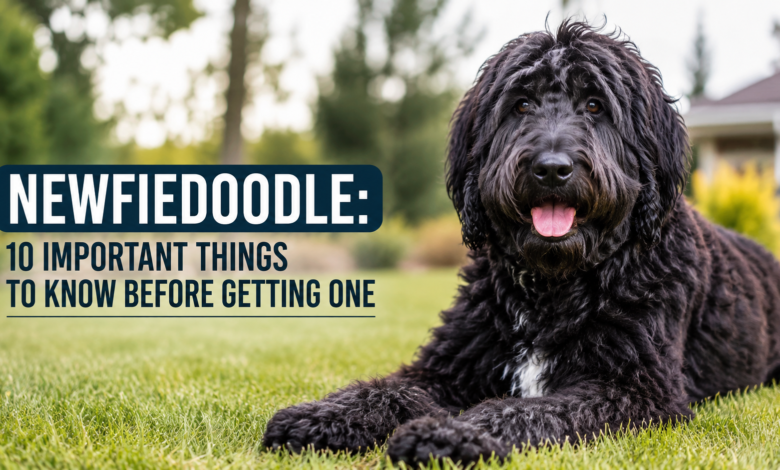
If you love gentle giant dogs but also want the intelligence and trainability associated with Poodles, the newfiedoodle may look like an ideal match. Also called a Newfypoo, Newfiepoo, or Newfoundland Poodle mix, this cross combines a Newfoundland with a Poodle, usually a Standard Poodle. The result can be a remarkably affectionate, intelligent, large dog—but there are important trade-offs.
Before bringing one home, you should understand its adult size, coat maintenance, exercise requirements, temperament, health risks, training needs, and everyday costs. Here are 10 important things prospective owners should know.
What Is a Newfiedoodle?
A newfiedoodle is a cross between a Newfoundland and a Poodle. Because it is a mixed-breed dog rather than a standardized purebred breed, its appearance, size, coat, and personality can vary considerably from one puppy to another. The Poodle parent may contribute intelligence and a curlier, potentially lower-shedding coat, while the Newfoundland side often contributes a calm, affectionate, people-oriented temperament.
Many adult dogs are genuinely huge. Depending on the parents, an adult may weigh roughly 70 to 130 pounds or more and stand around 22 to 30 inches at the shoulder. These figures are estimates, not guarantees, so prospective owners should look carefully at the actual size of both parents.
The name itself can vary. Newfiedoodle, Newfypoo, and Newdle are all used for essentially the same Newfoundland-Poodle cross.
1. A Newfiedoodle Can Be Extremely Large
The first consideration is size. A fluffy puppy can seem manageable at eight or ten weeks. Still, that same puppy may eventually become a dog that occupies a large portion of your sofa and requires considerable space in your home and vehicle.
Size also affects practical expenses. You need a strong crate, appropriately sized bed, sturdy leash and harness, large-breed food, and enough room for comfortable movement. Veterinary procedures can also become more complicated and expensive as a dog gets larger.
Before buying a puppy, think beyond your current lifestyle. Ask yourself whether you could comfortably manage a 100-pound dog that becomes difficult to move if injured or elderly.
2. The Temperament Is Usually Affectionate and Social
Newfoundlands are widely known for their gentle, patient nature, while Poodles are intelligent and responsive. A newfiedoodle can inherit qualities from both sides and may become a loving, family-focused companion.
Many are happiest when they can stay close to their people. They may follow family members around the house, enjoy interactive games, and seek attention rather than spending long periods completely alone.
However, temperament is never guaranteed by a breed label—Genetics, early socialization, training, environment, and breeding quality all matter. A responsible breeder should prioritize stable behavior rather than selecting puppies solely for color or coat type.
Because of their size, even a friendly dog can accidentally knock over a toddler or older adult. Supervision and early manners are therefore essential.
3. Don’t Assume the Coat Is Hypoallergenic
One of the biggest misconceptions about doodle mixes is that every dog will be hypoallergenic or completely non-shedding. That is not how genetics work.
A newfiedoodle can have a wavy, curly, or straighter, heavier coat. Some shed relatively little, while others may shed noticeably. Coat characteristics can even vary among puppies from the same litter.
People with allergies should spend time with the dog before deciding. No dog can be guaranteed to be completely allergy-free.
The coat also needs serious maintenance. Dense or curly hair can develop mats close to the skin, particularly behind the ears, around the legs, beneath the collar, and in other friction-prone areas.
4. Grooming Is a Major Commitment
A newfiedoodle is not a wash-and-go dog. Regular brushing is necessary, and dogs with dense or curly coats may need frequent, thorough brushing to reach the skin, not just smooth the surface.
Professional grooming may be needed about every six to eight weeks, although the ideal schedule depends on coat type, haircut, and how consistently you maintain the coat at home.
Grooming should include more than clipping hair. Owners should pay attention to nails, ears, paws, skin, teeth, and areas where moisture or debris can become trapped.
If you dislike brushing or don’t want to budget for professional grooming, this mix may not be the right choice.
5. Exercise Should Be Moderate but Consistent
Despite their enormous appearance, many Newfiedoodles do not need hours of intense exercise every day. However, they still require regular physical activity and mental stimulation.
Daily walks, training sessions, controlled play, and appropriate outdoor activities can help maintain fitness and prevent boredom. Some individuals also inherit a strong interest in water from the Newfoundland side.
Puppies need special care because their bones and joints develop rapidly. Avoid forcing young giant-breed puppies into excessive running, jumping, or repetitive high-impact exercise. Your veterinarian can help determine an age-appropriate activity plan.
Keeping an adult dog lean is especially important because excess weight adds stress to already heavily loaded joints.
6. Training Should Start Early
The combination of size and intelligence makes early training particularly valuable. A small puppy jumping on people may seem harmless; a 100-pound adult doing the same thing is a completely different problem.
Use reward-based training and begin with practical behaviors such as name recognition, recall, loose-leash walking, polite greetings, settling calmly, and handling tolerance.
Early socialization is equally important. Gradually introduce puppies to suitable people, environments, sounds, surfaces, grooming routines, and veterinary handling. The objective is not to overwhelm the puppy but to create positive, controlled experiences.
Because Poodles can be highly intelligent, repetitive training may become boring. Short sessions with variety and clear rewards often work better than long drills.
7. Health Screening Matters
A crossbreed is not automatically healthier than its parent breeds. A newfiedoodle can inherit health problems associated with either Newfoundland or Poodle genetics.
Because these dogs are often large, orthopedic health deserves particular attention. Hip and elbow problems are important concerns to discuss with your veterinarian and breeder. Newfoundland breeding recommendations also include hip, elbow, cardiac, and cystinuria screening. Standard Poodles have their own recommended health evaluations, including hip and eye assessments.
Potential owners should ask breeders for documented health testing of both parents rather than accepting vague claims that the puppies are “healthy.”
Other concerns can include heart disease, eye disorders, skin problems, and urinary issues. Cystinuria is a genetic condition specifically recognized in Newfoundland health testing recommendations.
Routine veterinary examinations, appropriate vaccination, parasite prevention, dental care, and weight management remain important throughout life.
8. Feeding Requires Large-Breed Planning
A growing newfiedoodle should not simply be fed as much as it wants. Giant-breed puppies need carefully managed nutrition because excessively rapid growth can contribute to orthopedic problems.
Choose an appropriate complete diet with your veterinarian’s guidance, especially during puppyhood. Adjust feeding amounts based on age, body condition, growth, activity level, and the food’s calorie density.
Adult food costs can also be high because a very large dog naturally consumes more than a small companion breed.
Avoid changing diets repeatedly or adding supplements without a reason. More supplements do not automatically mean better health.
9. Consider the Real Cost of Ownership
The purchase price is only one part of owning a newfiedoodle. The ongoing expenses can be substantial.
Budget for food, routine veterinary care, parasite prevention, vaccinations, grooming, training, bedding, crates, equipment, dental care, and unexpected medical treatment. Pet insurance may also be worth considering, especially given the potential orthopedic and cardiac concerns associated with the parent breeds.
A useful approach is to calculate your expected annual costs before committing to a puppy. Also maintain an emergency fund or another realistic plan for unexpected veterinary bills.
If buying from a breeder, focus on health practices, transparency, puppy raising, and parent temperament rather than choosing solely on the lowest price.
10. It Can Be a Wonderful Family Dog—With the Right Home
For the right household, a newfiedoodle can be an affectionate and rewarding companion. The combination of a gentle giant heritage and Poodle intelligence can produce a dog that enjoys family interaction, training, outdoor activities, and simply being near its people.
However, this is not a low-maintenance designer dog. Take its potential size, grooming needs, food requirements, training demands, and health considerations seriously.
The best home has enough space, time, financial resources, and commitment to care for a giant dog throughout its life. Families with children should also establish rules for respectful interaction and supervise young children around any large dog.
Conclusion
A newfiedoodle can offer an appealing combination of affection, intelligence, trainability, and the gentle presence associated with the Newfoundland. But its advantages come with responsibilities. Expect significant grooming, careful weight management, consistent training, regular exercise, and potentially higher ownership costs.
Most importantly, don’t choose a puppy based only on its adorable appearance or claims that doodle mixes are automatically healthier or hypoallergenic. Research the parents, verify health testing, meet the breeder, evaluate the puppy’s environment, and discuss large-breed care with your veterinarian.
If your household can genuinely accommodate a giant, active, people-oriented dog, a newfiedoodle may become a devoted companion for many years.
More Pet Guides: For more pet-related guides, tips, and helpful information, visit PetOrbit.blog. Thank you for reading this article!
(FAQs)
Is a newfiedoodle a good family dog?
Yes, many individuals can be excellent family companions because they may inherit the Newfoundland’s gentle temperament and the Poodle’s intelligence. However, every dog is an individual. Proper socialization, training, supervision, and responsible breeding are especially important because of the dog’s potential adult size.
How big does a newfiedoodle get?
Adult size varies considerably because this is a mixed breed. Many are large to giant dogs, with some reaching approximately 70 to 130 pounds or more. Height commonly ranges from 22 to 30 inches at the shoulder. Looking at the actual parents provides a better indication than relying on an advertised average.
Does a newfiedoodle shed?
It can. Some have relatively low-shedding curly coats, while others inherit more of the Newfoundland’s heavier coat characteristics and shed more. Coat type isn’t completely predictable, and low shedding doesn’t mean low maintenance.
How often should a newfiedoodle be groomed?
Many need professional grooming roughly every six to eight weeks, combined with regular brushing at home. Dogs with dense or curly coats may require more frequent attention to prevent mats. The exact schedule depends on coat texture and the length you maintain.
Are Newfiedoodles easy to train?
They can be quite trainable because Poodles are highly intelligent and Newfoundlands are generally responsive and people-oriented. Their large size makes early training particularly important. Positive reinforcement, consistency, socialization, and short engaging sessions are effective approaches.
What health problems can a newfiedoodle have?
Potential concerns can come from either parent breed and include orthopedic problems such as hip and elbow disorders, as well as certain cardiac, eye, skin, and urinary conditions. Responsible breeding and documented health screening can reduce some inherited risks, but no breeding program can eliminate every health problem.
How long does a newfiedoodle live?
There is no single established lifespan because the mix is not a standardized breed and individual size and genetics vary. Owners should recognize that giant dogs often have shorter lifespans than many smaller breeds and should prioritize preventive veterinary care, healthy body weight, nutrition, and appropriate exercise.
Is a newfiedoodle good for first-time dog owners?
It can be, but the owner’s preparation matters. A first-time owner should be comfortable managing a potentially giant dog, paying for professional grooming and veterinary care, providing consistent training, and meeting daily exercise and social needs. For someone wanting a small, inexpensive, low-maintenance dog, this mix would likely be a poor fit.

I’m a Pet Niche Expert and Pet Blogger with 12 years of experience in researching and sharing practical, reliable information about pets. Through PetOrbit.blog, I help pet parents and animal lovers better understand their pets and make informed decisions about their care and well-being.
My expertise covers a wide range of pet topics, including pet health, pet food and nutrition, dog and cat breeds, grooming, behavior, training, safety, pet care, travel with pets, and overall pet wellness. I also explore information about different types of pets, their unique needs, characteristics, lifestyles, and responsible ownership.
With more than 12 years of experience in the pet niche, my focus is on creating clear, useful, and easy-to-understand content based on practical knowledge, careful research, and real-world pet care considerations. I believe pet information should be informative without being unnecessarily complicated, so my goal is to make every article helpful for both new and experienced pet owners.
At PetOrbit, my mission is to provide valuable pet guides, breed information, health and nutrition insights, food and care tips, travel advice, and trustworthy resources that help pets live healthier, happier, and more comfortable lives.
PetOrbit.blog — Practical Pet Knowledge for Better Pet Care.