Cats for Cat Allergies: 9 Helpful Cat Breeds Allergy Sufferers Can Consider
Cats for Cat Allergies

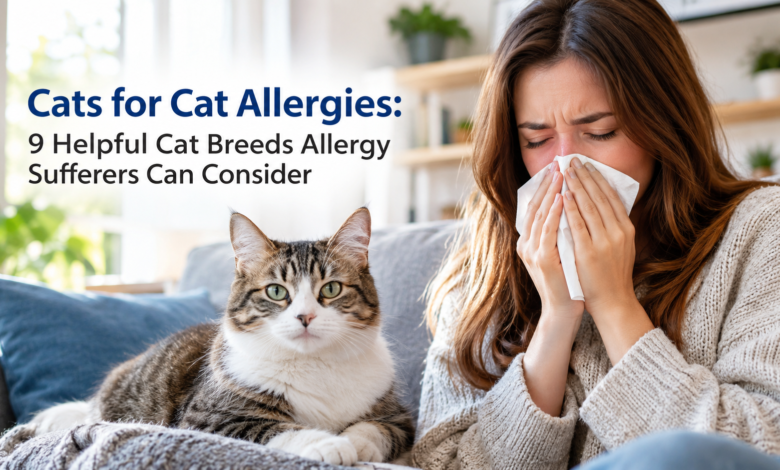
Living with a cat allergy doesn’t always mean giving up the idea of having a feline companion. Some breeds are often considered better choices for people who react to cats because they may shed less, produce fewer allergens, or spread fewer allergens around the home. However, there is an important distinction: no cat is truly hypoallergenic.
For allergy sufferers researching cats for cat allergies, the goal should be to find a cat that may produce or spread fewer allergens while also reducing exposure at home. In this guide, you will learn which nine breeds are commonly considered, what makes each one different, and how to make living with a cat more manageable.
What Makes Cats for Cat Allergies Different?
Before choosing among cats for cat allergies, it helps to understand what actually causes the reaction. Cat allergies are usually triggered by proteins rather than the hair itself. The most important cat allergen is Fel d 1, which is produced mainly through a cat’s saliva and skin secretions.
When cats groom themselves, saliva containing allergens gets onto their coat and skin. The allergen can then become attached to hair and dander and spread around the home.
This explains why a hairless cat is not automatically allergy-free. Likewise, having short hair does not guarantee that someone with allergies will have no reaction.
However, individual cats can produce different amounts of allergens, and breeds also differ in coat type, grooming habits, and shedding patterns. Therefore, some cats may be easier for a particular allergy sufferer to tolerate than others.
The safest approach is to spend time with the specific cat before adoption whenever possible. A reaction to one cat doesn’t necessarily predict how you will respond to another.
9 Cats for Cat Allergies Allergy Sufferers May Consider
Several breeds often come up when people search for cats for cat allergies. They don’t guarantee they’ll prevent allergic reactions, but their coat characteristics or reputation for producing fewer allergens make them worth researching.
1. Siberian
Siberian cats have a long, dense coat and may seem like an unusual choice for an allergy sufferer. Yet they are often included on lists of potentially allergy-friendlier cats because some individual Siberians may produce relatively low levels of Fel d 1.
They are affectionate, intelligent, and generally social. Their thick coat does require regular grooming, however, so allergy sufferers should consider whether brushing and loose hair could increase their exposure.
2. Balinese
The Balinese has a silky, medium-length coat and is closely related to the Siamese. Despite its longer appearance, it has a relatively manageable coat and is commonly mentioned among potentially allergy-friendlier breeds.
Balinese cats are intelligent, vocal, active, and strongly attached to their families. They may be a good fit for households looking for an interactive companion rather than an independent cat.
3. Devon Rex
The Devon Rex has a distinctive curly coat with relatively fine hair. It generally sheds less visibly than many traditional cats, which can make household grooming easier.
This playful breed is energetic, affectionate, and highly people-oriented. However, reduced shedding doesn’t mean fewer allergens. A Devon Rex can still trigger symptoms, so individual exposure testing remains important.
4. Cornish Rex
Cornish Rex cats have a short, wavy coat that feels very different from the typical feline coat. Their unusual fur can mean less loose hair around the home.
They are active, playful, curious cats that often enjoy climbing and interacting with people. For someone investigating cats for cat allergies, the Cornish Rex may be worth considering, particularly if visible shedding is a concern.
5. Sphynx
The Sphynx is famous for being hairless, but it should not be described as a hypoallergenic cat. It still produces Fel d 1, and allergens can remain on the skin.
Interestingly, the absence of a conventional coat may mean less loose hair around the house, but Sphynx cats require regular skin care because natural oils accumulate on their skin. They are typically affectionate, social, and comfortable being close to their owners.
6. Russian Blue
Russian Blue cats have a dense, short coat and often come up in discussions about allergy-friendly cats. Their coat can help limit loose hair circulating in the home compared with some heavily shedding breeds.
They tend to be intelligent and loyal but can be more reserved around unfamiliar people. A calm home may suit them particularly well.
7. Bengal
Bengals have a short, sleek coat that generally requires less grooming than long-haired breeds. Their distinctive spotted or marbled appearance makes them especially recognisable.
They are energetic, intelligent, and often need plenty of mental stimulation. A Bengal may suit an active household, but prospective owners should spend time with one before adoption to see how their allergies respond.
8. Javanese
Javanese cats have a silky coat without a heavy undercoat. Related to Siamese-type cats, they are known for being intelligent, communicative, and strongly bonded with people.
Their coat can be easier to manage than that of many long-haired breeds. Still, allergen production varies between individual cats, so the breed should not be treated as a guarantee for allergy sufferers.
9. Oriental Shorthair
Oriental Shorthairs have a fine, short coat that is relatively easy to maintain. Their grooming needs and visible shedding can be lower than those of many long-haired cats.
They are generally social, active, curious, and vocal. For people searching for cats for cat allergies, the Oriental Shorthair may be an interesting option, especially for households that prefer an interactive companion.
How to Choose Cats for Cat Allergies Safely
Breed alone should not determine your decision. The individual cat matters enormously. Before bringing a cat home, try to spend meaningful time with the exact animal you are considering.
If possible, visit the cat more than once. Watch for symptoms during or after the visit. Someone with significant allergies or asthma should also discuss cat exposure with an allergist before making a long-term commitment.
Adoption organisations may sometimes allow foster-to-adopt arrangements, which can provide a better opportunity to discover how your body reacts to a particular cat.
Remember that kittens may eventually shed differently as their adult coat develops. So tolerating a kitten doesn’t always guarantee the same response later.
Ways to Reduce Cat Allergens at Home
Even after choosing potentially more suitable cats for cat allergies, environmental management remains important. No breed can eliminate allergens from a home.
Useful strategies include:
- Keep the cat out of the bedroom if possible.
- Wash bedding regularly.
- Vacuum carpets, furniture, and other areas where hair and dander accumulate.
- Consider a HEPA-filter vacuum or air purifier.
- Wash your hands after handling the cat.
- Avoid touching your eyes immediately after petting.
- Clean surfaces where the cat frequently rests.
- Have a non-allergic household member handle regular grooming when possible.
Regular cleaning can reduce accumulated allergens, but it cannot remove them completely. Consistency is more useful than occasional deep cleaning.
Are Cats for Cat Allergies Really Hypoallergenic?
The phrase “hypoallergenic cat” can be misleading. It generally means a cat that may be less likely to trigger symptoms for some people, not a cat that cannot cause allergies.
All cats can produce Fel d 1. Hair length, coat colour, and being hairless do not make a cat completely allergen-free.
For that reason, view cats for cat allergies as potentially more manageable choices, not guaranteed solutions.
Another important point is that allergy severity varies from person to person. One person may tolerate a particular Siberian or Devon Rex reasonably well, while another person may react strongly to the same cat.
If your symptoms include wheezing, breathing difficulty, significant asthma, or severe reactions, do not rely on breed selection alone. Seek professional medical advice before bringing a cat into your home.
Pros, Limitations and Expert Tips for Allergy Sufferers
The biggest potential advantage of choosing one of these cats for cat allergies is that certain coat types or individual cats may be easier for some people to live with. Lower visible shedding can also make household cleaning more manageable.
The limitation is that no breed-based guarantee exists. A cat that is marketed as “hypoallergenic” can still trigger symptoms.
A practical approach is to combine careful cat selection with allergen management. Spend time with the specific cat, keep the environment clean, keep the bedroom as an allergen-controlled area, and seek medical advice if symptoms are significant.
Most importantly, never choose a cat solely because an advertisement claims it is allergy-free. Focus on the individual animal, your own reaction, and whether you can safely manage ongoing exposure.
Conclusion
For people searching for cats for cat allergies, breeds such as the Siberian, Balinese, Devon Rex, Cornish Rex, Sphynx, Russian Blue, Bengal, Javanese, and Oriental Shorthair may be worth investigating. However, none are completely hypoallergenic.
The most important allergen is Fel d 1, and every cat can produce it. Individual cats can differ, and personal sensitivity differs even more. Therefore, spending time with a specific cat before adoption is one of the most practical steps you can take.
With realistic expectations, careful selection, consistent cleaning, and appropriate medical guidance, some allergy sufferers may be able to enjoy life with a feline companion more comfortably.
More Pet Guides: For more pet-related guides, tips, and helpful information, visit PetOrbit.blog. Thank you for reading this article!
(FAQs)
What are the best cats for cat allergies?
No single cat is universally best for allergy sufferers because reactions vary. Siberian, Balinese, Devon Rex, Cornish Rex, Sphynx, Russian Blue, Bengal, Javanese, and Oriental Shorthair cats are commonly considered potentially easier options. However, every cat can produce allergens, so it’s important to test your reaction to the individual cat.
Are cats for cat allergies completely hypoallergenic?
No. Even cats commonly marketed as hypoallergenic can produce Fel d 1, the major cat allergen. Hairless cats are not automatically allergy-free, either. The term “hypoallergenic” should therefore be understood as “potentially less likely to cause symptoms,” not “allergen-free.”
Which cat produces the least allergens?
No breed can reliably be identified as completely allergen-free. Individual cats can produce different amounts of Fel d 1, which means a person’s reaction may vary significantly from one cat to another, even within the same breed.
Can a Sphynx cat be good for someone with allergies?
A Sphynx may produce less loose hair because it has little conventional fur, but it still produces Fel d 1. Allergens can remain on its skin and be transferred through contact. So don’t assume a Sphynx is safe for someone with a cat allergy.
Does cat hair cause most cat allergies?
Cat hair itself is not generally the primary allergen. Proteins such as Fel d 1 are major triggers. These allergens can stick to hair, skin flakes, and other particles, then spread around the home when cats groom and shed.
How can I live with cats if I have cat allergies?
Reducing exposure can help. Keep the cat away from your bedroom, clean frequently, wash bedding, vacuum regularly, consider HEPA filtration, and wash your hands after handling the cat. People with significant symptoms should also discuss management options with an allergist.
Should I meet a cat before adopting if I have allergies?
Yes. Spending time with the exact cat you plan to adopt can give you useful information about your personal reaction. If possible, visit more than once or consider a foster-to-adopt arrangement. Your response to one cat may not be identical to your response to another.
Can allergy sufferers ever safely own cats for cat allergies?
Some people with cat allergies can live with cats by combining careful cat selection and allergen-reduction strategies, but risk varies. People with asthma or significant allergic symptoms should discuss cat ownership with a qualified healthcare professional before bringing a cat home.

I’m a Pet Niche Expert and Pet Blogger with 12 years of experience in researching and sharing practical, reliable information about pets. Through PetOrbit.blog, I help pet parents and animal lovers better understand their pets and make informed decisions about their care and well-being.
My expertise covers a wide range of pet topics, including pet health, pet food and nutrition, dog and cat breeds, grooming, behavior, training, safety, pet care, travel with pets, and overall pet wellness. I also explore information about different types of pets, their unique needs, characteristics, lifestyles, and responsible ownership.
With more than 12 years of experience in the pet niche, my focus is on creating clear, useful, and easy-to-understand content based on practical knowledge, careful research, and real-world pet care considerations. I believe pet information should be informative without being unnecessarily complicated, so my goal is to make every article helpful for both new and experienced pet owners.
At PetOrbit, my mission is to provide valuable pet guides, breed information, health and nutrition insights, food and care tips, travel advice, and trustworthy resources that help pets live healthier, happier, and more comfortable lives.
PetOrbit.blog — Practical Pet Knowledge for Better Pet Care.