Benadryl for Dogs: Safe or Risky? What how many teeth do dogs have Can Teach You About Dog Health

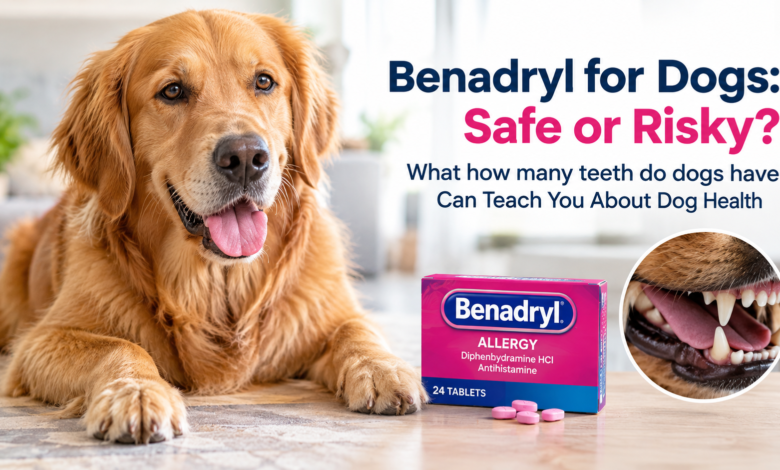
Benadryl is a common household medication, but that does not automatically make it safe for every dog. If your dog has itching, hives, or a mild allergic reaction, you may wonder whether diphenhydramine, the active ingredient in Benadryl, is appropriate.
This guide explains when Benadryl may be used in dogs, when it should be avoided, possible side effects, and why veterinary guidance matters. It also answers the unusual but useful question, how many teeth do dogs have, because understanding normal dog anatomy can help owners recognize broader signs of health problems.
Can Dogs Take Benadryl Safely?
Yes, Benadryl can sometimes be used in dogs under veterinary guidance. The active ingredient, diphenhydramine, is an antihistamine that blocks histamine, a chemical involved in allergic reactions.
Veterinarians may recommend diphenhydramine for certain allergic conditions, insect bites, hives, and other situations where reducing histamine-related symptoms is appropriate. However, Benadryl is not a universal treatment for every type of itching, swelling, or skin problem.
The biggest mistake is assuming that a medication safe for humans is automatically safe for dogs. Dogs can react differently to medicines because of their weight, age, medical conditions, metabolism, and other medications they may be taking.
Another important issue is the specific product. Some human allergy or cold medicines contain additional ingredients that can be dangerous to dogs. Therefore, never give a combination product without confirming its ingredients with a veterinarian.
What Is Benadryl Used for in Dogs?
Diphenhydramine may be used by veterinarians for certain allergic reactions because it can reduce the effects of histamine. Depending on the situation, it may help with symptoms such as mild hives, itching associated with allergies, or reactions to insect bites.
However, Benadryl does not treat the underlying cause of every skin problem. Fleas, mites, bacterial infections, fungal infections, food allergies, environmental allergies, and other conditions can all cause itching.
For example, a dog repeatedly scratching its ears may have an ear infection rather than a simple histamine reaction. Giving an antihistamine might temporarily change the symptoms without solving the actual problem.
Understanding basic anatomy is equally important. Owners frequently search how many teeth do dogs have because changes around the mouth can reveal dental disease. Adult dogs normally have 42 teeth, while puppies generally have 28 deciduous teeth.
How Much Benadryl Can Dogs Have?
There is no single Benadryl dose that is appropriate for every dog. Veterinary dosing is based on factors such as body weight, age, medical history, the reason for treatment, and the exact formulation being used.
Some veterinary protocols use weight-based diphenhydramine dosing, but owners should not calculate a dose from a human package and assume it is appropriate. Liquid products may have different concentrations, while tablets and combination products can contain additional active ingredients.
Before giving Benadryl, check the package carefully. Avoid products containing ingredients such as decongestants unless a veterinarian specifically prescribes them. Products containing xylitol are particularly dangerous because xylitol can cause a rapid and potentially life-threatening drop in blood sugar in dogs.
If you are unsure whether a particular Benadryl product is suitable, contact your veterinarian and provide the exact product name, active ingredients, strength, and your dog’s weight.
The same careful approach applies when investigating oral health. Knowing how many teeth do dogs have gives owners a useful baseline, but counting teeth does not replace a professional dental examination.
Benadryl Side Effects in Dogs
Even when diphenhydramine is appropriate, dogs can experience side effects. Sleepiness is one of the most commonly recognized effects. Some dogs may instead become restless or unusually excited.
Other possible effects can include dry mouth, changes in urination, gastrointestinal upset, increased heart rate, or changes in coordination. The risk can be higher when a dog receives an inappropriate dose or a product containing other medications.
If your dog accidentally consumes a large amount of Benadryl or an unknown medication, contact a veterinarian or emergency veterinary service promptly. Do not wait for severe symptoms to develop.
Emergency signs can include extreme sedation, severe agitation, difficulty breathing, seizures, collapse, abnormal heart rhythm, or loss of consciousness. These symptoms require immediate veterinary attention.
Dental symptoms deserve the same caution. If you are researching how many teeth do dogs have because your dog has missing, loose, broken, or painful teeth, do not assume the change is normal. Adult dogs should generally have 42 permanent teeth, and unexplained tooth loss warrants veterinary evaluation.
When Should You Not Give Benadryl to a Dog?
Benadryl may be inappropriate for some dogs, particularly those with certain medical conditions or those taking other medications. Dogs with glaucoma, cardiovascular problems, urinary retention issues, hypertension, or other health concerns may require special consideration.
Pregnant or nursing dogs also need veterinary guidance before receiving medication. Older dogs and dogs with multiple health conditions may be more sensitive to medication effects.
Most importantly, do not use Benadryl to manage a severe allergic reaction without professional advice. Facial swelling, difficulty breathing, weakness, collapse, vomiting, or widespread hives can indicate a serious reaction that may require emergency treatment.
A veterinarian may use medications other than antihistamines depending on the severity and cause of the reaction.
If your dog has mouth swelling, excessive drooling, difficulty chewing, or facial pain, do not focus only on how many teeth do dogs have. Dental infections and oral injuries can also cause swelling and discomfort and may need examination and treatment.
What Should You Do If Your Dog Takes Too Much Benadryl?
If your dog has swallowed more Benadryl than intended, first determine exactly what was consumed. Keep the package nearby so you can tell the veterinarian the product name, strength, amount, and approximate time of ingestion.
Do not induce vomiting unless a veterinary professional specifically tells you to do so. Some situations require different emergency procedures, and attempting treatment at home can make matters worse.
Watch for unusual sleepiness, agitation, tremors, abnormal breathing, vomiting, rapid heartbeat, seizures, or collapse. Even if your dog initially appears normal, an excessive medication exposure should be discussed with a veterinary professional.
Also check whether the product contains other active ingredients. A combination cold, flu, sinus, or allergy medicine may present a much greater risk than plain diphenhydramine.
Owners sometimes become focused on questions such as how many teeth do dogs have when checking their pet’s overall health. That information is useful, but medication safety depends on the dog’s complete medical picture rather than one physical characteristic.
Benadryl, Dog Health, and Everyday Safety
Medication is only one part of responsible dog care. Owners should keep human medicines securely stored, read labels carefully, and avoid giving dogs medications based solely on advice intended for people.
For allergies, identifying the trigger can be more important than simply suppressing symptoms. Flea prevention, appropriate nutrition, treatment of infections, environmental management, and veterinary allergy care may all play a role.
Dental care also deserves regular attention. Puppies develop temporary teeth before their permanent adult teeth emerge. Adult dogs normally have 42 teeth distributed among incisors, canines, premolars, and molars. Searching how many teeth do dogs have can help owners understand normal anatomy, but the condition of those teeth matters just as much as the number.
Regular brushing with dog-safe toothpaste, appropriate dental care, and veterinary oral examinations can help reduce plaque, tartar, gum disease, and tooth loss. Never use human toothpaste for dogs unless a veterinary professional confirms that the specific product is safe.
A practical safety checklist is simple:
- Check every medication’s active ingredients.
- Never assume a human formulation is suitable for a dog.
- Confirm the dose with a veterinarian.
- Keep medication packaging available in case of accidental ingestion.
- Seek emergency care for breathing difficulty, collapse, seizures, or severe swelling.
- Arrange a veterinary examination when allergic symptoms keep returning.
Conclusion: Is Benadryl Safe for Dogs?
Benadryl can be appropriate for some dogs, but it should not be treated as a harmless all-purpose allergy medicine. Diphenhydramine may help with certain histamine-related symptoms, yet the correct product, dose, and treatment plan depend on the individual dog.
Avoid combination products and ingredients that are dangerous to dogs, including xylitol. If symptoms are severe, rapidly worsening, or accompanied by breathing problems, collapse, or significant swelling, seek emergency veterinary care rather than relying on an antihistamine at home.
Questions such as how many teeth do dogs have are useful for understanding normal anatomy, but responsible pet care goes beyond counting teeth. Your dog’s age, weight, medical history, medications, dental condition, and current symptoms all matter when deciding what treatment is appropriate.
When in doubt, give your veterinarian the exact medication label and your dog’s details before administering Benadryl. A few minutes of professional guidance can prevent a potentially serious medication mistake.
More Pet Guides: For more pet-related guides, tips, and helpful information, visit PetOrbit.blog. Thank you for reading this article!
FAQs
Can dogs take Benadryl for allergies?
Dogs can sometimes receive diphenhydramine for specific allergic symptoms, but it should be used according to veterinary guidance. The correct product and dose depend on the dog’s size, health, medications, and the cause of the reaction. Benadryl should not replace emergency treatment for severe allergic reactions.
How many teeth do dogs have?
Adult dogs normally have 42 permanent teeth. Puppies generally have 28 temporary, or deciduous, teeth. If an adult dog suddenly loses a tooth, has a broken tooth, or develops painful or swollen gums, a veterinary dental examination may be necessary.
Does Benadryl make dogs sleepy?
Yes. Sleepiness or sedation is a common effect of diphenhydramine. However, some dogs may experience the opposite reaction and become restless or excited. Severe sedation, abnormal behavior, breathing problems, or collapse should be treated as urgent concerns.
Can puppies take Benadryl?
A puppy should not be given Benadryl without veterinary advice. Puppies are still developing, and their appropriate medication choices can differ from those for adult dogs. A veterinarian can determine whether diphenhydramine is suitable and what treatment is appropriate.
Can Benadryl treat a dog’s itching?
Benadryl may reduce itching caused by histamine in some situations, but it does not treat every cause of itching. Fleas, infections, parasites, allergies, and other skin conditions can require completely different treatments. Persistent itching should be evaluated rather than repeatedly treated with an antihistamine.
Is children’s Benadryl safe for dogs?
Not necessarily. Children’s formulations can vary in concentration and may contain additional ingredients. Never assume a children’s medication is safe simply because it is designed for children. Check the complete ingredient list with a veterinarian before giving it to a dog.
What should I do if my dog eats too much Benadryl?
Contact a veterinarian or emergency veterinary service immediately and provide the medication package, strength, estimated amount consumed, and your dog’s weight. Do not induce vomiting unless a veterinary professional specifically instructs you to do so.
How many teeth do dogs have compared with puppies?
Adult dogs generally have 42 permanent teeth, while puppies usually have 28 deciduous teeth. Puppy teeth eventually fall out as permanent teeth develop. Persistent retained puppy teeth, overcrowding, or painful gums should be checked by a veterinarian.

I’m a Pet Niche Expert and Pet Blogger with 12 years of experience in researching and sharing practical, reliable information about pets. Through PetOrbit.blog, I help pet parents and animal lovers better understand their pets and make informed decisions about their care and well-being.
My expertise covers a wide range of pet topics, including pet health, pet food and nutrition, dog and cat breeds, grooming, behavior, training, safety, pet care, travel with pets, and overall pet wellness. I also explore information about different types of pets, their unique needs, characteristics, lifestyles, and responsible ownership.
With more than 12 years of experience in the pet niche, my focus is on creating clear, useful, and easy-to-understand content based on practical knowledge, careful research, and real-world pet care considerations. I believe pet information should be informative without being unnecessarily complicated, so my goal is to make every article helpful for both new and experienced pet owners.
At PetOrbit, my mission is to provide valuable pet guides, breed information, health and nutrition insights, food and care tips, travel advice, and trustworthy resources that help pets live healthier, happier, and more comfortable lives.
PetOrbit.blog — Practical Pet Knowledge for Better Pet Care.