If your dog suddenly starts dry heaving and nothing comes up, it can be alarming. Dog dry heaving may happen after eating too quickly, during a coughing fit, or because something irritates the throat. However, repeated unproductive retching can also signal a medical emergency.
Look at the whole picture: how often it happens, whether your dog is trying to vomit, whether the abdomen looks swollen, and whether breathing or behavior has changed. This guide covers nine causes, warning signs, safe home steps, and when to see a vet.
What Does Dog Dry Heaving Mean? And When Is It Different From Vomiting?
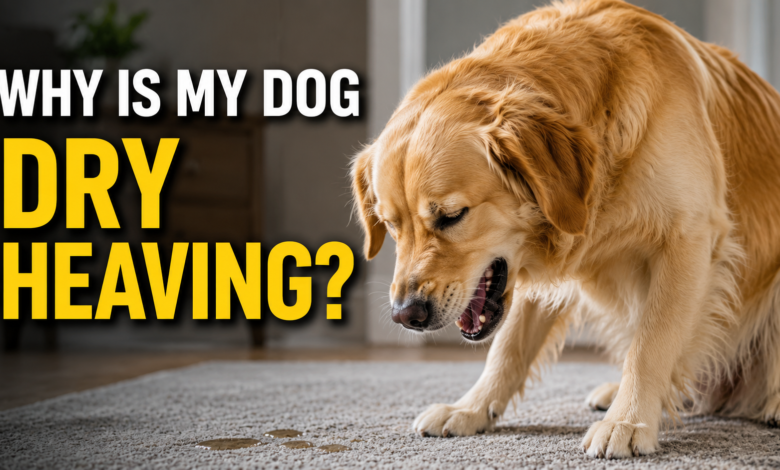
Dry heaving is forceful retching without producing vomit. A dog may stretch the neck, open the mouth, contract the abdominal muscles, swallow repeatedly, or gag. It differs from vomiting because little or nothing comes up.
Sometimes dry heaving is actually coughing or gagging. A short video can help your veterinarian tell the difference.
An isolated episode in a comfortable dog is not always an emergency. Repeated episodes or worsening symptoms deserve attention.
9 Common Causes of Dog Dry Heaving
Several conditions can cause unproductive retching. The likely cause depends on your dog’s age, recent activities, other symptoms, and medical history.
- Eating too fast or stomach irritation: Eating too fast, overeating, dietary changes, or swallowing air can cause nausea and retching. Rich or unfamiliar foods can also trigger nausea.
- Something stuck in the throat: A bone fragment, toy piece, stick, rawhide, or other object can irritate or obstruct the throat. Dogs may gag, paw at the mouth, drool, swallow repeatedly, or struggle to eat.
- Kennel cough or another respiratory infection: Respiratory irritation can trigger a harsh cough followed by gagging or retching. The dog may otherwise seem normal early in the illness.
- Tonsil or throat inflammation: Inflammation from infection, irritation, or trauma can make swallowing uncomfortable and cause repeated gagging.
- Nausea or gastrointestinal disease: Gastritis, intestinal irritation, parasites, pancreatitis, or other digestive problems may cause nausea, lip licking, drooling, retching, vomiting, diarrhea, or reduced appetite.
- Foreign material in the stomach or intestines: Swallowed objects may cause retching, vomiting, abdominal pain, lethargy, or loss of appetite. An obstruction can become life-threatening.
- Bloat or gastric dilatation-volvulus (GDV): A dog with GDV may repeatedly try to vomit but produce little or nothing. Other warning signs include a swollen or tight abdomen, restlessness, excessive drooling, weakness, pale gums, or collapse. GDV is an emergency.
- Motion sickness or stress: Car travel, anxiety, excitement, or strong odors can trigger nausea and gagging in some dogs. These episodes often improve when you remove the trigger, but persistent symptoms still need evaluation.
- Heart or lung-related disease: Some dogs with respiratory or cardiac disease cough, gag, or retch. This is more concerning with exercise intolerance, breathing difficulty, weakness, fainting, or persistent cough.
When Is a Dog Dry Heaving an Emergency?
Not every episode requires an emergency clinic, but repeated unproductive retching with warning signs should never be ignored. GDV is especially urgent because it can progress rapidly.
Seek emergency veterinary care immediately if your dog is dry heaving and has a visibly swollen or painful abdomen, repeated attempts to vomit with nothing produced, trouble breathing, pale or blue-tinged gums, severe weakness, collapse, extreme restlessness, or sudden deterioration.
Possible dog dry heaving from a swallowed object is also a reason for prompt veterinary assessment, especially if your dog is choking, cannot swallow normally, is drooling heavily, or repeatedly paws at the mouth. Do not unquestioningly reach deep into the throat because you could push an object farther down or get bitten.
If your dog has mild retching but is otherwise bright and comfortable, contact your regular veterinarian if it keeps happening or does not settle. Puppies, senior dogs, and dogs with existing health problems may need earlier assessment.
What to Do if Your Dog Is Dog Dry Heaving
First, keep your dog calm and observe. Note when it started, how often it occurs, what your dog ate or chewed, and whether there is coughing, vomiting, diarrhea, drooling, pain, or appetite loss.
Check the mouth only if your dog is calm and it is safe. Look for an obvious object near the front, but never perform a blind finger sweep.
Do not force food or water while your dog is actively retching. Avoid human medications or home remedies unless a veterinarian recommends them; some are unsafe and may mask symptoms.
If the episode is mild and stops, monitor closely. A video can help because coughing, gagging, and vomiting are not always easy to distinguish.
How Veterinarians Diagnose Dog Dry Heaving
A veterinarian will start with a physical examination and history. They may ask about recent meals, chewing habits, access to toys or bones, coughing, bowel movements, medications, travel, and timing.
Depending on the findings, testing may include a mouth and throat examination, blood work, X-rays, or ultrasound. Imaging is especially important when a foreign body or obstruction is suspected.
Treatment depends on the cause. Mild stomach irritation may need supportive care, while an obstruction, severe infection, or GDV may require urgent procedures or surgery. Treating the symptom alone is not reliable.
How to Help Prevent Dog Dry Heaving and Future Episodes
Prevention starts with reducing common triggers. Feed appropriate portions, avoid sudden diet changes, and consider slower-feeding methods for dogs that gulp meals. Keep small toys, bones, sticks, socks, and other chewable objects away from dogs that swallow things they should not.
Regular checkups can help identify dental, respiratory, digestive, or other problems early. Keep preventive care appropriate to your dog’s risk and your veterinarian’s advice.
If your dog frequently retches after eating, note the food, portion size, eating speed, and timing. A simple symptom diary can reveal patterns.
Conclusion: Take Dog Dry Heaving Seriously When It Repeats
Dog dry heaving can result from fast eating or throat irritation, but it can also occur with a swallowed object, gastrointestinal disease, respiratory problems, or life-threatening bloat. The frequency and accompanying symptoms matter.
If your dog repeatedly tries to vomit without producing anything, especially with a swollen abdomen, breathing problems, weakness, pale gums, or collapse, treat it as an emergency and seek veterinary care immediately. If symptoms are mild but recurring, arrange a veterinary evaluation rather than managing the problem at home repeatedly.
More Pet Guides: For more pet-related guides, tips, and helpful information, visit PetOrbit.blog. Thank you for reading this article!
FAQs
Is dog dry heaving always serious?
No. A single brief episode can occur with throat irritation, fast eating, nausea, or coughing. However, repeated dry heaving is more concerning, particularly when it occurs with abdominal swelling, pain, drooling, weakness, breathing difficulty, or changes in appetite and behavior.
Why is my dog dry heaving but not vomiting?
A dog may retch without vomiting because the stomach is empty, the throat is irritated, or the problem is actually gagging or coughing. More serious causes, including a foreign body or GDV, can also produce repeated unproductive attempts to vomit. Discuss persistent episodes with a veterinarian.
Can eating too fast cause dog dry heaving?
Yes. Gulping food can cause swallowed air, stomach discomfort, gagging, or retching. Slower feeding may help, but repeated symptoms should not automatically be blamed on eating speed.
Should I give my dog water after my dog dry heaves?
Do not force water while your dog is actively retching. Once it stops, ask your veterinarian about hydration, especially if your dog has also vomited, has diarrhea, or seems unwell.
How can I tell if my dog is coughing or dry heaving?
Coughing usually involves forceful breathing or hacking and may end with a gag. Dry heaving is more like repeated retching or an attempt to vomit without producing material. A video can help your veterinarian tell them apart.
When should I take my dog to the vet for dog dry heaving?
Contact a veterinarian promptly if episodes keep returning, your dog cannot keep food or water down, appetite decreases, or lethargy, pain, diarrhea, coughing, or excessive drooling develops. Go to an emergency clinic immediately for repeated unproductive retching with a swollen abdomen, breathing difficulty, pale gums, collapse, or severe weakness.
Can a swallowed object cause dry heaving in a dog?
Yes. Objects lodged in the throat can cause gagging and retching, while objects that reach the digestive tract can cause irritation or obstruction. If you suspect your dog swallowed a toy, bone, fabric, or another object, veterinary assessment is safer than waiting for symptoms to worsen.
What should I do if my dog keeps dry heaving at night?
Repeated nighttime episodes deserve veterinary attention, particularly if they are new or increasing. Note whether they follow meals, coughing, exercise, or lying down, and record a video if possible. Emergency signs such as breathing difficulty, abdominal swelling, repeated unproductive retching, or collapse require immediate care.

I’m a Pet Niche Expert and Pet Blogger with 12 years of experience in researching and sharing practical, reliable information about pets. Through PetOrbit.blog, I help pet parents and animal lovers better understand their pets and make informed decisions about their care and well-being.
My expertise covers a wide range of pet topics, including pet health, pet food and nutrition, dog and cat breeds, grooming, behavior, training, safety, pet care, travel with pets, and overall pet wellness. I also explore information about different types of pets, their unique needs, characteristics, lifestyles, and responsible ownership.
With more than 12 years of experience in the pet niche, my focus is on creating clear, useful, and easy-to-understand content based on practical knowledge, careful research, and real-world pet care considerations. I believe pet information should be informative without being unnecessarily complicated, so my goal is to make every article helpful for both new and experienced pet owners.
At PetOrbit, my mission is to provide valuable pet guides, breed information, health and nutrition insights, food and care tips, travel advice, and trustworthy resources that help pets live healthier, happier, and more comfortable lives.
PetOrbit.blog — Practical Pet Knowledge for Better Pet Care.