A small dog with a big personality, the bichapoo is a companion breed known for its affectionate nature, intelligence, and soft, often curly coat. Also called a Bichpoo, this cross between a Bichon Frise and a Toy or Miniature Poodle can make a lively household companion when its exercise, grooming, training, and social needs are properly met.
However, adorable looks do not tell the whole story. Before bringing one home, prospective owners should understand its expected size, temperament, grooming requirements, potential health concerns, and daily care. This guide covers what to expect from life with a bichapoo realistically.
What Is a Bichapoo?
The bichapoo is a designer dog developed from the Bichon Frise and Poodle. Because it is a crossbreed rather than a standardized purebred, individual dogs can vary considerably in appearance, coat texture, size, and personality.
Most Bichapoos are small, companion-oriented dogs. Their coat may be curly, wavy, or somewhere between the coats of their parent breeds. Colors can include white, cream, apricot, gray, black, or combinations depending on genetics.
A major attraction is the breed’s combination of the Bichon Frise’s cheerful companionship and the Poodle’s intelligence. Still, no crossbreed is guaranteed to inherit a particular temperament or coat. Buyers should evaluate the health and behavior of the individual puppy and its parents rather than relying solely on breed labels.
Bichapoo Size, Appearance & Lifespan
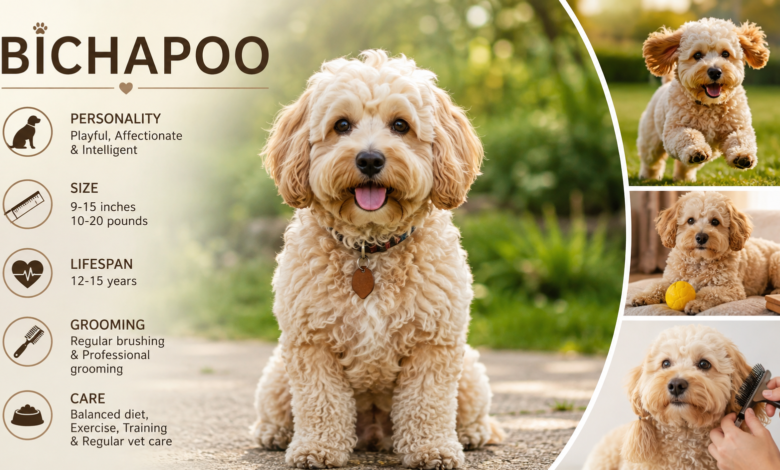
A bichapoo generally remains a small dog, although adult size depends heavily on whether the Poodle parent was Toy or Miniature. Many adults stand roughly 9 to 15 inches tall and weigh around 10 to 20 pounds, but individual dogs can fall outside these ranges.
The body is typically compact, with a rounded face, dark expressive eyes, and floppy ears. Its coat is usually one of its most recognizable features. Depending on inheritance, it can range from loose waves to tighter curls and may feel soft or woolly.
The typical lifespan of a healthy bichapoo is about 12 to 15 years. Genetics, nutrition, preventive veterinary care, exercise, dental hygiene, weight management, and overall living conditions all influence longevity. A longer lifespan is possible, but owners should treat breed averages as estimates, not guarantees.
Bichapoo Personality & Temperament
The bichapoo is usually affectionate, playful, social, and eager to interact with its family. Its Poodle heritage can contribute to impressive learning ability, while the Bichon Frise side often adds a friendly and people-focused character.
These dogs commonly enjoy being involved in household activities. They may follow their owners from room to room and can become unhappy if routinely left alone for long periods. This makes companionship an important consideration for potential owners.
Early socialization is particularly valuable. Puppies should gradually experience different people, friendly dogs, household sounds, surfaces, and everyday situations. Positive exposure can help develop confidence and reduce fear-based reactions.
With children, a well-socialized bichapoo can be playful and affectionate. However, its small body means young children should always be supervised around the dog. The same principle applies when introducing one to cats or other pets. Individual temperament matters more than breed-based assumptions.
Bichapoo Training, Exercise & Daily Needs
Despite its small size, the Bichapoo is not a purely decorative lapdog. It needs regular physical activity and mental stimulation. Short walks, indoor games, interactive toys, scent activities, and training sessions can help prevent boredom.
Because Poodles are highly intelligent, many Bichapoos learn quickly. That intelligence can work both ways: a bored dog may invent its own entertainment, including barking, chewing, or unwanted attention-seeking.
Use reward-based training and keep sessions short and engaging. Basic commands such as sit, stay, come, leave it, and drop it help with everyday safety. Consistency works better than harsh corrections.
House-training may require patience, particularly during puppyhood. Establish a predictable bathroom routine, reward successful elimination immediately, and supervise closely while the puppy learns.
Daily exercise needs vary by age, health, and individual energy level. Several short activities can be more appropriate for a small dog than one exhausting workout.
Bichapoo Grooming & Coat Care
Grooming is one of the biggest responsibilities of owning a Bichapoo. Its coat can mat easily, especially when it is curly or dense. Regular brushing removes loose hair, prevents tangles, and keeps the skin accessible for inspection.
Many owners benefit from professional grooming every 4 to 8 weeks, depending on coat length and condition. A shorter practical trim can make maintenance easier, particularly for busy households.
Watch for common tangle areas, including behind the ears, around the collar, under the legs, and near the tail. Brush gently, as pulling through severe mats can hurt the dog.
Dental care is also important. Small dogs can be prone to dental problems, so regular tooth brushing with pet-safe toothpaste and routine veterinary dental assessments should be part of the care plan. Trim nails as needed, and check ears regularly for wax, odor, redness, or irritation.
Bichapoo Health, Nutrition & Veterinary Care
Although mixed-breed dogs can have genetic health concerns inherited from either parent, individual risk varies. Potential issues to discuss with a veterinarian include dental disease, allergies or skin problems, patellar luxation, eye disorders, and other conditions associated with small dogs or the Bichon Frise and Poodle lineages.
Responsible breeding matters. Prospective owners should ask breeders about veterinary screening and health testing of both parents and request appropriate documentation rather than accepting vague assurances that puppies are “healthy.”
A balanced, complete dog food appropriate for the dog’s age, size, and activity level is generally the foundation of nutrition. Portion control matters because excess weight can stress joints and reduce overall quality of life.
Fresh water should always be available. Puppies typically need meals divided throughout the day, while adult feeding schedules can be adjusted according to the dog’s needs and veterinary advice.
Routine preventive care should include vaccinations, parasite prevention, dental care, weight monitoring, and regular veterinary examinations. Puppies also need an appropriate vaccination and deworming schedule established with a veterinarian.
Is a Bichapoo Right for Your Home?
The Bichapoo can suit apartments, houses, and many different lifestyles because of its relatively small size. However, living in a small home does not eliminate its need for daily activity and interaction.
Its biggest advantages are companionship, trainability, playful energy, and a generally adaptable nature. On the other hand, grooming can be demanding, some individuals may develop separation-related problems, and small dogs require careful handling.
Before buying or adopting, consider these practical questions:
- Can you provide daily exercise and mental stimulation?
- Can you maintain regular brushing and professional grooming?
- Will someone be available for adequate companionship?
- Can you budget for routine veterinary and dental care?
- Are children old enough to interact safely with a small dog?
- Can you commit to training and socialization throughout puppyhood?
Choosing a dog based only on appearance can lead to problems later. The best match depends on the dog’s individual temperament and your household’s ability to meet its needs.
Conclusion: Is the Bichapoo a Good Companion?
The Bichapoo can be a delightful companion for owners who want a small, intelligent, affectionate dog and are prepared for regular grooming and daily interaction. Its compact size makes it adaptable, and its intelligence gives it strong training potential.
However, this is not a completely maintenance-free pet. Proper socialization, exercise, dental care, nutrition, grooming, and preventive veterinary care are essential. If you choose a puppy, prioritize responsible breeding and health screening; if you adopt, take time to evaluate the individual dog’s personality and needs.
With proper care and realistic expectations, a bichapoo can become a loving, engaging member of the family for many years.
More Pet Guides: For more pet-related guides, tips, and helpful information, visit PetOrbit.blog. Thank you for reading this article!
(FAQs)
How big does a Bichapoo get?
A bichapoo commonly weighs around 10 to 20 pounds and stands approximately 9 to 15 inches tall. However, there is no single guaranteed size because the Poodle parent may be Toy or Miniature, and individual genetics can produce considerable variation.
How long does a Bichapoo live?
A Bichapoo typically has an expected lifespan of about 12 to 15 years. Good nutrition, a healthy body weight, preventive veterinary care, dental hygiene, appropriate exercise, and responsible breeding can all contribute to a longer, healthier life.
Are Bichapoos easy to train?
Generally, yes. A Bichapoo can be intelligent and responsive to positive reinforcement. Short, consistent training sessions usually work well. Early house-training and socialization are especially important for developing reliable adult behavior.
Do Bichapoos shed a lot?
Many Bichapoos shed relatively little compared with some other dogs, particularly those inheriting a curlier Poodle-like coat. However, low shedding does not mean low maintenance. Loose hair can remain trapped in the coat, increasing the risk of mats without regular brushing.
How often does a Bichapoo need grooming?
Most Bichapoos need frequent brushing at home and professional grooming approximately every 4 to 8 weeks, depending on coat type and preferred length. Ears, nails, skin, and teeth also require regular attention.
Are Bichapoos good with children?
A well-socialized bichapoo can be affectionate and playful with respectful children. Because these dogs are small and can be physically delicate, always supervise interactions with toddlers and young children. Teach children never to pull the dog’s ears, tail, or coat, or disturb it while eating or sleeping.
Can Bichapoos live in apartments?
Yes. A Bichapoo can adapt well to apartment living with adequate walks, play, training, and mental stimulation. Its small size helps, but it doesn’t eliminate the need for daily activity or companionship.
What are the main disadvantages of owning a Bichapoo?
Main challenges include regular coat maintenance, dental care, potential barking, separation-related behavior, and the need for consistent training. Prospective owners should also remember that crossbreeds can vary significantly in appearance, temperament, and inherited health risks.

I’m a Pet Niche Expert and Pet Blogger with 12 years of experience in researching and sharing practical, reliable information about pets. Through PetOrbit.blog, I help pet parents and animal lovers better understand their pets and make informed decisions about their care and well-being.
My expertise covers a wide range of pet topics, including pet health, pet food and nutrition, dog and cat breeds, grooming, behavior, training, safety, pet care, travel with pets, and overall pet wellness. I also explore information about different types of pets, their unique needs, characteristics, lifestyles, and responsible ownership.
With more than 12 years of experience in the pet niche, my focus is on creating clear, useful, and easy-to-understand content based on practical knowledge, careful research, and real-world pet care considerations. I believe pet information should be informative without being unnecessarily complicated, so my goal is to make every article helpful for both new and experienced pet owners.
At PetOrbit, my mission is to provide valuable pet guides, breed information, health and nutrition insights, food and care tips, travel advice, and trustworthy resources that help pets live healthier, happier, and more comfortable lives.
PetOrbit.blog — Practical Pet Knowledge for Better Pet Care.