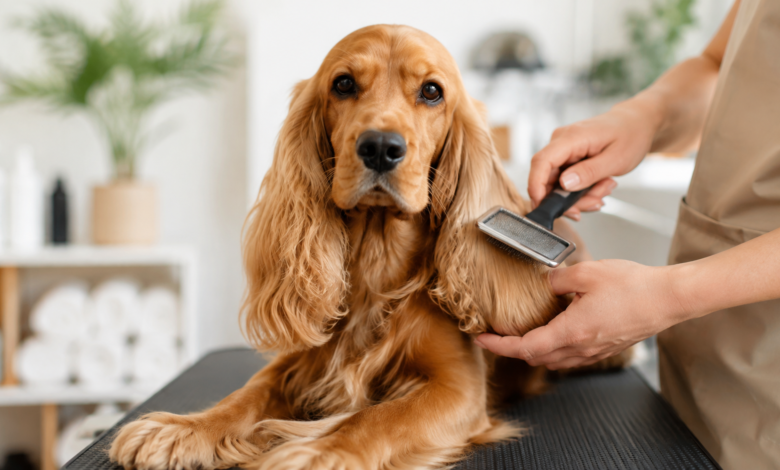
Cocker Spaniels are known for their silky coats, feathered ears, expressive eyes, and charming appearance. However, that beautiful coat needs consistent care to stay clean, comfortable, and free from painful mats. Good Cocker Spaniel Grooming is not simply about making your dog look attractive; it also helps you notice skin problems, ear irritation, tangled fur, overgrown nails, and other concerns early.
This guide explains how often to groom a Cocker Spaniel, which brushes and grooming tools to use, how to care for the ears and feet, when bathing and trimming are needed, and when professional grooming is the safer choice.
How Often Should a Cocker Spaniel Be Groomed?
A Cocker Spaniel generally needs more grooming than a short-coated breed. Daily brushing is ideal for dogs with a longer coat, while a shorter pet cut may allow a little more flexibility. The exact routine depends on coat length, lifestyle, age, weather, and how much time your dog spends outdoors.
For most dogs, a practical routine includes frequent brushing, regular ear checks, routine nail care, and professional trimming when the coat becomes difficult to maintain. Dogs that regularly walk through grass, woods, mud, or fields may need additional brushing because burrs, leaves, and dirt can quickly collect in the feathering.
A simple weekly schedule can look like this:
- Brush or comb the coat several times a week, or daily for a long coat.
- Check the ears regularly and clean them only when appropriate.
- Check the paws and nails frequently.
- Bathe when the coat is dirty or according to your groomer’s or veterinarian’s advice.
- Schedule professional trimming roughly every 4–6 weeks when needed.
The important point is consistency. Waiting until the coat is heavily tangled makes Cocker Spaniel Grooming harder and less comfortable for your dog.
Cocker Spaniel Grooming: How to Brush the Coat Properly
Brushing is the foundation of Cocker Spaniel Grooming. Their feathered coat can develop knots around the ears, chest, legs, belly, armpits, and tail. Regular brushing removes loose hair, dirt, and small tangles before they turn into mats.
A slicker brush can be useful for working through a feathered coat, while a suitable comb helps identify smaller knots that a brush may miss. Brush gently and work through the coat section by section rather than repeatedly pulling through a difficult mat.
Pay particular attention to areas where friction occurs. Behind the ears and around the legs are common places for tangles to develop. If you encounter a tight mat close to the skin, do not aggressively cut it with household scissors. The skin can easily be caught accidentally, and severe mats may require professional removal.
Working Cocker Spaniels may pick up considerably more debris during outdoor activities. After muddy walks, hunting activities, or countryside adventures, inspect the feathering and remove debris before it becomes embedded.
Bathing, Drying, and Skin Care
Bathing should support the coat rather than replace regular brushing. Brush the dog before the bath so loose hair and tangles are removed first. Use lukewarm water and a shampoo specifically formulated for dogs. Human shampoo can be inappropriate because canine skin has different requirements.
Rinse thoroughly because shampoo residue can irritate the skin. Once the bath is finished, drying is especially important for a Cocker Spaniel. Thick or feathered hair can retain moisture, particularly around the ears and skin folds.
Never rely on frequent bathing to solve a persistent odor, itching, redness, or greasy coat. Those signs can sometimes indicate an underlying skin or ear problem and deserve veterinary attention.
How often your Cocker needs a bath depends on lifestyle and coat condition. A dog that spends most of its time indoors may need fewer baths than one that regularly swims or explores muddy outdoor areas. Over-bathing can also interfere with the skin’s natural oils.
Cocker Spaniel Grooming for Ears, Feet, and Nails
Ear care deserves special attention because Cocker Spaniels have long, floppy ears that can restrict airflow and retain moisture. They are therefore particularly prone to ear problems. Regularly look for redness, swelling, unusual discharge, unpleasant odor, or sensitivity when the ears are touched.
Do not routinely put random liquids or homemade solutions deep into the ear canal. If your veterinarian recommends an ear cleaner, follow the product directions and veterinary advice.
After swimming or bathing, gently dry the outer ear and surrounding hair. Keeping moisture under control is particularly important for dogs that frequently get wet.
Paw care is another important part of Cocker Spaniel Grooming. Check between the pads for grass seeds, mud, stones, or other foreign material. Hair around the feet may also need careful trimming when it becomes excessively long.
Nails should be kept at a comfortable length. The sensitive inner part of the nail, known as the quick, contains blood vessels and nerves. Cutting into it can cause pain and bleeding. Dark nails make the quick harder to see, so inexperienced owners may benefit from having a groomer or veterinarian demonstrate the correct technique.
Trimming and Haircuts: Puppy Cut or Longer Coat?
Cocker Spaniel haircuts should match the dog’s lifestyle rather than simply following a fashionable style. A longer coat can look beautiful but requires significantly more brushing and maintenance.
A shorter puppy or pet cut reduces tangling and can make daily care easier. However, shorter does not mean maintenance-free. The coat still needs brushing, ear care, bathing when necessary, nail trimming, and regular inspections.
Professional trimming can be particularly useful around the ears, feet, sanitary areas, and heavily feathered sections. Experienced groomers understand how to work safely around sensitive areas and can recommend a practical style for the individual dog.
Working and show-type Cockers can also have different grooming requirements. Some working lines carry less coat, while dogs with fuller feathering may require considerably more attention. The goal should be a healthy, comfortable coat rather than simply removing as much hair as possible.
Avoid shaving a Cocker Spaniel simply because the coat is difficult to manage. Severe matting may sometimes require clipping, but that decision is best made with a qualified groomer or veterinarian when necessary.
Best Tools for Cocker Spaniel Grooming
Having the right equipment makes Cocker Spaniel Grooming easier and safer. You do not need every grooming product on the market. A small collection of appropriate tools is usually more useful than a large collection of unsuitable ones.
Useful basics include a slicker brush, metal comb, dog-specific shampoo, towels, nail clippers or a nail grinder, and an appropriate dog ear-cleaning product when recommended.
A grooming table or secure non-slip surface can also make brushing safer. Introduce equipment gradually, especially with puppies. Let your dog investigate the brush and become comfortable with handling before attempting a long grooming session.
Clippers require more caution. The correct blade depends on the coat, area being trimmed, and desired finish. Because clipper blades can become hot and sensitive areas are easy to injure, inexperienced owners should consider having a professional groomer perform substantial clipping. Professional groomers are trained to select suitable tools and handle areas such as feet, ears, nails, and mats safely.
Cocker Spaniel Grooming for Puppies and Adult Dogs
Puppy grooming should begin as a calm training experience rather than a stressful event. Young puppies can gradually become accustomed to having their ears, paws, face, tail, and body handled.
Short sessions are better than forcing a puppy to tolerate an extended grooming session. Reward calm behavior and stop before the puppy becomes overwhelmed. This early preparation can make future professional grooming much easier.
As the coat develops, grooming requirements increase. Around six months, many Cocker Spaniels begin developing more noticeable feathering, making regular brushing increasingly important.
Adult dogs should have a predictable grooming routine. If your dog suddenly dislikes having its ears, paws, or coat touched, do not automatically assume it is being stubborn. Pain, infection, a mat pulling the skin, or another health issue could be responsible.
A professional groomer can also become an important part of your dog’s routine. Choose someone experienced with spaniel coats and ask about their approach to brushing, bathing, drying, ear care, nail trimming, and clipping.
Common Cocker Spaniel Grooming Mistakes to Avoid
Many grooming problems are caused by small mistakes repeated over time. The most common is waiting until visible mats have already formed. Frequent brushing is easier and more comfortable than trying to repair a neglected coat.
Another mistake is focusing only on appearance. Healthy grooming also involves examining the skin, ears, paws, nails, eyes, and mouth.
Avoid these common errors:
- Brushing aggressively through mats.
- Using human shampoo.
- Leaving the coat damp after bathing.
- Ignoring unpleasant ear odor or discharge.
- Cutting dark nails too quickly.
- Using household scissors to remove tight mats.
- Attempting complicated clipping without proper training.
- Bathing excessively instead of addressing the reason for odor or skin problems.
If you notice persistent itching, inflamed skin, ear discharge, strong ear odor, bleeding, painful mats, or unusual sensitivity, contact your veterinarian rather than trying to solve the problem through grooming alone.
Conclusion
Good Cocker Spaniel Grooming is a combination of regular brushing, sensible bathing, careful ear and paw care, nail maintenance, and appropriate trimming. The best routine is not necessarily the most complicated one. It is the routine you can perform consistently while keeping your dog comfortable.
Longer coats require more attention, while a practical pet cut can reduce tangling and daily maintenance. Most importantly, grooming should also give you an opportunity to notice changes in your dog’s skin, ears, paws, and overall condition.
With patience, suitable tools, and professional help when needed, Cocker Spaniel Grooming can become a positive part of your dog’s normal care routine and help keep that beautiful coat healthy for years.
More Pet Guides: For more pet-related guides, tips, and helpful information, visit PetOrbit.blog. Thank you for reading this article!
(FAQs)
How often should a Cocker Spaniel be groomed?
A Cocker Spaniel usually benefits from frequent brushing, with daily brushing particularly useful for a long or full coat. Professional trimming is commonly needed every few weeks, depending on coat growth and the haircut. Dogs that spend lots of time outdoors may need additional brushing after walks.
Can I groom my Cocker Spaniel at home?
Yes. Basic brushing, coat checks, bathing, and routine hygiene can be managed at home when you have suitable equipment and your dog is comfortable being handled. Complex clipping, severe mat removal, and difficult nail trimming are better handled by an experienced professional.
How do I prevent mats in a Cocker Spaniel’s coat?
Regular brushing is the most effective approach. Work through the ears, chest, armpits, legs, belly, and tail carefully because these areas commonly tangle. Removing dirt and plant material soon after outdoor walks also helps prevent knots from becoming established.
How often should a Cocker Spaniel’s ears be cleaned?
There is no single schedule that suits every dog. Check the ears regularly and clean them according to their condition and your veterinarian’s recommendations. Cocker Spaniels are prone to ear problems, so redness, swelling, discharge, bad odor, or pain should be evaluated rather than treated as normal grooming issues.
What is the best haircut for a Cocker Spaniel?
The best haircut depends on the dog’s lifestyle, coat type, activity level, and the amount of grooming the owner can maintain. A shorter pet or puppy cut can reduce tangling, while a longer coat requires more frequent brushing and maintenance.
Should I shave my Cocker Spaniel in summer?
Shaving should not be treated as a routine solution for hot weather or difficult grooming. If a coat is severely matted, clipping may sometimes be necessary, but it should be done carefully and preferably by a professional. Discuss major coat changes with your groomer or veterinarian.
What grooming tools does a Cocker Spaniel need?
Basic equipment includes a suitable slicker brush, metal comb, dog shampoo, towels, nail-care equipment, and an appropriate ear-cleaning product when recommended. Clippers are more specialized because blade selection and safe handling vary by coat and body area.
When should a Cocker Spaniel puppy start grooming?
Puppies can begin learning grooming behaviors early through gentle handling of their paws, ears, face, and coat. Keep sessions short and positive. As the puppy’s feathering develops, gradually introduce a more complete grooming routine so regular Cocker Spaniel Grooming becomes familiar rather than stressful.

I’m a Pet Niche Expert and Pet Blogger with 12 years of experience in researching and sharing practical, reliable information about pets. Through PetOrbit.blog, I help pet parents and animal lovers better understand their pets and make informed decisions about their care and well-being.
My expertise covers a wide range of pet topics, including pet health, pet food and nutrition, dog and cat breeds, grooming, behavior, training, safety, pet care, travel with pets, and overall pet wellness. I also explore information about different types of pets, their unique needs, characteristics, lifestyles, and responsible ownership.
With more than 12 years of experience in the pet niche, my focus is on creating clear, useful, and easy-to-understand content based on practical knowledge, careful research, and real-world pet care considerations. I believe pet information should be informative without being unnecessarily complicated, so my goal is to make every article helpful for both new and experienced pet owners.
At PetOrbit, my mission is to provide valuable pet guides, breed information, health and nutrition insights, food and care tips, travel advice, and trustworthy resources that help pets live healthier, happier, and more comfortable lives.
PetOrbit.blog — Practical Pet Knowledge for Better Pet Care.