Standard Bernedoodle: Wonderful Guide to Size, Lifespan, Temperament & Care
standard bernedoodle

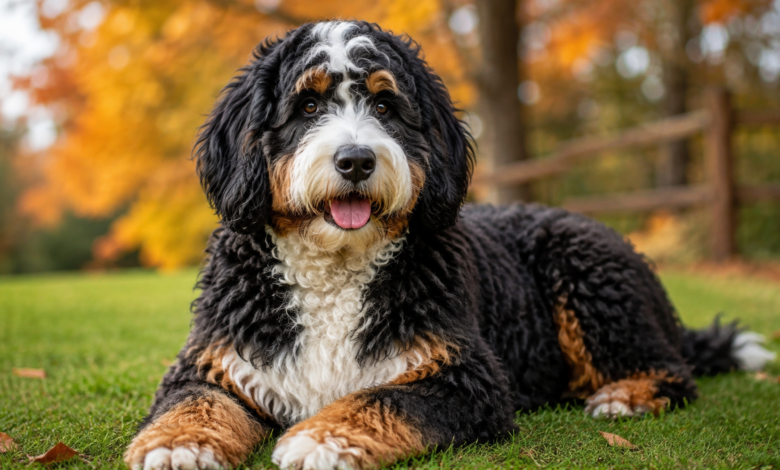
The standard Bernedoodle is a popular designer dog created by crossing a Bernese Mountain Dog with a Standard Poodle. The result is typically a large, intelligent, affectionate companion with a soft, often wavy or curly coat. However, these dogs are not simply a predictable blend of two breeds. Their size, coat, energy level, and personality can vary considerably depending on genetics and upbringing.
If you are considering bringing one home, it is important to understand what daily life with this dog is really like. This guide covers standard Bernedoodle size, lifespan, temperament, exercise, grooming, training, nutrition, health concerns, family compatibility, and the costs and responsibilities of ownership.
What Is a Standard Bernedoodle?
A standard Bernedoodle is generally produced by breeding a Bernese Mountain Dog with a Standard Poodle. Because both parent breeds are relatively large, standard puppies usually grow into substantial dogs. Breeders may use different generations, such as F1 or multigenerational Bernedoodles, which can influence coat characteristics and other inherited traits.
The name “Bernedoodle” describes a crossbreed rather than a breed with completely standardized characteristics. Therefore, there is no guarantee that every puppy will have the same appearance or temperament.
A healthy adult standard Bernedoodle commonly weighs around 50 to 90 pounds, although some individuals can fall outside that range. Height is often around 23 to 29 inches at the shoulder. Genetics, sex, nutrition, and overall health all affect final size.
Standard Bernedoodle Size and Appearance
The standard Bernedoodle is usually the largest Bernedoodle variety. It has a sturdy body, long legs, floppy ears, and a fluffy coat. Many have the classic tri-color pattern associated with the Bernese Mountain Dog, featuring black, white, and rust markings. Others may have different color combinations.
The coat can range from loose waves to tighter curls. Curlier coats may shed less visibly, but that does not mean the dog is truly hypoallergenic. Allergens come from dander, saliva, and other proteins as well as hair.
Because these dogs can become large and strong, early socialization and training are particularly important. A poorly trained 70-pound dog can be difficult to manage, even when it is friendly.
Puppies may also grow rapidly during their first year. Owners should avoid excessive forced exercise while bones and joints are developing. A veterinarian can help determine an appropriate activity level for a growing puppy.
Standard Bernedoodle Temperament and Personality
The typical standard Bernedoodle is affectionate, social, intelligent, and eager to interact with its family. The Bernese Mountain Dog contributes a gentle, people-oriented nature, while the Poodle contributes intelligence, trainability, and mental energy.
However, individual temperament can vary. Some dogs are calm and easygoing, while others are energetic, sensitive, vocal, or easily bored.
These dogs generally enjoy being involved in family activities. Long periods of isolation can contribute to unwanted behaviors such as barking, chewing, digging, or separation-related distress.
With proper socialization, they can be excellent family companions. Many do well with respectful children, although young children should always be supervised around a large dog. Early exposure to different people, household situations, friendly dogs, sounds, and environments can help build confidence.
With other pets, success depends more on the individual dog’s temperament and introduction process than on the breed mix alone.
Exercise, Training, and Mental Stimulation
A standard bernedoodle needs regular exercise, but its requirements are not necessarily the same as those of a highly driven working dog. Daily walks, play sessions, training exercises, and opportunities to explore are usually more useful than simply trying to exhaust the dog physically.
A balanced routine can include:
- Daily walks appropriate for age and fitness
- Interactive games such as fetch
- Basic obedience practice
- Puzzle feeders and food games
- Supervised play with suitable dogs
- Sniffing and exploration activities
Training should begin early. These dogs are often intelligent and learn quickly, but intelligence can work against the owner when a dog becomes bored or discovers that unwanted behavior gets attention.
Use reward-based training and keep sessions short and engaging. Consistent household rules matter too. If jumping is forbidden one day but rewarded with attention the next, the dog receives mixed signals.
Mental stimulation is especially important for Poodle-influenced dogs. Five to ten minutes of focused training can sometimes be more valuable than adding another long walk.
Grooming, Feeding, and Everyday Care
The standard bernedoodle often requires significant grooming because its coat can mat easily, particularly when it is long or curly. Regular brushing helps remove loose hair and prevents painful tangles. Professional grooming may be needed every several weeks depending on coat type and the owner’s preferred length.
Owners should also routinely check the ears, trim nails when necessary, and maintain good dental hygiene. Floppy ears and dense hair can make ear care particularly important.
Food requirements depend on age, body condition, activity level, and the individual dog’s metabolism. Puppies need a complete diet appropriate for large-breed growth, not simply a high-calorie food designed to promote rapid growth.
Adults should be fed enough to maintain a healthy body condition without becoming overweight. Obesity stresses joints and can reduce quality of life.
Include treats in the overall daily calorie intake. Fresh water should always be available.
Standard Bernedoodle Lifespan and Health Concerns
A standard Bernedoodle may live roughly 10 to 15 years, although lifespan varies between individuals. Crossbreeding does not automatically eliminate inherited health problems, so responsible breeding and preventive veterinary care remain important.
Potential concerns may include hip and elbow problems, eye disorders, allergies or skin problems, certain orthopedic conditions, and inherited diseases found in either parent breed. Bernese Mountain Dogs also have a concerning predisposition to certain cancers, while Poodles can have their own hereditary health risks.
That does not mean a Bernedoodle will develop these conditions. Instead, prospective owners should ask breeders about health screening of both parents and request appropriate documentation.
Routine veterinary examinations are valuable throughout the dog’s life. Preventive care can include vaccinations, parasite control, dental care, weight monitoring, and age-appropriate screening.
Pet insurance may also be worth considering because orthopedic problems, emergencies, and chronic diseases can become expensive. Comparing coverage before a medical problem develops is generally more useful than waiting until after diagnosis.
Is a Standard Bernedoodle Right for Your Family?
A standard Bernedoodle can be a rewarding choice for families who want a large, affectionate, intelligent companion and are prepared for grooming and training responsibilities.
The breed mix may be a good fit if you can provide:
- Consistent companionship and interaction
- Daily exercise and mental stimulation
- Regular brushing and professional grooming
- Positive, ongoing training
- Adequate indoor living space
- A realistic budget for food, grooming, veterinary care, and emergencies
On the other hand, this may not be the best choice if you want a low-maintenance dog, frequently leave home for long periods, or are unwilling to invest time in training and grooming.
Before buying a puppy, prioritize temperament and health over unusual coat colors or fashionable markings. A responsible breeder should be willing to discuss parent health, puppy socialization, veterinary care, and expected adult characteristics.
Adoption and rescue organizations can also be worth exploring. Adult dogs let you see their established size and temperament before you commit.
Conclusion
The standard bernedoodle combines traits from two very different parent breeds, producing a dog that can be affectionate, intelligent, playful, and highly devoted to its family. Consider its large size, grooming needs, exercise requirements, and potential health concerns before bringing one home.
The biggest advantage is its versatility as a family companion. The biggest misconception is that every Bernedoodle will automatically be low-shedding, easygoing, and problem-free.
With responsible breeding, appropriate nutrition, preventive veterinary care, early socialization, consistent training, and regular grooming, a standard bernedoodle can become a wonderful long-term companion. The right dog is not simply the cutest puppy; it is the one whose needs and temperament fit your household.
More Pet Guides: For more pet-related guides, tips, and helpful information, visit PetOrbit.blog. Thank you for reading this article!
(FAQs)
How big does a standard bernedoodle get?
Most adult Standard Bernedoodles are roughly 23 to 29 inches tall and may weigh about 50 to 90 pounds. Some individuals can be smaller or larger because this is a crossbreed rather than a uniformly standardized breed.
How long does a standard bernedoodle live?
A typical Standard Bernedoodle may live about 10 to 15 years. Genetics, preventive veterinary care, nutrition, body weight, exercise, and overall lifestyle can all influence longevity.
Are Standard Bernedoodles good family dogs?
They can be excellent family companions when properly socialized and trained. Their affectionate nature often makes them well-suited to families, but their large size means you should always supervise interactions with young children.
Does a standard bernedoodle shed?
Shedding varies significantly. Some have wavy coats that shed moderately, while others have curlier coats that appear to shed less. No Bernedoodle should be considered completely non-shedding or guaranteed hypoallergenic.
How much exercise does a standard bernedoodle need?
Most need daily physical activity combined with mental stimulation. Walks, play, training, scent games, and puzzle toys can provide a balanced routine. Puppies should not be pushed into excessive high-impact exercise while developing.
Are Standard Bernedoodles easy to train?
They are often highly trainable because Poodles are intelligent and the Bernese Mountain Dog is generally responsive to people. However, intelligence does not guarantee obedience. Consistent reward-based training and early socialization are essential.
Do Standard Bernedoodles have health problems?
They can inherit health conditions associated with either parent breed. Orthopedic problems, eye disorders, skin issues, and other inherited diseases are among the concerns owners should discuss with a veterinarian and responsible breeder.
Is a standard bernedoodle high maintenance?
They can be relatively high maintenance compared with some dogs. Their large size, grooming needs, training requirements, exercise, food costs, and veterinary care require a meaningful long-term commitment. For the right household, however, that investment can be worthwhile.

I’m a Pet Niche Expert and Pet Blogger with 12 years of experience in researching and sharing practical, reliable information about pets. Through PetOrbit.blog, I help pet parents and animal lovers better understand their pets and make informed decisions about their care and well-being.
My expertise covers a wide range of pet topics, including pet health, pet food and nutrition, dog and cat breeds, grooming, behavior, training, safety, pet care, travel with pets, and overall pet wellness. I also explore information about different types of pets, their unique needs, characteristics, lifestyles, and responsible ownership.
With more than 12 years of experience in the pet niche, my focus is on creating clear, useful, and easy-to-understand content based on practical knowledge, careful research, and real-world pet care considerations. I believe pet information should be informative without being unnecessarily complicated, so my goal is to make every article helpful for both new and experienced pet owners.
At PetOrbit, my mission is to provide valuable pet guides, breed information, health and nutrition insights, food and care tips, travel advice, and trustworthy resources that help pets live healthier, happier, and more comfortable lives.
PetOrbit.blog — Practical Pet Knowledge for Better Pet Care.